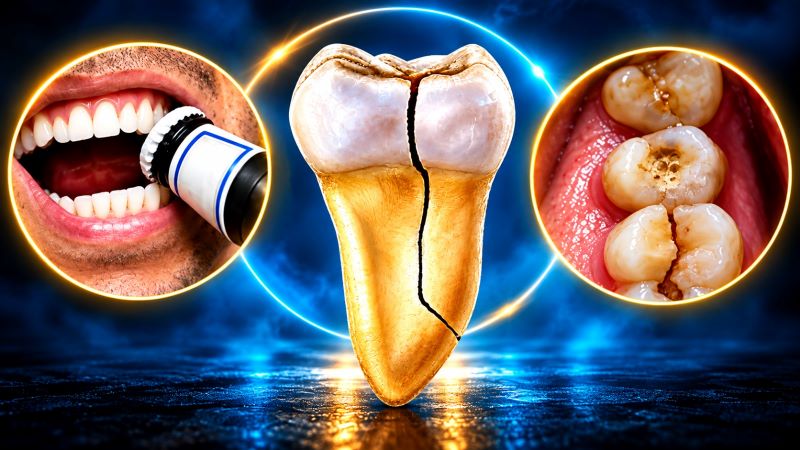
Using teeth to open bottles, tear packages or crack hard objects may seem like a harmless shortcut. However, these everyday habits can cause serious dental injuries, sometimes within seconds.
Many people use their teeth for tasks they could easily perform with scissors, bottle openers or other appropriate tools. Others bite hard materials, hold objects between their teeth or use them to tear plastic packaging. Although these actions may save a few seconds, they expose teeth to unnecessary pressure and damage.
Teeth are naturally strong and designed to withstand the forces involved in biting and chewing food. However, their strength has limits. They are not designed to function as general-purpose tools.
The outer layer of a tooth, known as enamel, is the hardest substance in the human body. It protects the underlying dentine and the dental pulp, which contains nerves and blood vessels. Despite its hardness, enamel can crack, chip or fracture when exposed to excessive or uneven forces.
Repeatedly using teeth to bite hard objects can gradually weaken their structure. Small cracks may develop and become more extensive over time. In other situations, one sudden and forceful bite can cause an immediate fracture. Depending on the severity, the damage may involve only a small part of the enamel or extend deeper into the tooth.
The consequences are not always immediately visible. Some people may initially experience no pain, even when a crack has developed. Others may notice sensitivity when drinking cold or hot beverages, discomfort when chewing or sharp pain when biting down.
When a fracture reaches the inner part of the tooth, the pulp may become inflamed or infected. This can require more complex dental treatment, including root canal treatment followed by a crown to protect the remaining tooth structure. In severe cases, when the tooth cannot be restored, extraction may become necessary.
One important reason to protect teeth is that enamel cannot naturally regenerate once it has been lost. Unlike skin or bone, which have healing and repair mechanisms, damaged enamel does not grow back. Although dentists can restore damaged teeth using appropriate materials, prevention remains essential.
Unfortunately, many people underestimate the risks because these habits are part of their daily routines. Opening a bottle with the teeth, for example, may appear easier than looking for a bottle opener. Similarly, tearing a package with the teeth may seem faster than using scissors. However, convenience should never come at the expense of long-term oral health.
Children and young adults should also be educated about these habits. Oral health education should not focus only on brushing, flossing and visiting the dentist. It should also address everyday behaviors that can damage teeth. Parents, teachers and healthcare professionals have an important role in helping children understand that teeth are not substitutes for household tools.
If a tooth becomes chipped or fractured, seeking professional dental care as soon as possible is important, even when there is little or no pain. A dentist can assess the extent of the damage and recommend appropriate treatment. Delaying examination may allow an existing problem to become more complicated.
Protecting teeth begins with making simple, responsible choices. Use bottle openers to open bottles, scissors to cut packages and appropriate tools to crack hard materials. Avoid biting objects that are not food, and never use your teeth to hold or carry items.
Oral health is influenced not only by what we eat or how often we brush, but also by the everyday habits we develop. A healthy smile requires protection from preventable injuries.
Our teeth are designed to help us bite and chew food, not to replace the tools we use every day. The few seconds saved by using them incorrectly may result in months of dental treatment.