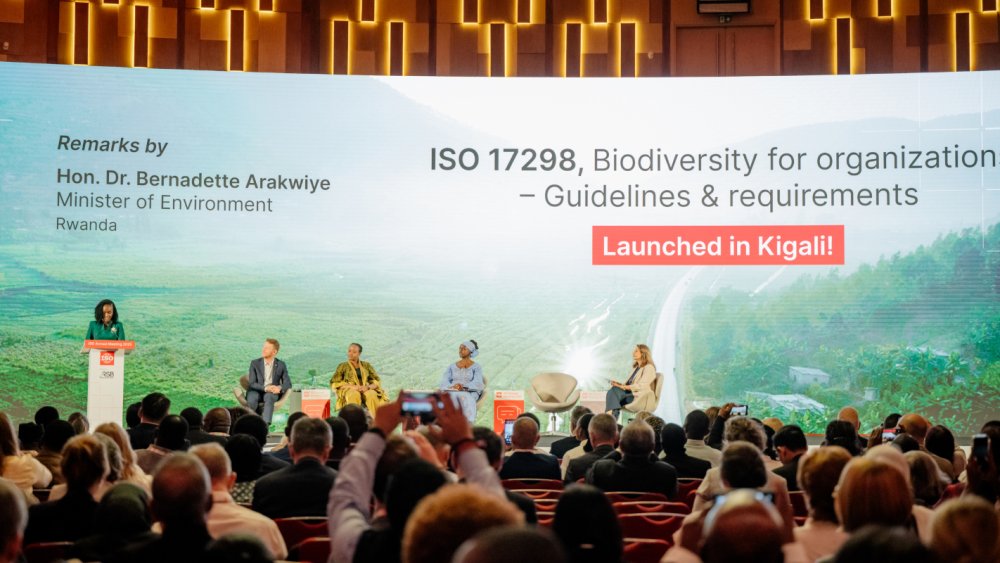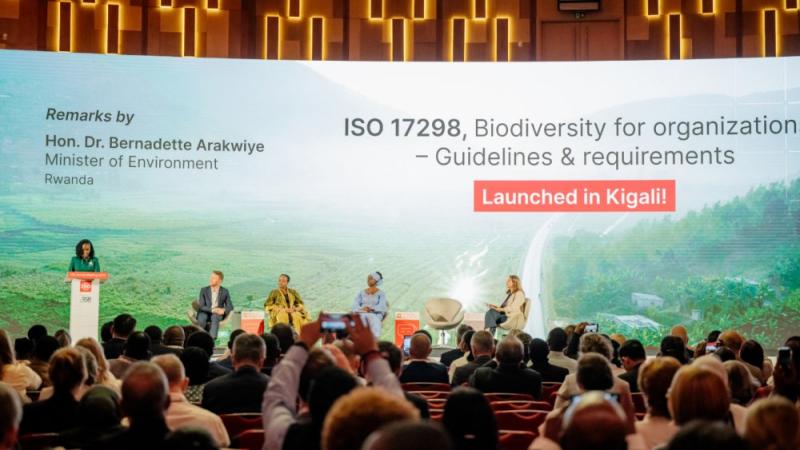
The International Organization for Standardization (ISO) has launched the world’s first International Standard dedicated to helping organizations worldwide take concrete action on biodiversity. The announcement was made during the ISO annual meeting 2025 on 7 October 2025 Kigali, Rwanda.
The new standard, ISO 17298: Biodiversity for organizations guidelines and requirements, provides a practical and scalable framework that enables organizations to assess their impacts, dependencies, risks, and opportunities related to biodiversity.
Biodiversity the variety of life on earth underpins healthy ecosystems, strong economies, and resilient communities. Yet, with nature loss accelerating, the risks for organizations are also increasing. Loss of biodiversity often leads to higher operating costs, disrupted supply chains, regulatory penalties, and reputational damage. By acting on biodiversity, organizations can reduce risks, strengthen operations, access nature-positive finance, and build trust with stakeholders.
The Ministry of Environment estimates that nearly 65% of Rwandans rely directly on biodiversity-related livelihoods, ranging from farming and forestry to livestock and tourism. This deep dependence highlights the importance of protecting natural resources, yet the country faces an urgent challenge: almost one in every four species in Rwanda is threatened with extinction if decisive action is not taken.
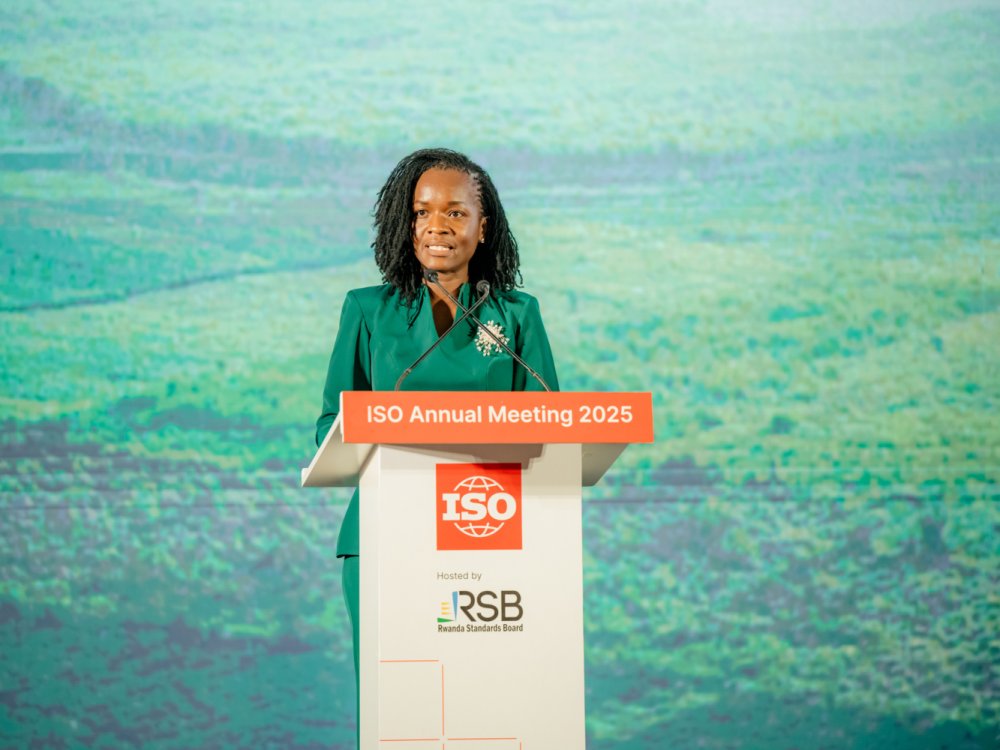
Speaking on this reality, Dr. Bernadette Arakwiye,the minister of Environment reminded stakeholders that conservation is a responsibility that transcends governments and institutions. It is a collective duty for businesses, communities, and individual citizens alike:
“Let us live in harmony with nature, because in protecting biodiversity, we are ultimately protecting ourselves.”
As Rwanda’s capital, Kigali, hosts global environmental leaders, the nation is using the platform to amplify a message that extends well beyond its borders: sustainable development is not a matter of choice but of survival. With a population of more than 13 million, Rwanda has demonstrated that progress and preservation can go hand in hand. The country has expanded forest cover to 30.4%, provides protection for more than 400 species of animals and over 1,000 species of birds, and continues to restore ecosystems once degraded by human activity.
Noelia Garcia Nebra, ISO’s Head of Sustainability and Partnerships, emphasized that ISO 17298 fills a critical gap:
“Until now, there has been no globally agreed standard for organizations to integrate biodiversity into their strategies and operations. This standard provides a structured roadmap, embedding biodiversity into governance and risk management practices – not just sustainability reporting.”
By grounding biodiversity action in a common global standard, ISO 17298 represents a milestone in shifting businesses and institutions from ambition to implementation with the transparency, accountability, and consistency needed to halt and reverse biodiversity loss. For Rwanda, safeguarding biodiversity is more than just an environmental agenda it is a moral obligation and a defining element of its national identity. In embracing this path, the nation is positioning itself as a global example of how small but determined countries can lead the way in balancing human prosperity with the protection of nature.