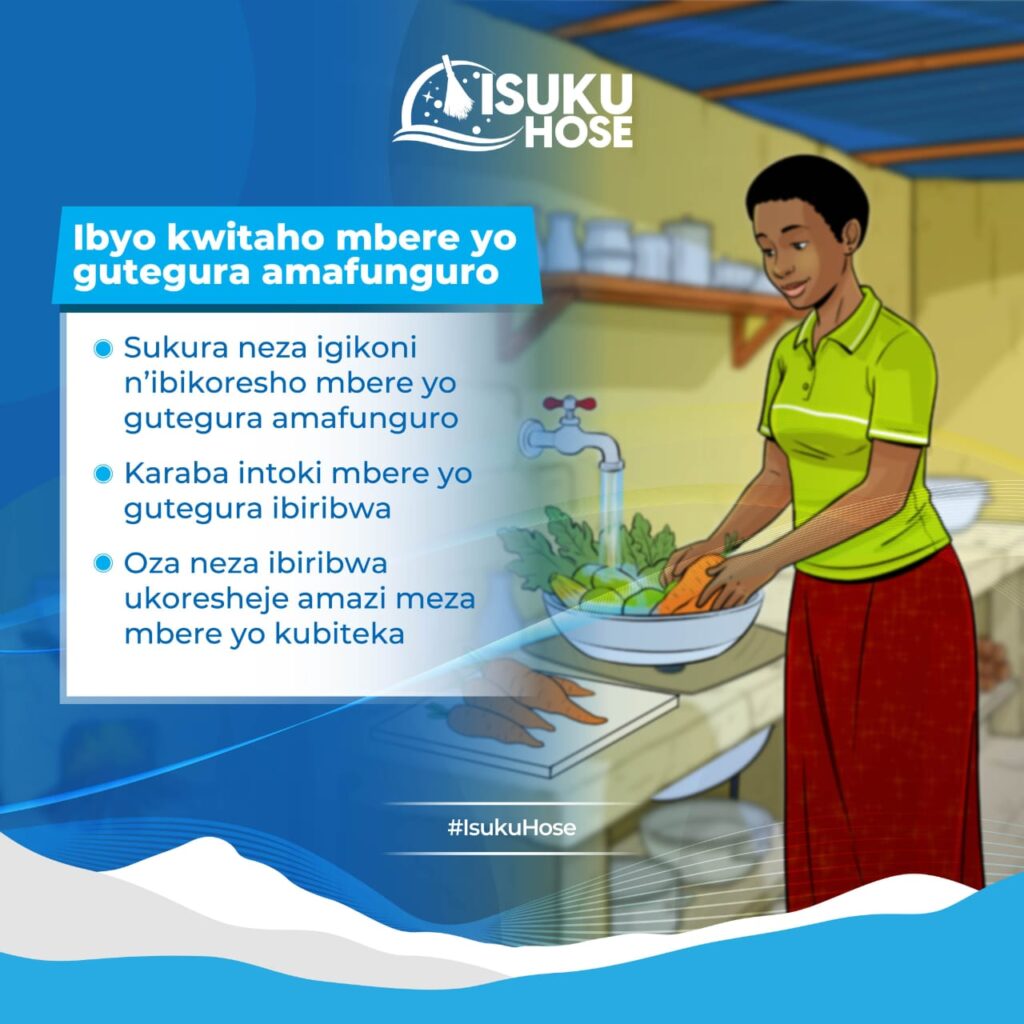
Hygiene in food preparation is one of the key pillars that play a major role in safeguarding public health. Although food is a source of energy and proper nutrition, when it is not prepared under hygienic conditions, it can become a cause of various diseases transmitted through contaminated food and unsafe water.
The Rwanda Biomedical Centre (RBC) states that many diseases including diarrhea, typhoid, cholera, and other gastrointestinal illnesses continue to affect the population, largely due to poor sanitation, unsafe water, and improper food handling practices. Through various public awareness campaigns, including the Isuku Hose (Comprehensive Hygiene) program, RBC calls on citizens to treat hygiene as a permanent culture rather than a temporary activity.
RBC emphasizes that anyone involved in food preparation, whether at home, in schools, restaurants, or during social events must follow basic hygiene standards.
These include Washing hands with clean water and soap before cooking and eating,maintaining personal hygiene and wearing clean clothing,cleaning cooking and dining areas thoroughly,washing kitchen utensils before and after use,cleaning vegetables and fruits with safe water before cooking or eating,separating raw food from cooked food,covering food to protect it from dirt and insects.
According to RBC, these simple measures, when properly observed, significantly reduce diseases that commonly affect many Rwandan households. A 2025 RBC study shows that poor hygiene in food preparation has various negative effects on public health and national development.
These include:Increased food and waterborne diseases, frequent hospital visits for both children and adults, loss of time and money spent on medical treatment, reduced productivity among workers and farmers, poor growth among children under five years old.
RBC reports that stomach related illnesses are among the leading causes of hospital visits for children, yet many of these diseases can be prevented through consistent hygiene practices. Residents from different parts of the country testify that prioritizing hygiene has significantly improved their lives.
Uwimana Bonifilida, a mother of four from Uwinkingi Sector, says her family previously suffered frequent stomach illnesses due to neglecting hygiene. “Before, we cooked carelessly, used water from wherever we found it, and prepared vegetables without washing them properly. The children fell sick often, especially with diarrhea and stomach infections.”She shared.
She adds that after receiving hygiene education from community health workers, their living conditions improved. “They taught us to wash our hands, cook in clean places, and wash vegetables and fruits properly. We have now gone a long time without visiting the hospital for stomach diseases. Hygiene has transformed our lives.”
Similarly, Mukamurera Venantie from Karama Sector in Huye District says hygiene should be a daily responsibility, not something practiced only when someone falls ill. “Hygiene is a culture that must begin at home. When food is prepared without cleanliness, you expose yourself and your family to disease.”
She explains that in her community, people have begun to understand the importance of hygiene. “Since we started receiving guidance from health authorities, people wash their hands, establish kitchen gardens, and remember to clean utensils properly. As a result, diseases have greatly decreased.” She spoke.
Hildebrand Niyomwungeri, the Mayor of Nyamagabe District, says that personal hygiene helps people maintain food hygiene as well.
“When a person maintains personal hygiene, it also helps them ensure cleanliness of food and other aspects of daily life. We urge residents of Nyamagabe District to continue promoting hygiene, as is the case in developed countries where cleanliness is given high priority. Hygiene should be everyone’s responsibility, and it is important for citizens to cooperate with people with disabilities so that everyone can maintain proper and sustainable hygiene.” He noted.

RBC stresses that disease prevention is far less costly than medical treatment. For this reason, it encourages citizens to continue implementing all hygiene guidelines and to teach children good hygiene practices from an early age
Dr JMV KAGIMBANGABO, the Director of Kigeme Hospital says that when a person suffers from diseases caused by consuming contaminated food, the effects are not limited to their health alone but also affect the country as a whole.
“When a person suffers from diseases caused by poor hygiene, the impact is not only on their health, but it also disrupts household income and the national economy in general. Most of these diseases are transmitted through food, for example people suffering from diarrhea after drinking contaminated water or eating unsafe food. However, preventing these diseases is possible. Everyone should wash their hands before handling food and ensure that food is properly cooked, in order to avoid diseases such as tapeworm and other infections that can even damage the brain.” He highlighted.

Citizens are urged to use safe water, avoid consuming uncovered food, and seek medical attention promptly when symptoms of stomach-related illnesses appear. In its message, RBC reminds the public that hygiene must be a way of life and that cleanliness is the foundation of good health. When every citizen embraces this mindset, the country moves closer to achieving the goal of a healthy population that is productive and capable of sustainable development.
Health indicator reports in Rwanda show that approximately 80% of diseases recorded nationwide are caused by poor hygiene and sanitation practices, both at individual and community levels including illnesses linked to contaminated water and food. Furthermore, 90% of patients who seek medical care report illnesses that could have been prevented through proper hygiene behavior.