Kirehe District authorities have called on farmers, agronomists, and agriculture stakeholders to take urgent measures to adapt to an expected short and weak rainy season during the upcoming 2026A planting cycle. Officials emphasized early planting and prioritized cultivation of land located near water sources as essential strategies to safeguard yields.
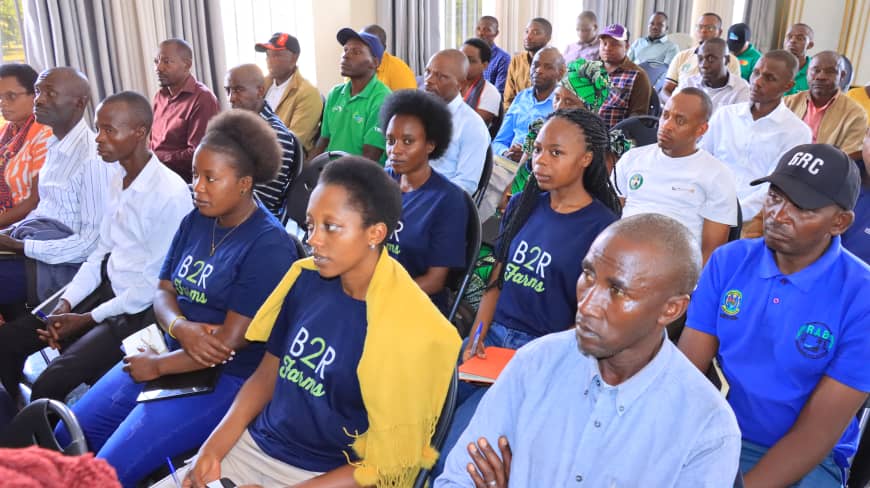
The call was made on September 1, 2025, during a seasonal planning meeting that brought together district leaders and agricultural partners to assess ongoing preparations and to chart strategies for maximizing harvests despite challenging weather conditions.
Low Rainfall Forecast for Kirehe
The Rwanda Meteorology Agency (Meteo Rwanda) recently announced that rains in Kirehe District will begin between September 29 and October 6, 2025. The total rainfall is projected to range between 300 and 400 millimeters; a significantly lower level compared to other parts of the country. This poses a challenge for farmers in the district, which is already known for its vulnerability to prolonged dry spells.
Calls for Irrigation and Fertilizer Use
Jerome Hitayezu, Head of Land Husbandry and Irrigation Research & Tech. Transfer Department at RAB stressed the need to maximize production through smart practices. He encouraged the use of organic fertilizers and urged that priority be given to farmland located near rivers, lakes, and irrigation schemes.
“We must mobilize farmers to plant early and make good use of organic fertilizers. Special attention should be given to areas close to water sources. Kirehe has a unique advantage, as we receive significant water flows from the Northern Province and other regions, which can be harnessed for irrigation. But while we have this opportunity, we also face the constant threat of drought. That is why every piece of land near water should be cultivated. Local leaders must support farmers to ensure productivity increases,” Hitayezu said.
District Leadership Speaks Out
Kirehe District Mayor, Bruno Rangira, confirmed that preparations for the new season are well underway. However, he acknowledged that the expected low rainfall makes it necessary to accelerate planting and focus on irrigable land.
“We must act early by planting crops before the rains end so that we can secure a good harvest. With rainfall expected to be limited, we have to intensify efforts in irrigated zones and maximize the use of land along rivers,” Rangira explained.
Crops Planned for the Season
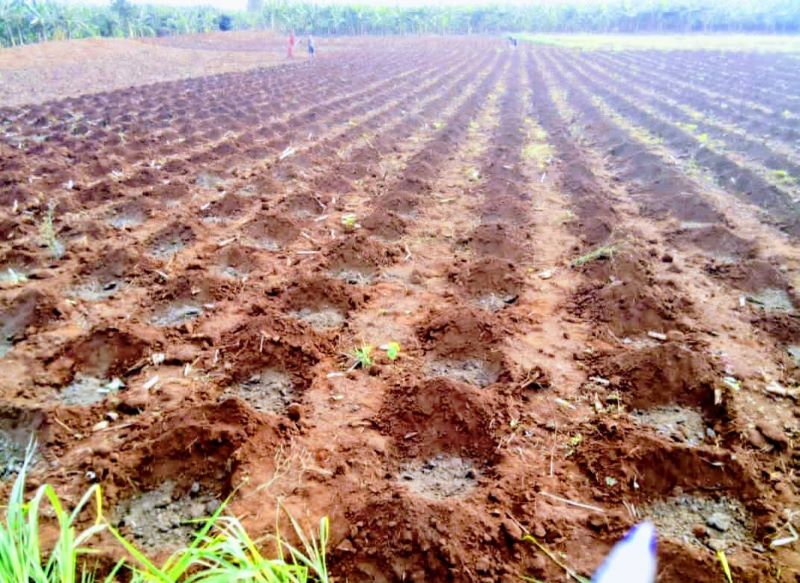
According to the district’s agricultural plan for the 2026A season, the following areas will be cultivated: Maize: 25,005 hectares, Beans: 9,286 hectares, Cassava: 800 hectares, Soybeans: 215 hectares, Rice: 816 hectares
In total, 35,217 hectares of farmland will be cultivated across the district. Authorities say that with early preparation, better irrigation, and fertilizer use, these areas can yield enough to strengthen food security and boost household incomes.