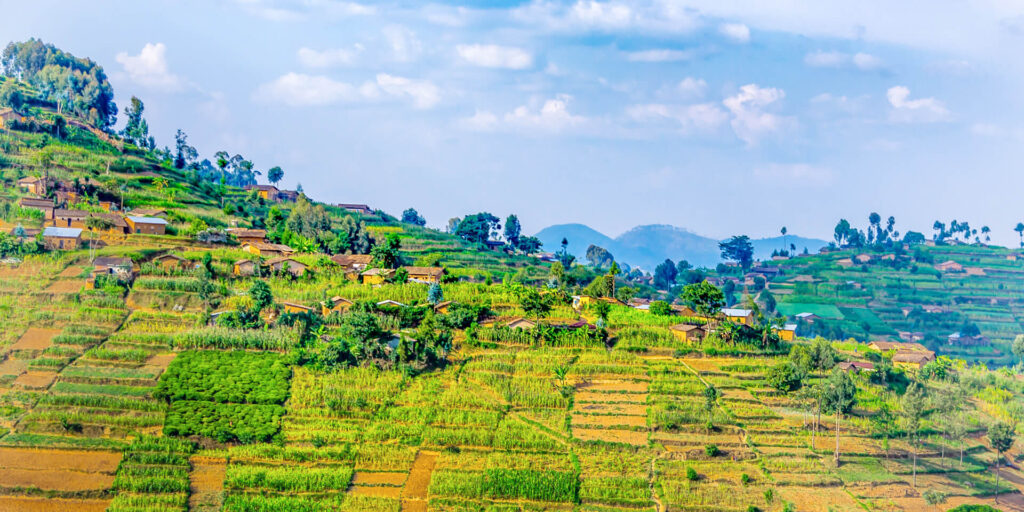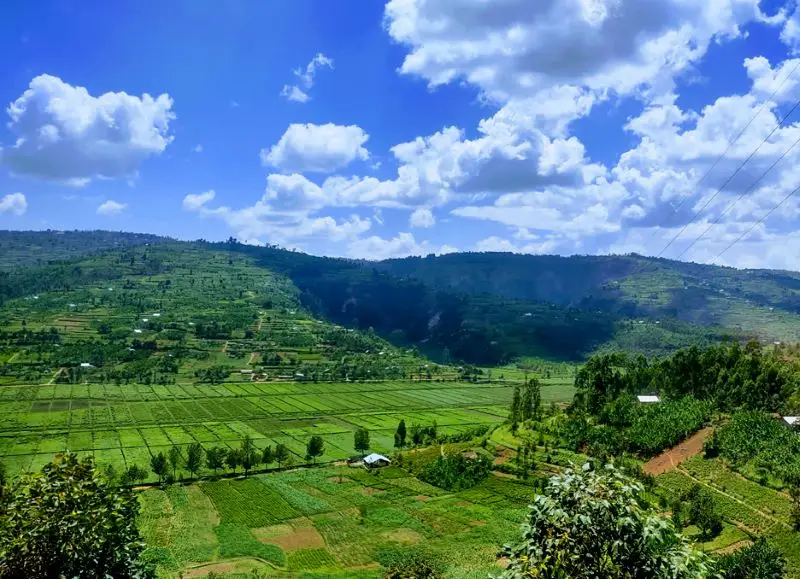
The Rwanda National Land Center (RLNC) has revealed that only 15% of the country’s total land area is designated for settlement. They emphasize that the best scenario would be to reduce the amount of land used for residential purposes wherever possible.
The growing demand for housing and its impact on land use.
With the increasing population, there is a growing demand for real estate, particularly housing, which results in an expansion of residential areas. This phenomenon contributes to a higher percentage of land being used for housing, which has implications for the remaining land resources in the country.
Insights from Rutagengwa Alexis, Head of Land Use and Planning who heads the Land Use and Planning Department at RLNC, spoke during Kubaza bitera kumenya at RBA aired on July 27th, 2025. He noted that while land can be categorized for settlement, agriculture, and other uses, the main challenge lies in how this land is used in practice. Proper land use planning and adherence to national policies are crucial for sustainable land management.
“Land suitable for settlement, agriculture, and other uses should be planned properly to avoid conflict between these purposes. Settlement areas are currently restricted to just 15% of the country’s total land area. Of the remaining land, 50% is allocated for agriculture, and forests occupy no more than 30%.” He stated.
Future vision for urban and agricultural development.
Rutagengwa further emphasized that if local governments and citizens adhered to the land use master plans, urban development would be centralized in specific regions, with sufficient land left for agricultural activities. He pointed out that this approach would allow both urban areas and agricultural zones to develop in harmony over time. He suggested that in 30 years, Rwanda could have clearly defined urban centers with well-established agricultural zones, facilitating sustainable development.
Current issues with land use planning.
Rutagengwa also acknowledged that in many areas across Rwanda, the land use master plans are not being effectively implemented. This has led to the improper use of land, resulting in the violation of intended land allocations. Proper enforcement of these master plans is needed to prevent misuse of agricultural land and to promote balanced urbanization.
Rwanda’s land area and agricultural potential.
Rwanda covers a total area of 26,338 square kilometers. According to the Ministry of Agriculture and Animal Resources, around 1.8 million hectares (equivalent to 73% of the country’s total land area) are suitable for agricultural activities. This highlights the importance of managing agricultural land responsibly to ensure food security and maintain the country’s agricultural output.