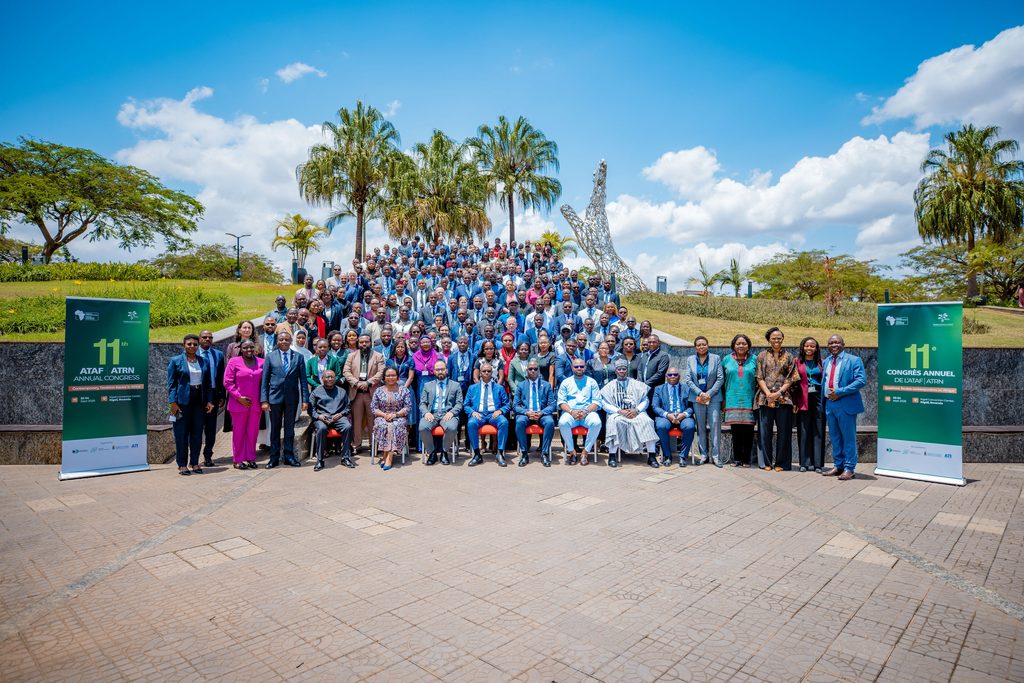
Rwanda is hosting the 11th Annual Congress of the African Tax Research Network (ATRN), bringing together policymakers, tax administrators, researchers, academics and development partners to discuss emerging taxation challenges and ways of strengthening domestic revenue mobilization across Africa.
The three-day congress is organized by the Rwanda Revenue Authority (RRA) in partnership with the African Tax Administration Forum (ATAF) through the African Tax Research Network. The meeting is being held under the theme “Contemporary Taxation Issues in Africa.”
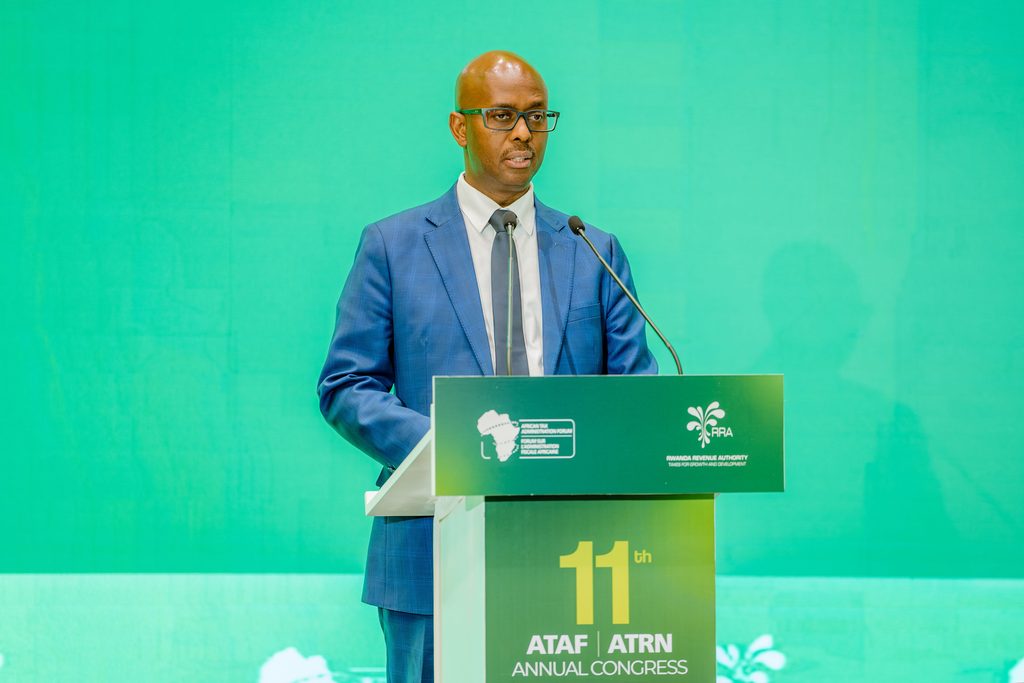
Opening the congress on Tuesday, Yusuf Murangwa, the Rwanda’s Minister of Finance and Economic Planning, stressed the importance of research and reliable evidence in developing effective tax policies. He said African countries need stronger research capacity to understand their tax systems, identify gaps and evaluate whether reforms are delivering the intended results.
“Good tax policy, like good statistics, depends on evidence gathered honestly, tested rigorously, and used without flinching from what it shows,” Murangwa said
The minister said evidence should not only inform the design of tax reforms but should also be used to assess their impact after implementation. He argued that governments need accurate information to identify weaknesses within their tax systems and determine where reforms are most needed.
“No finance ministry can close a tax gap it has not measured, formalize an informal sector it has not characterized, or reform an incentive regime whose cost it does not know,” He said
His remarks come as African countries continue to face growing demands for public financing to support infrastructure, social services and economic development. With many countries seeking to strengthen domestic sources of financing, improving tax collection has become an important part of fiscal policy discussions across the continent.
The Kigali congress provides a platform for researchers and policymakers to examine these issues and discuss how findings from academic and policy research can be translated into practical tax reforms.
According to the Rwanda Revenue Authority, the 2026 congress received 190 research-paper submissions, compared with 120 submissions in 2024. The increase reflects growing interest in African-led research on taxation and public finance.
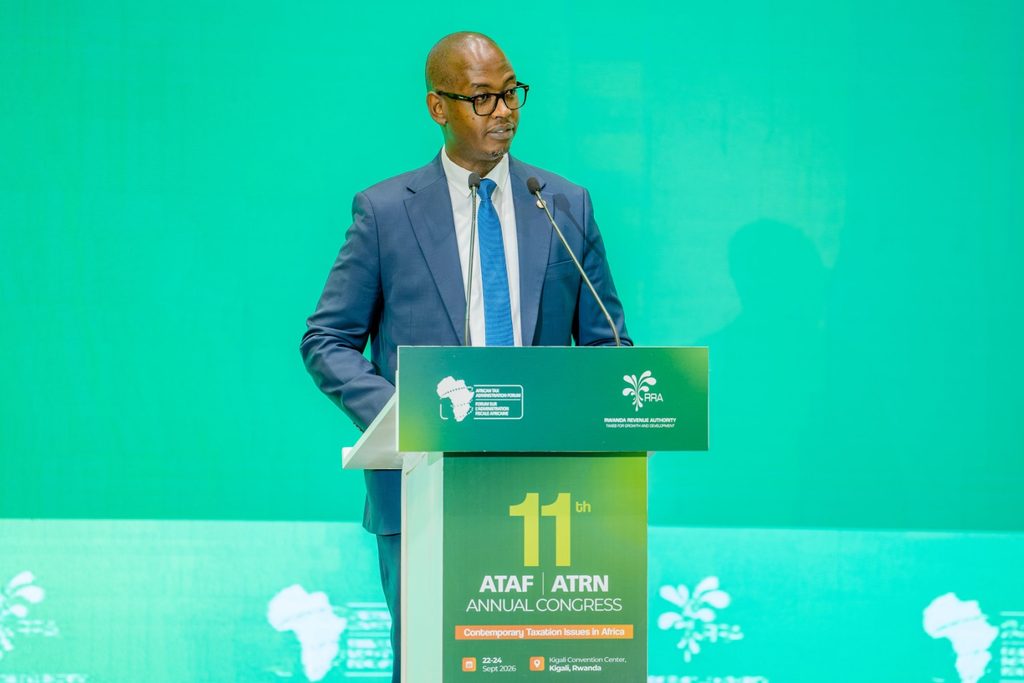
Ronald Niwenshuti, the Commissioner General_Rwanda Revenue Authority highlighted that RRA had exceeded its target by 104.2% with a 27.7% year-on-year growth in the fiscal year ending that June, crediting this performance to economic growth, robust VAT collection, expanded digital services, smarter recovery measures, and solid tax policies ultimately, framing this growth as compliance-led, data-driven, and built on taxpayer engagement.
The studies being presented cover a wide range of issues, including tax administration, informal economic activity, cross-border taxation, tax disputes, tax incentives and access to reliable data. The organizers say the objective is to strengthen the connection between researchers and policymakers so that evidence generated in Africa can contribute more directly to tax policy decisions.
The African Tax Research Network was established in 2013 following an African Academic Forum convened by ATAF in Nairobi. Its purpose is to strengthen African capacity in tax research, particularly in tax policy, tax administration and tax law, while encouraging closer cooperation between researchers and government institutions.
Technology and digitalization are also among the major issues being discussed during the Kigali meeting. The rapid expansion of digital payments, digital businesses and artificial intelligence is changing the way tax authorities interact with taxpayers and administer tax systems.
The Rwanda Revenue Authority says artificial intelligence and digital technologies present opportunities to improve taxpayer services, compliance and revenue collection. At the same time, their use raises questions about data protection, governance, fairness and the responsible use of technology.
The discussion is particularly relevant as tax administrations across Africa increasingly adopt digital systems for taxpayer registration, tax payments, compliance monitoring, risk assessment and audits.
Researchers and policymakers are therefore examining how technological developments can be used to improve tax administration while ensuring those taxpayers’ rights and relevant safeguards are maintained.
Among the researchers presenting at the meeting is Nigerian journalist and policy analyst Arabinrin Aderonke, whose research focuses on the relationship between communication and taxation in Africa.
“The Impact of Communication on Taxation in Africa will explore how strategic communication can strengthen taxpayer awareness, build trust, improve voluntary compliance and support domestic revenue mobilization across the continent,” Aderonke highlighted ahead of the congress.
Her research adds another dimension to the taxation debate, which often focuses on tax rates, legislation, enforcement and administrative capacity. Effective communication can also influence taxpayers’ understanding of their obligations and their willingness to comply voluntarily.
For Rwanda, the congress is also an opportunity to share its experience in domestic revenue mobilization with other African countries.
The discussions in the congress therefore go beyond taxation as a matter of revenue collection. They also focus on how governments can design efficient and sustainable tax systems while responding to changes in technology, international trade and the global economy.
As the 11th Annual Congress of the African Tax Research Network continues through September 24, participants are expected to exchange research findings, examine emerging tax challenges and discuss practical approaches that African countries can use to strengthen their revenue systems.