


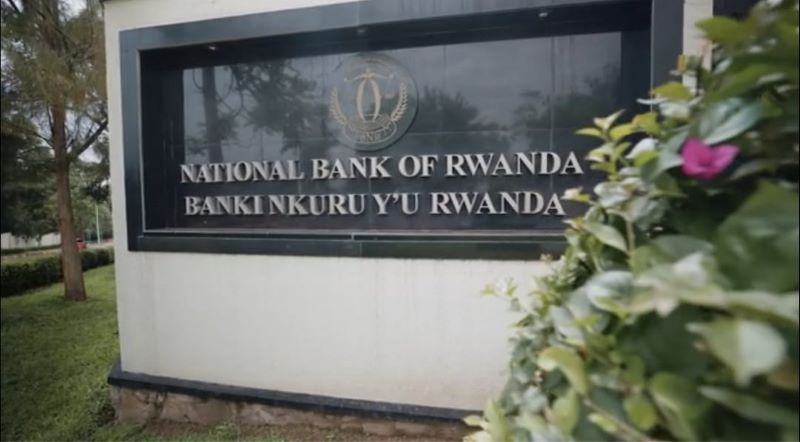
The National Bank of Rwanda (BNR) is calling on Rwandans to embrace a culture of making payments through digital technologies, noting that such methods are secure and have great potential to accelerate economic development.
Micro, Small and Medium Enterprises (MSMEs) count 98% of all companies in Rwanda and provide employment to more than 2.5 million people, according to statistics from the Ministry of Trade and Industry.
Speaking to the media, Adeline Mukashema, an officer at the National Bank of Rwanda in the Payment Systems Supervision Department, said that Rwanda now has a wide range of digital payment options, including Mobile Money, Internet Banking, and card-based payment systems for both domestic and international transactions unlike in the past when cash was the primary means of payment.
She explained that these systems have reached a commendable level of maturity.
“Considering where we came from, when we relied solely on cash, and where we are today with Mobile Money, Internet Banking, and card payments that can be used both locally and internationally I believe this is a very encouraging milestone.” She highlighted.
Mukashema added that BNR, as the institution responsible for regulating and setting rules for payment systems, works to ensure that users receive fast and efficient services, enabling them to pay anyone, anytime.
“This is a major step forward because people no longer need to line up at banks or financial institutions to make payments. You can do it from home, whether you are paying someone within Rwanda or abroad.” She noted.
She further revealed that BNR is also planning to introduce a digital currency, which is currently under consideration, and which is expected to further strengthen digital payments in Rwanda.
“Yes, it is still at the feasibility stage, but once implemented, it will add value to the payment ecosystem in Rwanda. There is also ongoing collaboration with international systems, as Rwandan banks continue to integrate with other banks across Africa, COMESA, and beyond.” She added.
Mukashema emphasized that digital payment systems are secure, highlighting the measures in place to educate the public on safeguarding their personal identification numbers (PINs), bank cards, and mobile phones, as well as the collaboration with regulatory authorities responsible for cybersecurity. She stressed that ensuring security is a continuous process.
“Yes, security is assured, but it is an ongoing effort. Payment systems are constantly evolving, with new technologies being introduced. Our first priority is to educate citizens on how to protect their PINs, devices whether mobile phones or bank cards and confidential information, and to avoid sharing such details with others.” She explained.
She added that BNR works closely with authorities responsible for cybersecurity regulations and continuously monitors whether financial service providers comply with these rules.
“We also set security standards and conduct assessments to strengthen system safety, ensuring that payment service providers adhere to the established regulations.” She spoke.
As the world rapidly advances in the use of technology, some businesses are still lagging behind, a situation that significantly hinders their growth and overall development.
While some of these enterprises have begun using modern accounting systems such as QuickBooks, others continue to rely on paper-based methods or basic technologies in their day-to-day operations, including inventory management and accounting.
Story by Eloi Isengwe