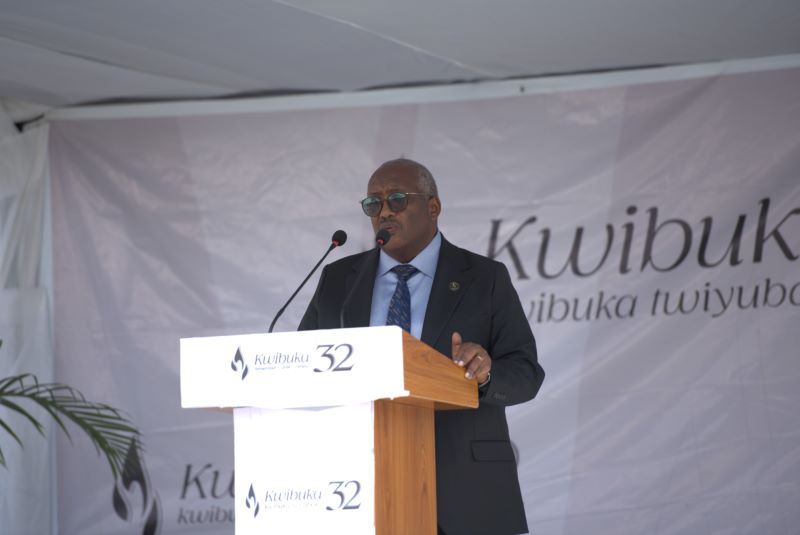
Senator Prof. Jean Pierre Dusingizemungu has urged the University of Rwanda to recruit individuals with extensive knowledge and experience in Rwanda’s history as part of ongoing efforts to preserve and properly teach the history of the 1994 Genocide against the Tutsi, regardless of their original academic background.
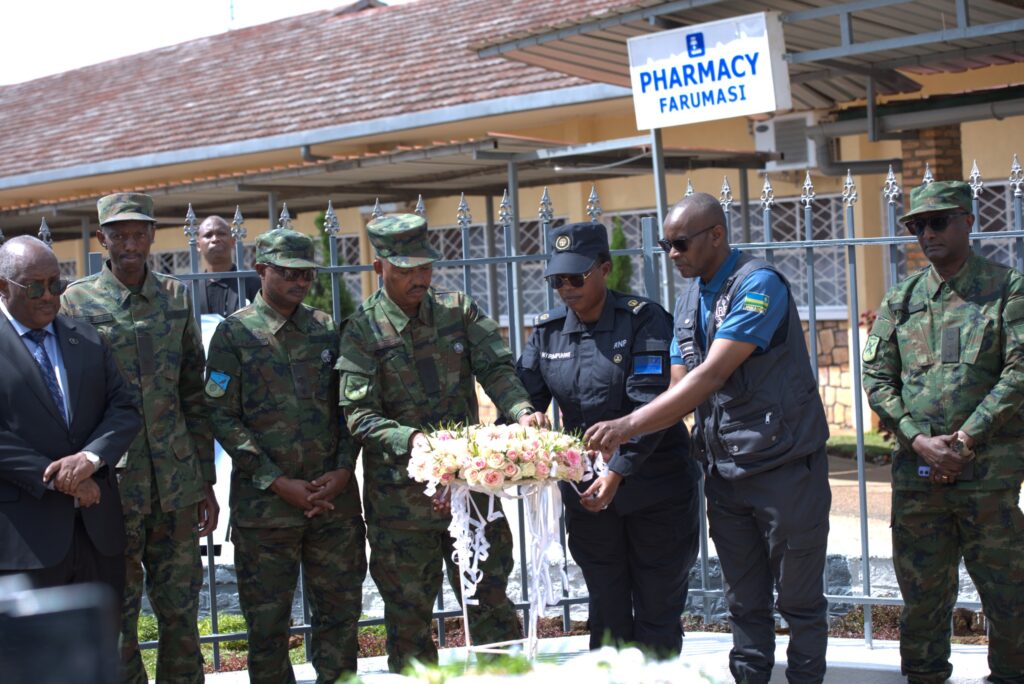
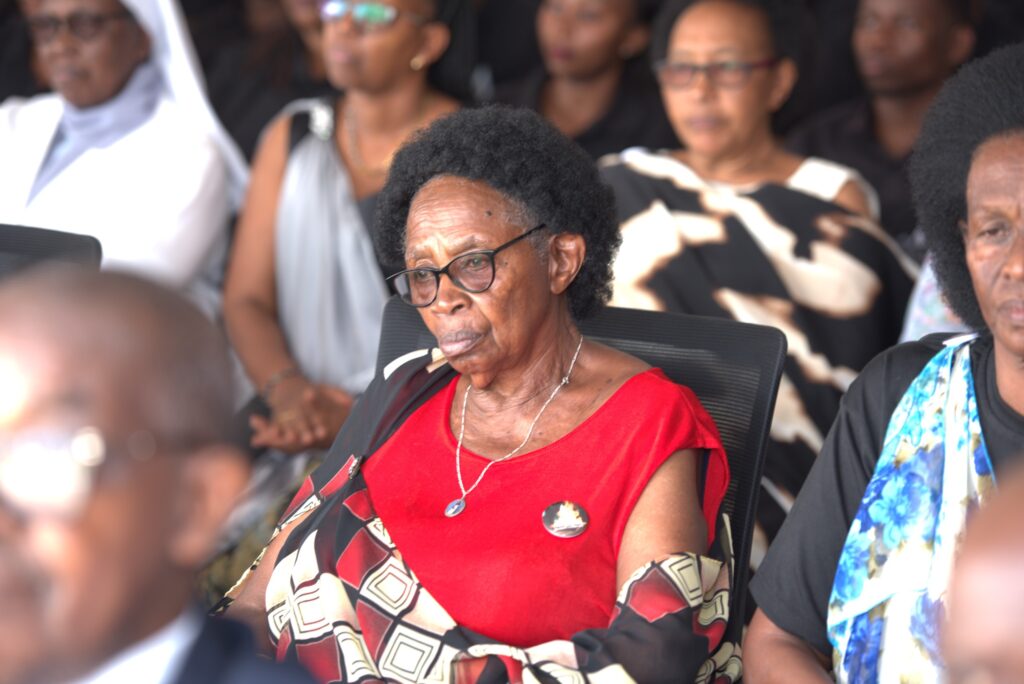
He made the remarks during the 32nd commemoration of the 1994 Genocide against the Tutsi held at the University Teaching Hospital of Butare (CHUB), where victims killed at the hospital during the genocide were remembered. Those commemorated included hospital employees, patients, caregivers, and people who had sought refuge at the facility before being killed.
During the commemoration, Senator Dusingizemungu cited Ambassador François-Xavier Ngarambe as an example of an individual whose expertise and research on genocide history could greatly benefit academic institutions. He praised Ngarambe’s recently published book titled “Le génocide contre les Tutsi du Rwanda : Conséquence inéluctable des politiques criminelles et des crimes politiques de 1959 à 1994.”
The book explains that the 1994 Genocide against the Tutsi was not a spontaneous event, but rather the result of decades of divisive politics, hatred, and discrimination that began in 1959. It highlights the role played by the government of the time, the Interahamwe militia, and extremist media outlets such as RTLM in spreading genocide ideology. The author also examines the failure of the international community to intervene in time and emphasizes the importance of teaching accurate history and combating genocide denial to prevent such atrocities from happening again.
Senator Dusingizemungu said individuals like Ambassador Ngarambe, despite having studied economics, possess exceptional expertise in genocide history and should be integrated into the University of Rwanda to support historical research and education.
“Ambassador François is an excellent historian even though his academic background is in economics. Through his research and writings on the Genocide against the Tutsi, he has demonstrated that he would make one of the best teachers of Rwanda’s history,” the senator said.
He further called on leaders of the University of Rwanda to create special academic positions for experts like Ngarambe and ensure they are given contracts and salaries that reflect their value and contribution.
“Bring him to teach at the university, but do not treat him like an ordinary lecturer. Offer him a special contract and appropriate remuneration. Together with others like him, this is how we can strengthen serious research on our history,” he added.
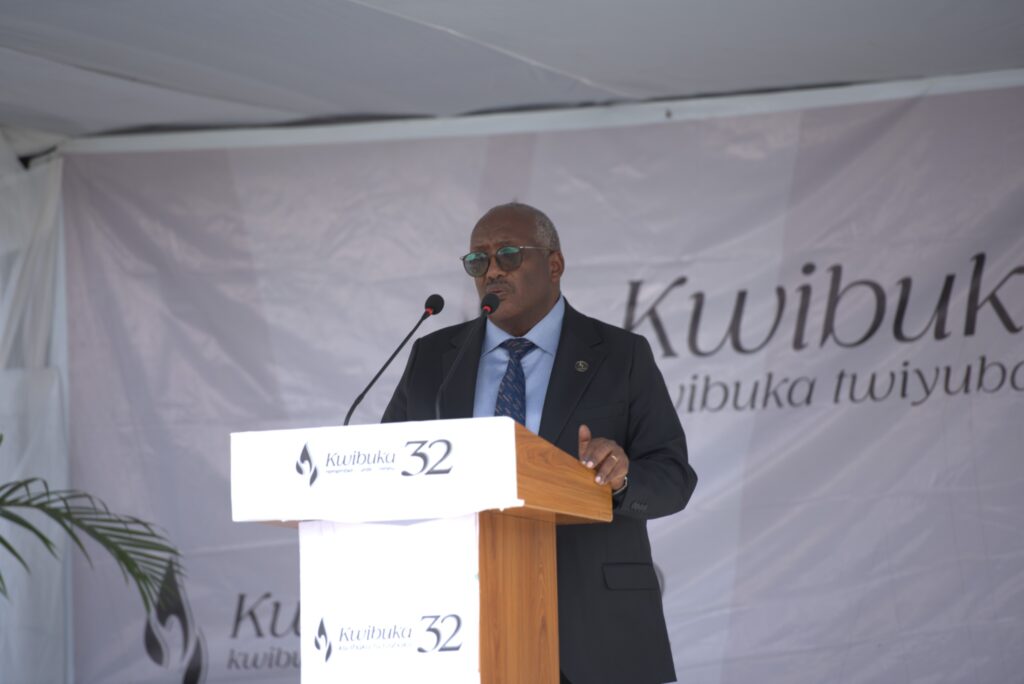
Dr. Christian Ngarambe, the Director General of CHUB, said the hospital continues to reflect on the horrific events that occurred there during the genocide, when some medical personnel participated in the killing of innocent people, including staff members, patients, and refugees who had sought shelter at the hospital.
He noted that the tragedy serves as a powerful lesson for today’s healthcare professionals on the dangers of hatred, discrimination, and division.
“The killings that took place in this hospital remain a painful reminder of the consequences of hatred and the betrayal of humanity. As healthcare providers, we must continue educating younger generations about the roots of genocide, how it was planned and executed, and the dangers of genocide denial and trivialization,” he said.
Esperance Munozayire, a medical professional working at CHUB, said the hospital now promotes teamwork, unity, and national values aimed at preventing genocide ideology.
“At CHUB, we work together as one team, guided by unity and mutual respect, to ensure that our hospital, the health sector, and the country continue moving toward sustainable development,” she said.
According to available statistics, 59 medical doctors were convicted of genocide-related crimes, of whom 25% committed those crimes at CHUB during the 1994 Genocide against the Tutsi. In addition, among nurses convicted for genocide crimes, 79% were implicated nationally, while 31% of them committed those crimes at CHUB.