


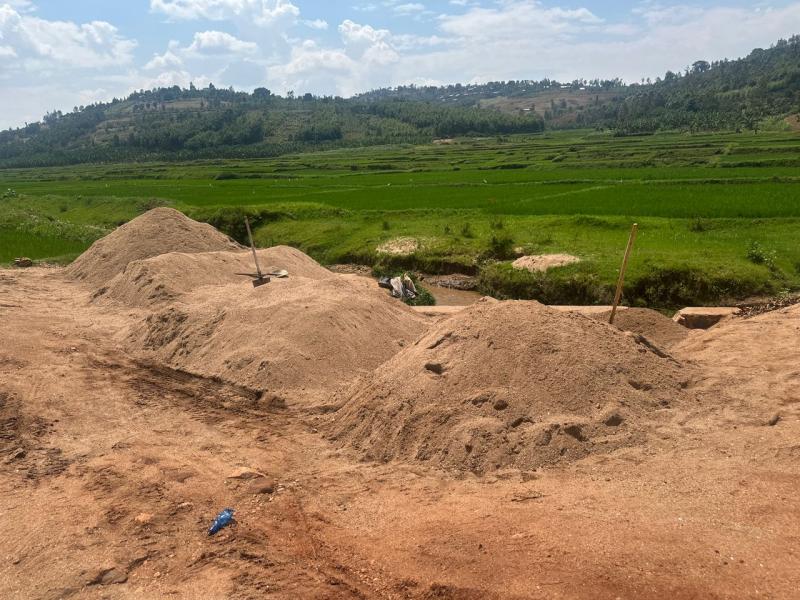
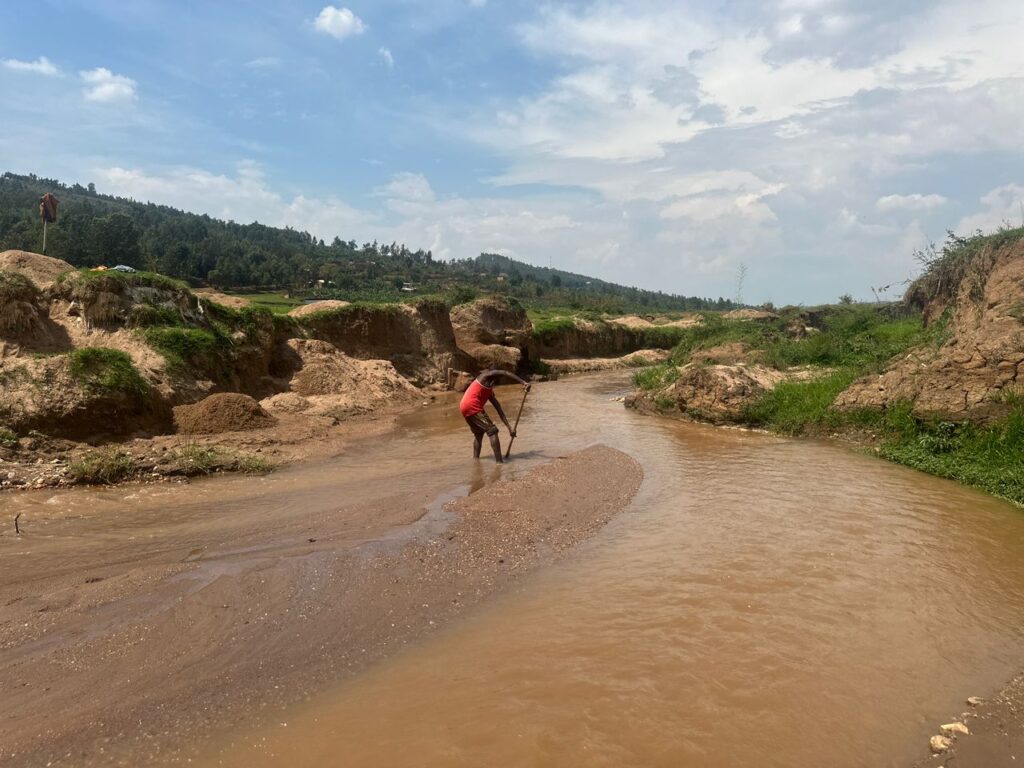
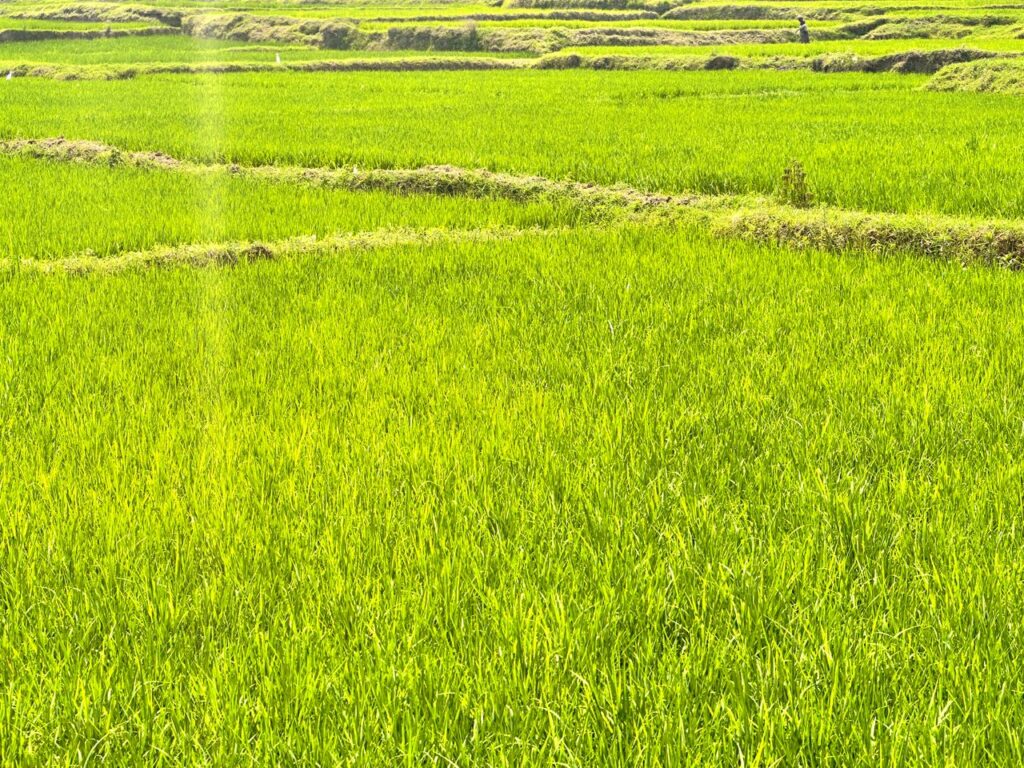
Residents who extract sand from Ngiryi Marshland, located between the sectors of Musha and Ndora in Gisagara District, say the activity helps protect rice farming because it prevents sand from blocking water channels, allowing water to flow properly and crops to thrive.
Nsanzabaganwa Damascene, who has been extracting sand from this marshland for more than four years, said that without this practice, sand would accumulate in irrigation channels and cause water to overflow into the rice fields, damaging crops.
“We have learned that removing sand is very important. If we don’t do it, water overflows into the rice fields and destroys crops. The money we earn from sand extraction helps us pay for community health insurance, form savings groups, and cover school fees for our children.” He spoke.
Noheli Alexis, a resident of Kavumu Village in Nyeranzi Cell, Gishubi Sector, also noted that removing sand has helped them protect their crops.
“If we don’t remove the sand, it fills the fields and water floods the crops. Now, we benefit from it because it prevents losses and gives us income to support our families.” He said.
From the farmers’ side, Nkeramugaba Vincent, who lives in Nkindi II Village, Mukande Cell, Ndora Sector, said the activity plays a major role in protecting rice and other crops.
“When water channels are filled with sand, the water overflows into the crops. By removing the sand, water flows smoothly, and those involved also earn money to improve their livelihoods.” He explained.
Jean Paul Habineza, the vice mayor of Gisagara district in charge of economic development, said the area where sand is extracted is not considered a mining site, but rather a community-led initiative to solve agricultural challenges in a safe and sustainable way.
“This is a community-driven activity that helps prevent the negative effects sand used to have on farming. Relevant authorities regularly monitor the activity to ensure it does not damage infrastructure, such as the bridge connecting Musha and Ndora. The bridge is repaired and maintained every year.” He stated:
In Gisagara District, over 85% of residents depend on agriculture and livestock for their livelihoods. The district has about 5,000 hectares of marshlands where rice, maize, beans, bananas, and vegetables are grown. Residents say that protecting these marshlands, including Ngiryi, is a key step toward sustaining productivity and improving their wellbeing.
Venuste HABINEZA.