


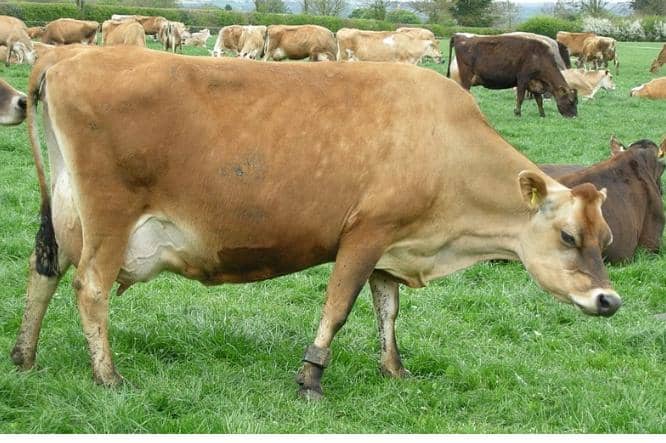
Livestock farmers in the Gatsibo and Nyagatare districts say that shifting from traditional cattle to Jersey cows has significantly improved their livelihoods by making a decent income from milk production.
Several farmers in these Eastern Province districts have upgraded their livestock practices by adopting Jersey cows, and they credit the Ongera Amata (Increase the Milk) project implemented by the Ripple Effect organization for helping them make the transition. As a result, they are now seeing much higher milk yields.
Marcel Hakorimana, a farmer from Kigasha Cell in Ngarama Sector, Gatsibo District, is one of those who made the switch to Jersey cows. He says the milk output is far better compared to what he used to get from local breeds.
He stated:
“To be honest, I was initially hesitant to keep Jersey cows because of their small size. I didn’t think they could produce more than five liters of milk a day, but that’s not the case at all, the milk yield has been impressive.”
He added:
“I’m very grateful for the Ongera Amata project run by Ripple Effect. They supported us in every way not only teaching us how to grow nutritious pasture but also helping us modernize our livestock farming practices.”

Marcel Hakorimana, a farmer from Kigasha Cell in Ngarama Sector, Gatsibo District
Silyvanie Mukandanga, another farmer, also emphasized that many had doubts about Jersey cows in the beginning. They appeared fragile, and people believed they wouldn’t produce much milk.
She said:
“We were late in recognizing the value of Jersey cows and had our doubts. But now we can confidently testify to their benefits, we’re happy with the milk we’re getting.”
She added:
“We’re encouraging other farmers who haven’t yet adopted Jersey cows to make the switch, because sticking with unproductive breeds leads to loss. Jerseys bring real profit and joy to the farmer.”

Silyvanie Mukandanga, another farmer
Jean D’Amour Ingabire, the coordinator of the Ongera Amata project under Ripple Effect, working in both Gatsibo and Nyagatare, said the project has already made a visible impact on local farmers.
He explained:
“Our goal is to increase milk production, just as the project name implies. We help farmers boost yields, and since the beginning, we’ve seen real changes. Farmers are now adopting improved livestock practices and growing pasture to feed their animals even during the summer season.”
Ingabire also noted that they continue to encourage farmers to switch to Jersey cows, urging them to move away from raising many unproductive cattle in favor of fewer, high yielding dairy cows.

Jean D’Amour Ingabire, the coordinator of the Ongera Amata project under Ripple Effect, working in both Gatsibo and Nyagatare
The Ongera Amata project works with around 5,000 farmers organized in groups and extends support to many others. Its main objective is to build professional livestock farming knowledge that leads to sustainable productivity. Initially planned for three years, the project may be extended based on the results achieved during this pilot phase.
Iradukunda Jean Damascene