On Rwanda’s hillsides, the future of farming is increasingly being shaped by climate change. Farmers face changing rainfall patterns, droughts, floods and soil erosion, while the country must continue producing enough food for a growing population. At the same time, agriculture contributes to greenhouse-gas emissions that drive global warming.
The scale of the sector makes this especially important. Rwanda had 2.2 million agricultural households in 2024, representing 65.3 % of all households, according to the National Institute of Statistics of Rwanda. About 3.6 million adults were engaged in agricultural activities. Agriculture contributed 20% of Rwanda’s GDP in the 2025/26 fiscal year, with the sector growing by 7%.
This means Rwanda cannot address climate change simply by producing less food. The focus is increasingly on producing more efficiently, sustainably and with greater resilience to climate shocks.
Rwanda’s challenge is part of a much larger global picture. The Food and Agriculture Organization (FAO) estimates that agri-food systems generated 16.5 billion tons of CO₂ equivalents in 2023, accounting for 32 % of human-caused greenhouse-gas emissions. About 8.1 billion tons came from crop and livestock production, while the remainder was linked to land-use change and activities such as processing, transport and retail.
Africa’s agri-food systems produced about 2.4 billion tons of emissions in 2023. However, there is evidence that agriculture can become more efficient. FAO estimates that the global emissions intensity of agricultural production fell by 25% between 2001 and 2023.
For Rwanda, this suggests that climate action does not necessarily have to come at the expense of agricultural production. The challenge is to produce more food while using land, water and other resources more efficiently.
Rwanda is putting policy and investment behind this approach. In December 2024, the Government launched the Fifth Strategic Plan for Agriculture Transformation, PSTA5, under the theme “Building Resilient and Sustainable Agri-Food Systems.” The strategy focuses on climate shocks, land scarcity, low productivity, post-harvest losses and access to finance.
In June 2025, Rwanda launched its Climate Smart Agriculture Investment Plan, targeting about 83,250 hectares for improved resilience and productivity. It also aims to connect approximately 170,200 farmers and 375 companies to climate-smart financing.
The investment approach reflects a broader shift: climate change is increasingly being treated not only as an environmental issue, but also as an agricultural and economic one.
Farmers Feel the Change
For farmers such as Mukamurigo Perpetue, who lives in Gasabo District, unpredictable weather is already affecting farming decisions. “I have noticed that the seasons are not as predictable as they used to be. Sometimes the rain comes heavily and washes away soil, and sometimes we wait for the rain and it does not come when we expect it,” says Perpetue.
She says protecting the soil has become increasingly important. Practices such as maintaining ground cover, planting trees and improving water management can help farmers deal with changing weather conditions.
“For me, protecting the soil is very important because the land is what gives my family food and income. If we lose the fertile soil, it becomes difficult to produce enough even when we have good seeds,” she added.
Perpetue also points to the need for greater support for farmers, particularly through training and affordable financing.
“We are willing to change our farming methods, but sometimes we need support to know which practices work best and to afford them,” she says.
One of the most immediate concerns is soil degradation. Rwanda’s steep terrain makes farmland particularly vulnerable to erosion, which can remove fertile topsoil and reduce productivity.
Conservation agriculture is one response. It uses practices that protect soil, maintain ground cover and improve water management. Rwanda held its first National Conservation Agriculture Symposium in March 2025. Under PSTA5, the country aims to increase land under conservation agriculture from 1,173 hectares in 2024/25 to 100,000 hectares by 2028/29.
Agro forestry can also help. Trees planted on farms can reduce erosion, improve water retention, provide fruit and fodder, and store carbon. These practices can therefore deliver both agricultural and environmental benefits.
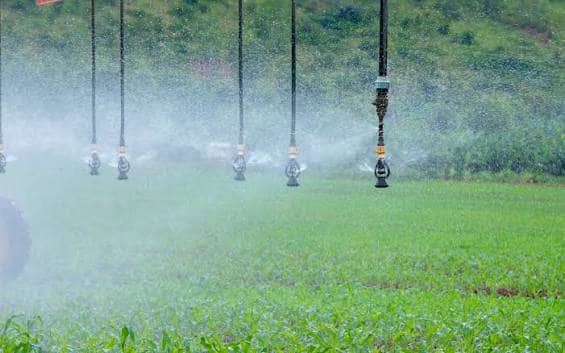
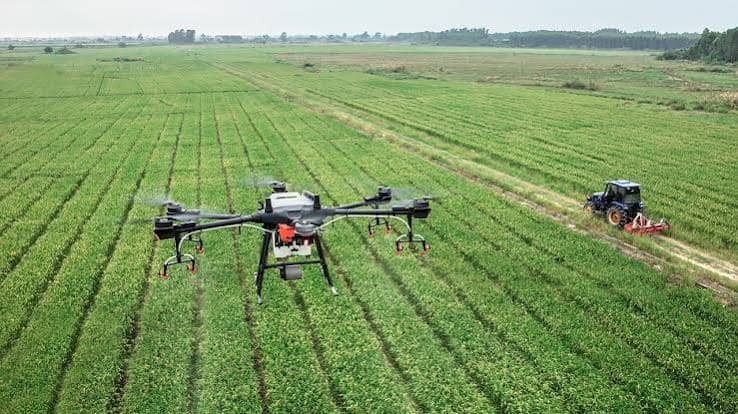
With agricultural land under pressure, increasing productivity is another key part of Rwanda’s strategy. During the 2024/25 financial year, irrigation infrastructure covered 74,375 hectares, while mechanization operations expanded to more than 100,000 hectares, according to MINAGRI.
A Farmer’s View on Productivity
For Mugemana Paul, a farmer living in Gasabo District, climate change is closely linked to the need to improve productivity.
“Rainfall has become difficult to predict, and this affects when we plant. A farmer can prepare the field at the right time, but if the rain changes, the harvest can still be affected,” Paul says.
Paul says better soil management, improved seeds and livestock management can help farmers adapt.
“I have learned that climate-smart farming is not only about protecting the environment; it is also about producing more from the land we already have,” he said.
The Government is also targeting higher yields for major crops. Average maize productivity is expected to increase from 2 tons per hectare in 2024 to 2.7 tons, while Irish potato productivity is targeted to rise from 8.5 tons to 14.7 tons per hectare.
In a recent interview with The New Times in September 2026, Solange Uwituze, Minister of State in the Ministry of Agriculture and Animal Resources, linked the productivity drive to the wider use of technology in agriculture.
“Technology will only transform agriculture if it reaches the ordinary farmer,” Uwituze said. She highlighted that the Government’s approach is to focus on technologies that have practical benefits for farmers rather than introducing technology for its own sake.
“Our approach is therefore not to introduce technology for its own sake, but to identify technologies that reduce farmers’ costs, increase productivity, improve access to information or reduce risk and then develop business models that make them affordable at scale,” She added
Uwituze also highlighted the use of digital tools to provide farmers with timely agricultural information.
“Rwanda is working towards an AI-enabled agricultural chatbot and interactive voice-response service that could provide advice on agronomic practices, pests, diseases and weather-related information.”
Higher yields could help Rwanda produce more food without continuously expanding cultivated areas. However, productivity gains need to be accompanied by responsible use of inputs. Efficient fertilizer application, improved seeds, soil testing and better water management can help farmers maintain production while reducing waste and environmental pressure.
The climate challenge also extends beyond crops. FAO estimates that livestock accounted for about 4.3 billion tons of CO₂ equivalent in 2023, making it the largest single component of global agri-food-system emissions.
Improving animal nutrition, breeding, animal health and manure management can allow farmers to produce more food while reducing emissions per unit of output.
Another issue is food that never reaches consumers. FAO estimates that activities before and after agricultural production generated 5.2 billion tons of CO₂ equivalent in 2023. Transport, processing, packaging and retail all contribute to food-system emissions. For Rwanda, reducing post-harvest losses therefore has both economic and environmental value. Better storage, processing and transportation can help farmers retain more of the value of their harvest while reducing the resources and emissions associated with wasted food.
There is no single practice that will make agriculture completely climate-neutral. Rwanda’s transition will depend on combining several measures: protecting soils, planting trees, improving irrigation, increasing productivity, managing livestock more efficiently and reducing losses throughout the food chain.