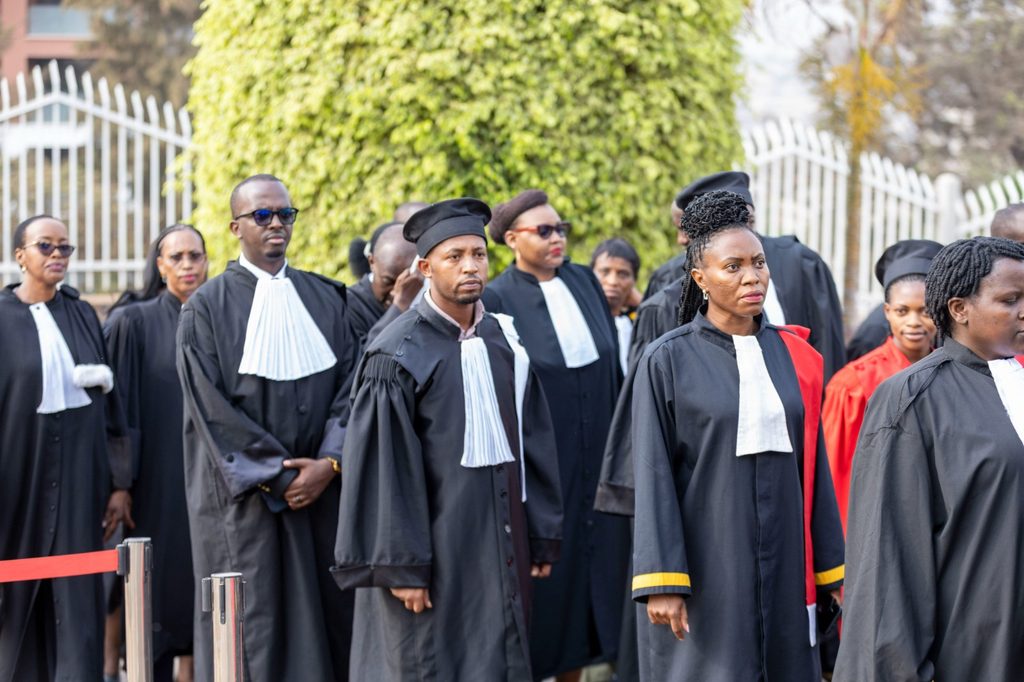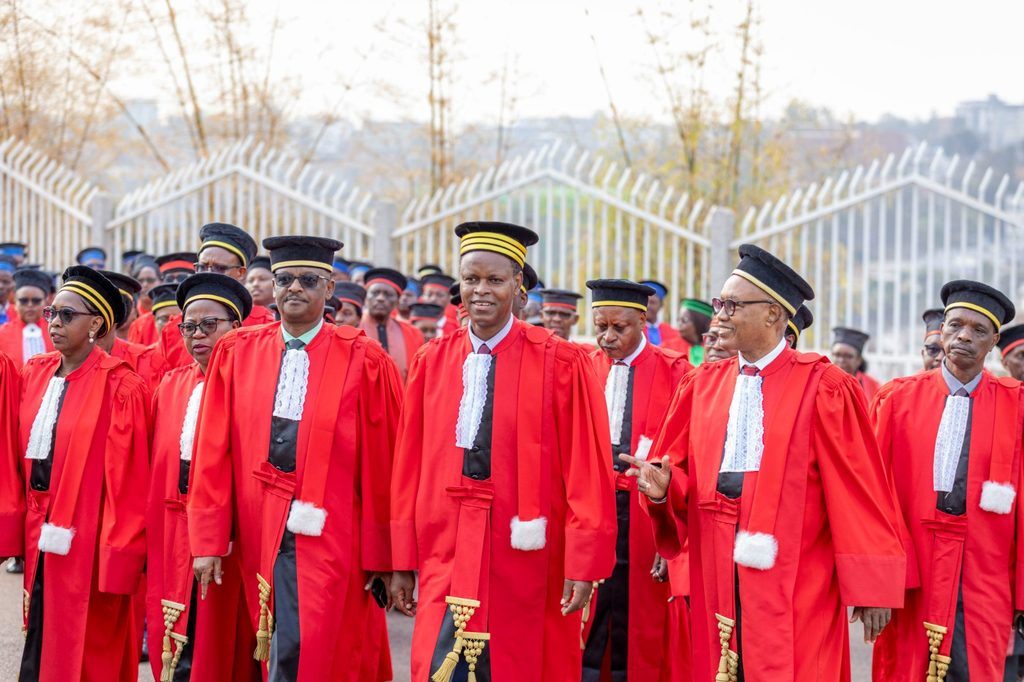
Rwanda’s judiciary is stepping up efforts to speed up case resolution, expand the use of technology and reduce the backlog of court cases, as more than 5,000 people received legal representation from lawyers during the 2025/2026 judicial year.
As Rwanda begins the 2026/2027 Judicial Year, justice sector institutions have highlighted key achievements from the previous year and outlined priorities aimed at improving the quality, efficiency and accessibility of judicial services. During the 2025/2026 Judicial Year, courts in Rwanda disposed of 123,027 cases, including 109,555 cases heard on their merits, representing 89 percent, and 13,472 cases related to provisional detention, accounting for 11 percent.
Me Moïse Nkundabarashi the president of the Rwanda Bar Association said one of the major achievements has been the continued improvement of legal aid services, particularly for people who cannot afford legal representation.
Bar Association has continued to strengthen its efforts to ensure that people in need of legal assistance, especially vulnerable and disadvantaged citizens, can access professional legal services.
More than 5,000 people were represented by lawyers in court during the previous judicial year, in a move aimed at helping citizens access justice and protect their legal rights.
During the 2025/2026 Judicial Year, courts received 109,417 cases, in addition to 54,278 cases carried over from the 2024/2025 Judicial Year. Courts went on to hear 109,555 cases on their merits during the year. Of these, 89,667 cases, or 82 percent, were resolved through ordinary litigation proceedings.
The figures highlight the substantial volume of cases handled by Rwanda’s courts as the judiciary continues to seek ways to shorten the time required to resolve cases and address the persistent challenge of case backlogs.
Rwanda also continued to cooperate with foreign jurisdictions in cases requiring evidence or testimony from people based in the country. According to Faustin Nkusi, spokesperson for the National Public Prosecution Authority, Rwanda sent more than 70 witnesses to testify before foreign courts during the previous judicial year.
The move forms part of Rwanda’s international judicial cooperation, particularly in cases where testimony or other evidence available in Rwanda is required in proceedings taking place in other countries.
For the 2026/2027 Judicial Year, the judiciary has set several priorities, including continued efforts to ensure that courts resolve cases in line with guidance and precedents established by higher courts.
The judiciary also plans to further expand the use of technology in the administration of justice, with the aim of making services more accessible to citizens and improving the efficiency of court operations. Justice institutions will also continue working with other relevant stakeholders to identify and address recurring issues that generate disputes, with the goal of resolving problems before they escalate into court cases.
Reducing the backlog of cases remains one of the judiciary’s key priorities. The target is to bring the case backlog to below 30 % by the end of the 2028/2029 Judicial Year, in line with the objectives of Rwanda’s Second National Strategy for Transformation (NST2).
The judiciary is also encouraging judges to adopt consistent approaches when handling cases involving similar legal issues. Officials say greater consistency in decisions involving similar cases can help citizens better understand and protect their rights, while also promoting predictability and coherence in the administration of justice.
As the 2026/2027 Judicial Year gets underway, Rwanda’s justice sector is placing renewed emphasis on faster case resolution, reducing case backlogs, expanding the use of technology and making judicial services more accessible to citizens, particularly those who are unable to afford legal assistance.