


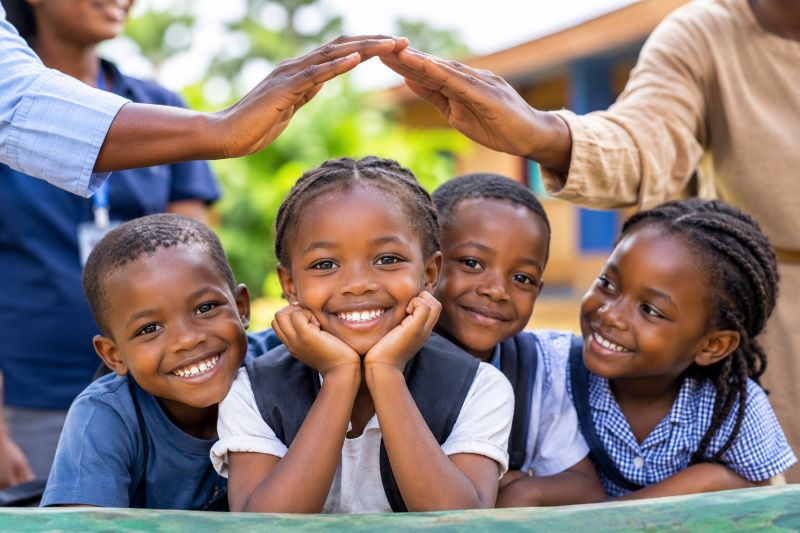
Children have the right to grow up in safe, supportive environments, free from abuse, neglect, exploitation and violence. However, ensuring their safety requires more than responding when harm occurs. It also requires organizations, families, communities and governments to establish effective measures to prevent abuse, identify risks and protect children from harm.
Two important concepts in this effort are child safeguarding and child protection. Although both share the goal of ensuring children’s safety, rights and well-being, they differ in their primary focus, responsibilities and practical application.
Understanding how these approaches complement each other is essential for institutions working with children, including schools, non-governmental organizations, faith-based institutions, youth centres and community-based organizations.
Understanding child safeguarding
Child safeguarding refers to the policies, procedures and practices that organizations put in place to prevent children from being harmed through their staff, volunteers, programs, activities or operations.
It requires organizations to identify potential risks, establish clear standards of conduct, train personnel and create accessible reporting mechanisms for concerns involving children’s safety.
Keeping Children Safe, an international child-safeguarding organization, emphasizes the responsibility of organizations to ensure their activities do not expose children to harm. This includes taking preventive measures and responding appropriately when safeguarding concerns arise.
For example, a school can implement child safeguarding measures by conducting appropriate background checks on staff, establishing rules governing interactions with pupils, training teachers to recognize potential risks and ensuring that children know how to report concerns.
Similarly, an organization providing services to vulnerable children should assess the safety of its activities, transport arrangements, accommodation and online communications. Child safeguarding therefore focuses on ensuring that organizations do not expose children to harm and that appropriate action is taken when risks or concerns are identified.
Understanding child protection
Child protection refers to the broader measures, services and systems established to prevent and respond to violence, abuse, neglect and exploitation affecting children in all settings, including homes, schools and communities.
It involves collaboration among government institutions, social workers, healthcare providers, law enforcement agencies, schools, families and community organizations. For example, when a child is identified as experiencing abuse at home, child protection measures may include assessing the child’s safety, reporting the concern to the appropriate authorities, providing psychosocial support and arranging safe care when necessary.
Child protection also involves strengthening family support systems, preventing harmful practices and ensuring that children affected by violence or exploitation receive appropriate assistance. Its primary purpose is to ensure that children at risk are protected and that those who experience harm receive appropriate support and intervention.
The United Nations Convention on the Rights of the Child reinforces this responsibility. Article 19 calls on governments to take appropriate legislative, administrative, social and educational measures to protect children from physical or mental violence, abuse, neglect, maltreatment and exploitation.
This demonstrates that protecting children requires coordinated action involving families, communities, institutions and public authorities rather than relying solely on the internal policies of individual organizations.
How child safeguarding differs from child protection
Although child safeguarding and child protection share the same overall objective, their approaches differ in scope and implementation.
Child safeguarding focuses particularly on preventing harm that may arise from an organization’s personnel, programmes, activities and operations. It requires institutions to assess risks, establish protective procedures and ensure that everyone working with children understands their responsibilities.
Child protection, on the other hand, encompasses a wider system of prevention, intervention and support for children facing abuse, neglect, exploitation or violence, regardless of where the harm occurs.
The difference can be illustrated through practical examples. When a youth center establishes a code of conduct for staff and volunteers, assesses risks during activities and creates a safe reporting mechanism, it is implementing child safeguarding measures. However, when a child experiencing abuse is referred to appropriate services and receives support to ensure their safety and well-being, child protection measures are being implemented.
Accountability also differs. Organizations are responsible for ensuring that their activities do not expose children to harm, while child protection requires cooperation among the institutions and professionals responsible for children’s safety, in accordance with applicable laws and procedures.
Despite these distinctions, the two approaches are closely connected. Effective safeguarding helps prevent harm within organizations, while child protection ensures that children at risk or those who have experienced abuse can access appropriate assistance and support.
Why both approaches matter
Child safeguarding and child protection are complementary approaches that work together to promote children’s safety and well-being. A strong safeguarding system can reduce the risk of abuse within an organization. However, preventive measures cannot eliminate every risk, making effective reporting and response procedures essential.
Similarly, child protection services depend partly on organizations and community members recognizing concerns and referring them to the appropriate authorities. Institutions working with children should therefore establish clear safeguarding policies, train staff and volunteers, assess risks regularly and ensure that children and caregivers know how to raise concerns safely.
When a concern arises, organizations should respond promptly, protect the child’s privacy, avoid actions that could expose the child to further harm and refer cases to appropriate professionals or authorities. The child’s safety and best interests should guide every decision. Children should also be able to report concerns without fear of punishment, discrimination or retaliation. Their views should be heard and considered in ways appropriate to their age, maturity and circumstances.
Creating a safe environment requires more than written policies. It involves building a culture in which adults understand their responsibilities, children know their rights and concerns are taken seriously.
Child safeguarding and child protection in Rwanda
In Rwanda, child safeguarding and child protection remain important in efforts to ensure that children grow up in safe and supportive environments. Children may face violence and abuse in homes, schools and communities, making prevention, reporting and effective responses essential.
Schools, faith-based institutions, youth programs and organizations serving vulnerable children can contribute by developing clear safeguarding policies, training personnel, promoting awareness of children’s rights and ensuring that concerns are referred through appropriate channels.
Families and community leaders also have an important role in promoting positive parenting, challenging harmful practices and encouraging children to speak to trusted adults when they feel unsafe. Government institutions and child protection service providers must ensure that children can access appropriate support and that concerns are addressed in accordance with national laws and established procedures.
Organizations working with children should ensure that safeguarding responsibilities are reflected in everyday practices, including how staff interact with children, how activities are organized, how complaints are handled and how concerns are referred for professional support.
Strengthening cooperation among institutions, families and communities can help identify risks earlier, improve responses to abuse and create environments in which children feel respected, heard and protected.
Building a safer future for every child
Protecting children is a shared responsibility that requires commitment from organizations, families, communities and government institutions. Child safeguarding helps ensure that organizations do not expose children to harm, while child protection provides the broader systems and interventions needed to prevent and address abuse, neglect, exploitation and violence.
Both approaches must be implemented effectively to create environments where children feel safe, respected and supported. Ultimately, keeping children safe is not only about responding when something goes wrong. It is also about creating systems, relationships and communities in which harm is prevented, concerns are taken seriously and every child can grow up with dignity, security and the opportunity to reach their full potential.