


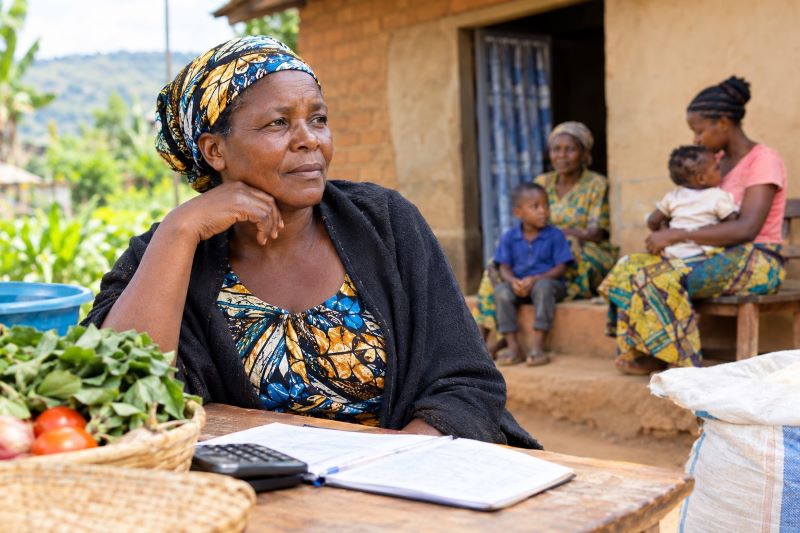
Women head more than one in four households in Rwanda, but many of these women are older, and their households are more likely to experience poverty than those headed by men, according to a report by the National Institute of Statistics of Rwanda (NISR).
The findings, published in the EICV7 Gender Thematic Report in 2025, draw on the Seventh Integrated Household Living Conditions Survey (EICV7) to examine differences in household leadership, poverty and living conditions.
The report found that women head 26% of households in Rwanda. Among female household heads, approximately 39% are aged 60 and above, compared with 16.5% of male household heads in the same age group.
This means that the proportion of female household heads aged 60 and above is more than twice that of their male counterparts, highlighting a notable age difference between the two groups.
An age gap with real-life implications
Growing older does not necessarily mean that household responsibilities diminish. For many people, managing a home continues to involve meeting daily expenses, supporting family members and making decisions about food, healthcare and other essential needs.
For older women who head households, the demands may vary considerably depending on their financial resources, family circumstances and access to support. Some may have stable incomes and relatives who can help, while others may have fewer resources available to meet household needs.
The age figures alone do not establish whether older female household heads face greater financial hardship than younger women. However, the findings become more significant when considered alongside the report’s figures on poverty and housing conditions.
Female-headed households record higher poverty rates
According to the report, 30.2% of female-headed households were classified as poor in 2023/24, compared with 26.6% of male-headed households.
The difference of 3.6 percentage points indicates that poverty affected a larger proportion of households headed by women than those headed by men.
In practical terms, this gap matters because household resources influence the choices families can make when paying for food, education, transport, healthcare and other necessities. Where money is limited, meeting one expense may mean postponing another.
However, the statistics do not mean that all female-headed households experience poverty, nor do they establish that having a female household head causes poverty. Rather, they point to a difference in poverty levels that warrants closer examination of the economic circumstances of women who lead households.
Income sources, employment opportunities, household size and access to social protection may all help explain why some families are more financially vulnerable than others.
Minister urges families to take responsibility for older people
The findings come amid calls for greater family and community support for older people, particularly those who continue to carry household responsibilities in later life.
Rwanda’s Minister of Gender and Family Promotion, Consolée Uwimana, emphasised the responsibility of families to care for older people, saying government assistance cannot replace the support and commitment of relatives.
Speaking during activities marking the International Day of Older Persons in Rutunga Sector, Gasabo District, on October 6, 2026, Uwimana highlighted the role children and grandchildren should play in supporting older family members.
“Caring for older people is not the responsibility of the Government alone. It is also the responsibility of families, especially children towards their parents. No government programme can replace the love and commitment of children and grandchildren,” she said
The Minister’s remarks highlight the importance of family support at a time when national statistics show that a substantial proportion of women heading households are aged 60 and above.
Housing conditions offer further insight
The NISR report found that 64% of female-headed households had beaten-earth floors, compared with 56.5% of male-headed households. Electricity was the main source of lighting for 44.5% of female-headed households, against 52% of households headed by men.
These figures offer another perspective on the living conditions of the two groups. Housing materials and access to electricity can help illustrate differences in household infrastructure, although neither indicator alone provides a complete picture of a family’s well-being.
When considered alongside the poverty figures, they suggest that female-headed households face differences in several aspects of living standards, not just household leadership.
What the findings mean for policy
The figures raise important questions about how social protection and poverty-reduction programmes respond to the circumstances of women who lead households.
For older female household heads, access to reliable income, pensions, healthcare and family support may be particularly relevant, depending on their individual circumstances. For others, employment opportunities and access to productive resources may be more important..
Beyond the numbers
The EICV7 findings provide a snapshot of household leadership and living conditions in Rwanda. They show that women head 26% of households, that female household heads are more likely than male household heads to be aged 60 and above, and that female-headed households have higher poverty rates. Understanding these differences requires looking beyond household headship to examine the resources available to women, the responsibilities they carry and the support they can access.