As climate change continues to disrupt traditional farming patterns, Rwanda’s Nyaruguru District is turning to hillside irrigation as part of efforts to help farmers maintain agricultural production despite increasingly unpredictable rainfall and prolonged dry spells.
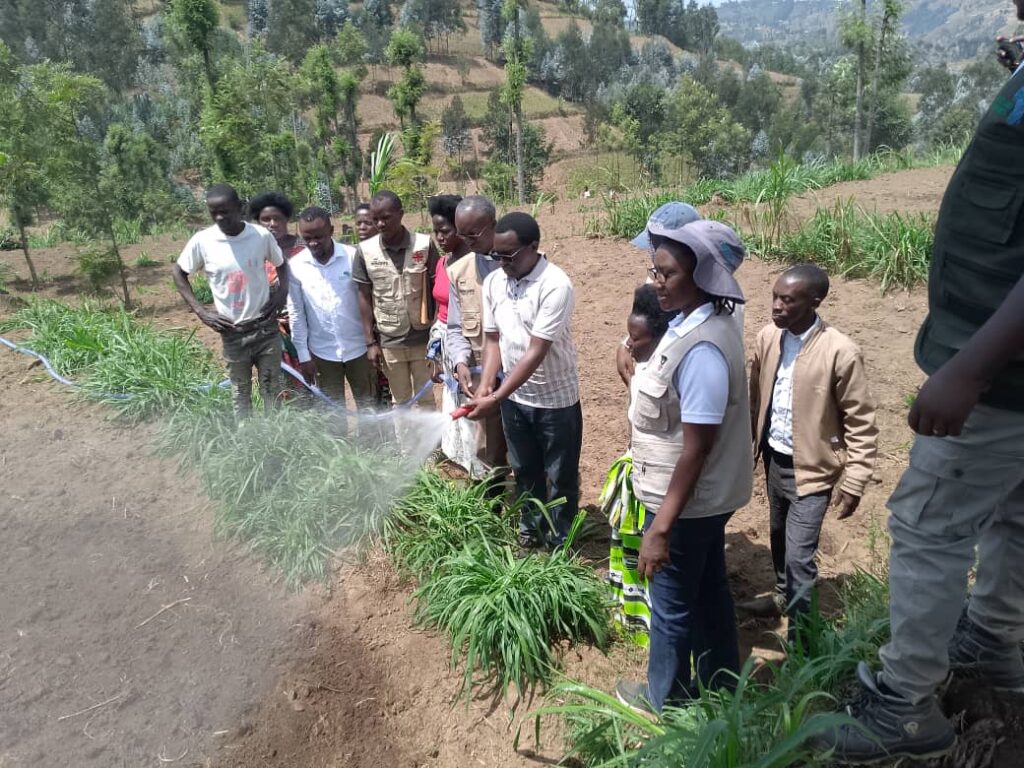
In Cyumuzi Village, Nyabimata Cell, Nyabimata Sector, a 23-hectare farming area has been equipped with a hillside irrigation system designed to provide farmers with a more reliable source of water for crop production.
The initiative is emerging at a time when farmers are increasingly being challenged by changing weather patterns. For generations, many rural households have depended heavily on rainfall. When rains arrived on time and in sufficient amounts, farmers could expect reasonable harvests. But delayed rainfall, prolonged dry seasons or excessive rainfall can disrupt planting seasons, reduce yields and increase pressure on household livelihoods.
For Nyaruguru, where agriculture remains one of the main economic activities, the challenge is not only to increase production but also to make farming more resilient to environmental changes.
Irrigation as a climate adaptation measure
The district administration says farmers need to adopt new approaches that reduce their dependence on rainfall and help them cope with the effects of climate change.
Dr Emmanuel Murwanashyaka, Nyaruguru District Mayor, says the district’s reliance on agriculture makes it necessary to introduce new technologies and practices that can increase productivity while helping farmers adapt to changing climatic conditions.
“Nyaruguru is largely an agricultural district, so it is important that we introduce new approaches in farming to increase production. Irrigation is one of those approaches,” He Said
For the mayor, irrigation is not simply a tool for increasing agricultural output. It is also an important climate adaptation measure, particularly as periods of drought and irregular rainfall become a challenge for farmers who depend entirely on rain-fed agriculture.
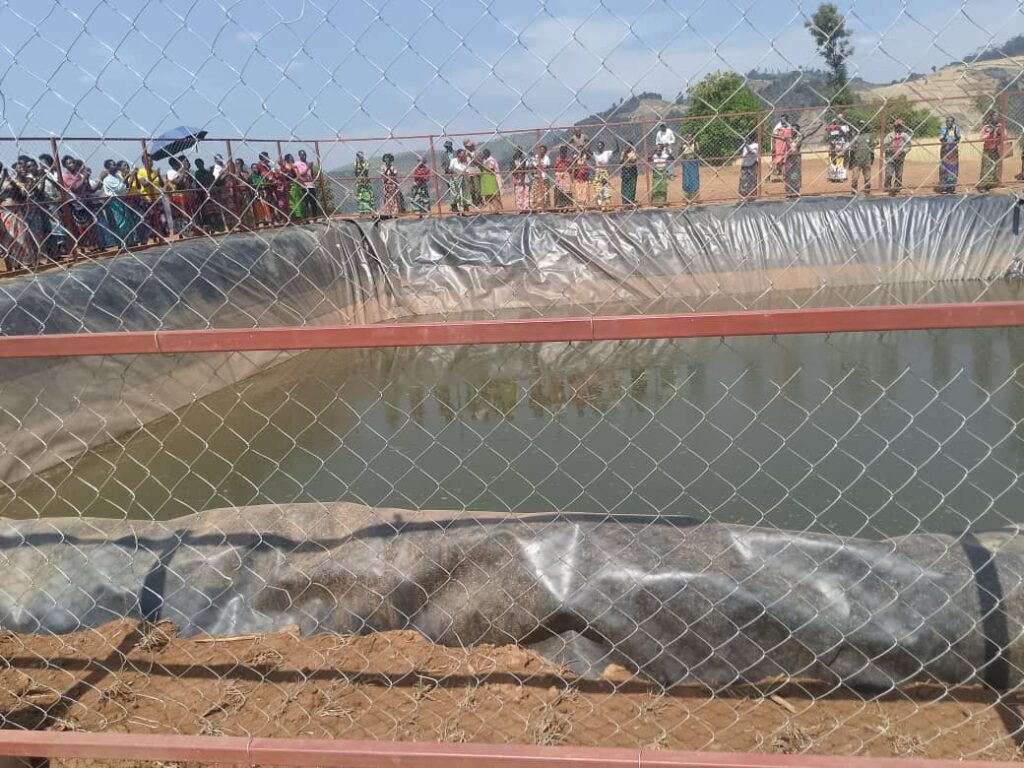
The irrigation system in Cyumuzi uses water conveyed through a pipeline from the Nyungwe forest area to farms located on the hillsides. The availability of water is expected to allow farmers to continue cultivating their land during dry periods, rather than suspending agricultural activities until the rains return.
From seasonal farming to year-round production
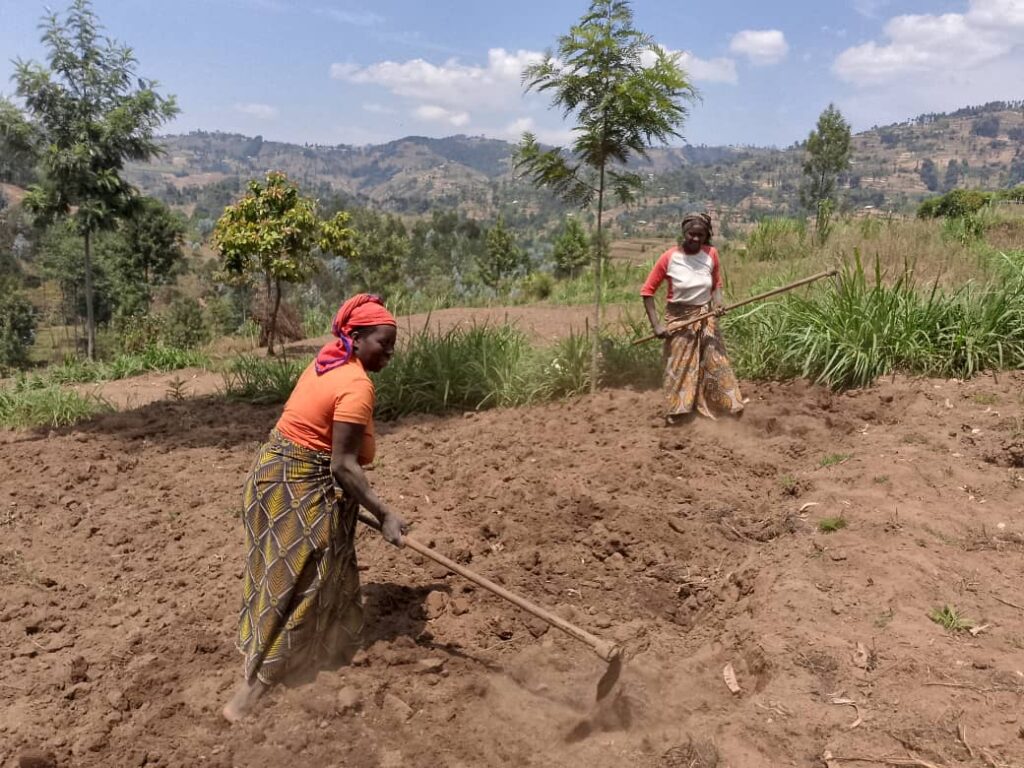
For farmers in Cyumuzi, the introduction of irrigation represents a significant change in the way they approach agriculture. Munyentwari Casien, a resident of Cyumuzi Village, says the dry season previously meant a significant reduction in farming activities because farmers lacked access to water.
“During the dry season, we had nothing to do because we could only cultivate two seasons. But after the irrigation system was brought closer to us, we will be able to farm throughout the year,” Munyentwari says.
He says the area has favourable conditions for growing crops such as potatoes and vegetables, but farmers previously had to obtain some of these products from other areas.
“Potatoes and different vegetables such as carrots and cabbages grow well here, but we used to get them from elsewhere. Having irrigation here will allow us to grow these crops ourselves and increase production,” he says.
The change could also create opportunities for farmers to diversify production and make better use of their land throughout the year.
Water security is becoming increasingly important
Mutezimana Verediyana, another farmer, says lack of water during the dry season was one of the main reasons farmers stopped cultivating their fields.
“During the dry season, many people could not farm because there was no water. But now that we have access to irrigation through the water pipeline from Nyungwe, we will be able to cultivate throughout the year,” Mutezimana says.
She believes reliable access to water will reduce farmers’ dependence on rainfall and allow them to plan agricultural activities more effectively.
The experience in Cyumuzi illustrates a broader environmental challenge facing agriculture: how to maintain food production while adapting to a changing climate and protecting the natural resources on which farming depends.
Irrigation alone is not enough
Although irrigation can help farmers cope with drought, Nyaruguru authorities say it must be combined with other environmental conservation measures. Among the measures being promoted is the construction and maintenance of terraces, particularly because much of the district’s farmland is located on hillsides.
Dr Murwanashyaka says farmers need to participate in terracing programmes so that irrigation and soil conservation can reinforce each other.
“Residents should participate in the construction of terraces so that hillside irrigation can also be implemented effectively. As climate change continues to be a challenge, we need to take additional measures to adapt to it,” he says.
Terraces can help reduce soil erosion, slow down surface water runoff and improve the retention of rainwater in agricultural landscapes. When combined with irrigation, they can contribute to more sustainable management of both soil and water resources. This is particularly important in mountainous areas, where heavy rainfall can quickly wash away fertile topsoil if farmland is not properly protected.
Protecting water sources while expanding irrigation
The irrigation project also highlights the importance of protecting the natural ecosystems that provide water for agriculture. Because the system relies on water from the Nyungwe forest area, maintaining the health of the forest and surrounding water catchments is critical to the long-term sustainability of the project.
Nyungwe is one of Rwanda’s most important natural ecosystems and plays a significant role in protecting biodiversity and regulating water resources.
This means that expanding irrigation cannot be separated from environmental conservation. Protecting forests, wetlands, water sources and watersheds is essential if communities are to have reliable water supplies in the future. As climate change affects rainfall patterns, the sustainable management of water resources is becoming increasingly important for both agriculture and rural livelihoods.
A changing climate requires changing farming practices
The situation in Nyaruguru reflects a wider need for farmers to adapt to changing environmental conditions. Traditional rain-fed agriculture can become increasingly vulnerable when rainfall patterns become less predictable. Farmers may face delayed rains, prolonged dry spells or intense rainfall events that can cause erosion, flooding and crop damage.
For this reason, climate-resilient agriculture requires a combination of approaches, including irrigation, water harvesting, soil conservation, terracing, protection of water sources and the adoption of farming practices suited to local environmental conditions. The goal is not simply to produce more food, but to ensure that agricultural production can continue without degrading the natural resources on which future production depends.
Nyaruguru wants the program to be expanded
Dr Murwanashyaka says the district wants the irrigation approach to reach other areas where conditions allow it.
“The plan is for this programme to reach other parts of the district because it is important for farmers to be able to cultivate throughout the year, including during the dry season, especially since many crops require water,” he says.
Expanding irrigation could help more farmers reduce their vulnerability to drought and rainfall variability. However, its long-term success will depend on responsible water management and environmental protection.
The experience of Cyumuzi shows that irrigation can do more than provide water to crops. It can change the relationship between farmers and the climate by giving them greater control over when and how they cultivate their land.
Building climate resilience from the farm level
For farmers in Cyumuzi, access to irrigation means that the dry season no longer necessarily has to be a period when agricultural activities come to a halt.
They now have the opportunity to cultivate potatoes and vegetables such as carrots and cabbages during periods when they previously struggled to produce anything. But the project also demonstrates that adapting agriculture to climate change requires more than simply bringing water to farms.
It requires protecting forests and water sources, managing water efficiently, controlling soil erosion, building terraces and adopting agricultural practices that conserve soil and water.
In this sense, the 23-hectare irrigation project in Cyumuzi represents more than an agricultural investment. It is also an example of how communities can begin adapting their livelihoods to a changing climate while seeking to protect the natural resources that sustain them.
For Nyaruguru’s farmers, the challenge is no longer simply whether climate change is affecting agriculture. The bigger question is how they can continue producing food and earning livelihoods in an environment where rainfall and weather patterns are becoming increasingly uncertain.
Hillside irrigation is one part of that response.
If combined with effective soil conservation, responsible water management, protection of forests and other ecosystems, and climate-smart farming practices, it could help build a more resilient agricultural system, one that is less dependent on rainfall alone and better prepared for the environmental challenges ahead.