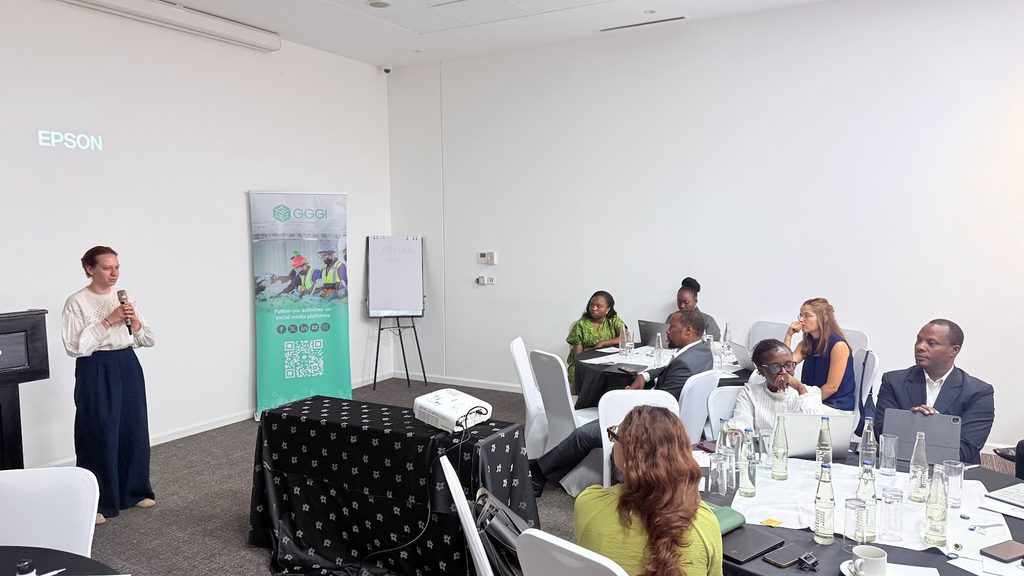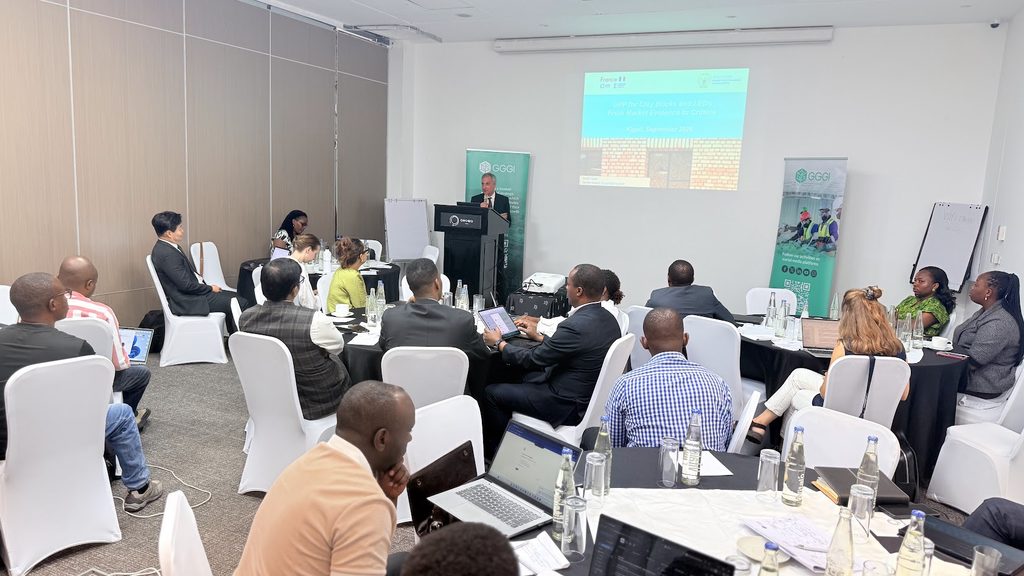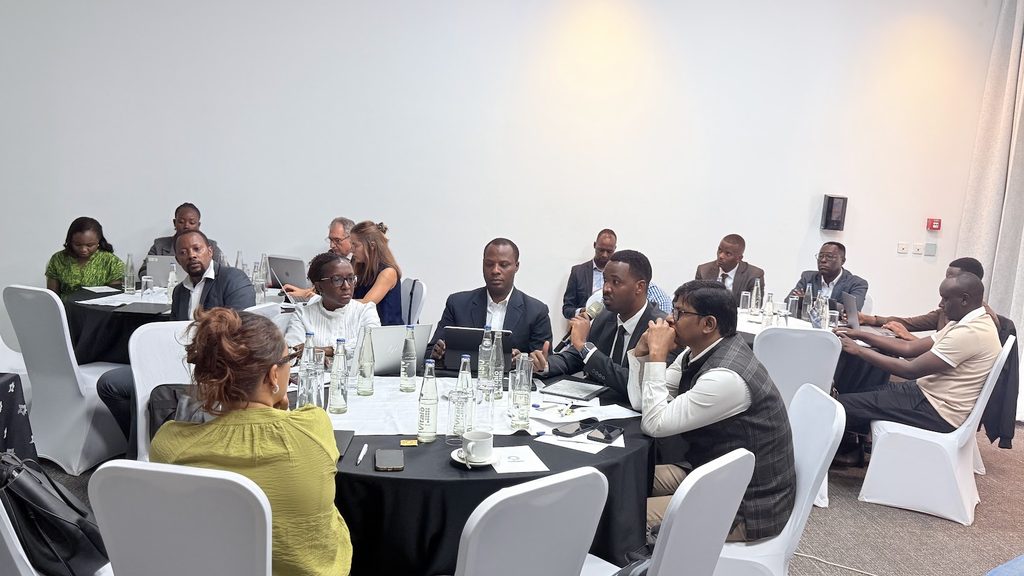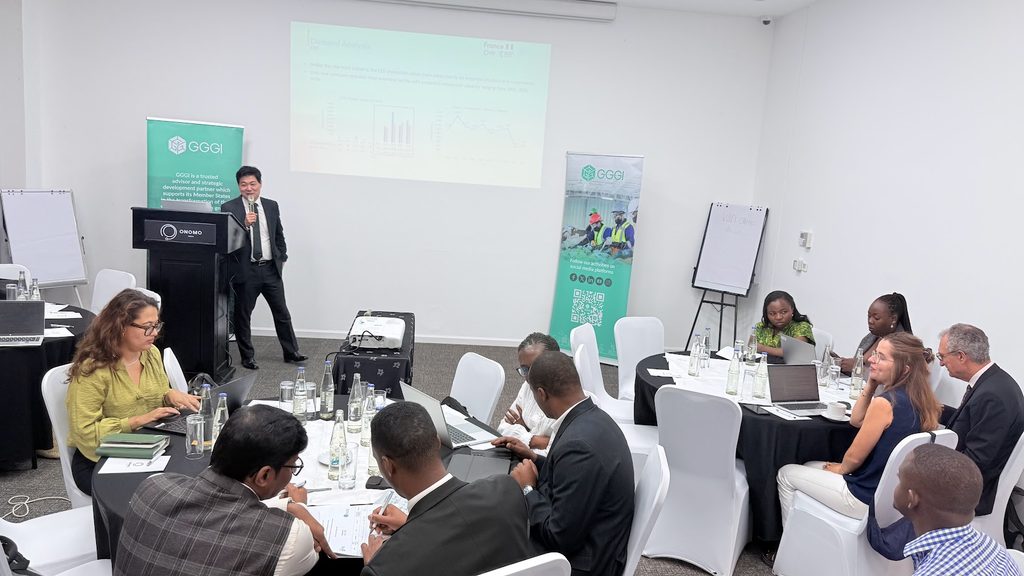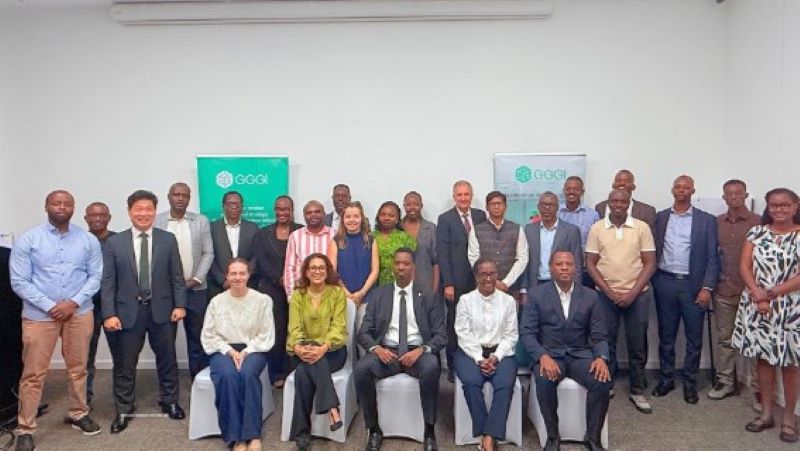
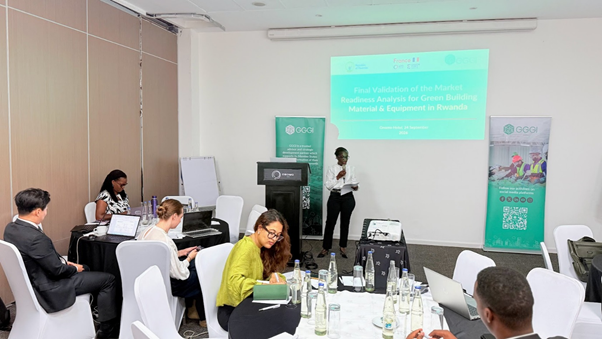
The Global Green Growth Institute (GGGI) and AFD Group / Expertise France, in partnership with the Government of Rwanda through the Rwanda Housing Authority (RHA) and Rwanda Public Procurement Authority (RPPA), have completed a market readiness study that assessed the availability, affordability and supply of selected green building materials and equipment in Rwanda. The Market Study on Rwanda’s Green Building Materials and Equipment Market was validated on Thursday, 24 September 2026 during an event that brought together representatives from government, the construction and engineering sectors, academia and other stakeholders.
The findings are expected to inform the development of green technical specifications for the identified products, hence supporting efforts to strengthen the implementation of Rwanda’s Green Building Minimum Compliance Standards. Based on the results of the consultations with stakeholders, three products widely used in the construction sector were selected for a detailed market readiness analysis, including market demand, lifecycle costs and supply chains. The analysis provides evidence on current market conditions and identifies opportunities and constraints that will inform future measures to increase the availability and uptake of sustainable construction solutions.
Caroline Raes, GGGI Africa’s Deputy Regional Director for Quality of Delivery and Country Representative for Rwanda, commended Rwanda’s ambition to promote green building and the strong partnership with AFD Group / Expertise France in accelerating this vision. She said:“The transition to greener construction requires more than standards and policies. It also requires markets that can provide accessible, affordable and reliable green solutions. This study helps connect Rwanda’s policy ambition with the market conditions needed for implementation, supporting a more sustainable built environment and contributing to the country’s broader transition to a green economy.”
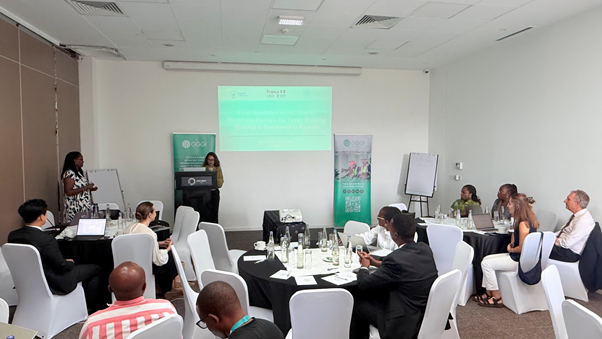
The study was conducted under the Green Public Financial Management (PFM) technical assistance program, funded by Agence Française de Développement (AFD) and implemented by Expertise France. The program supports Rwanda’s efforts to integrate environmental and climate considerations into public financial management and public spending. Under this framework, Expertise France has commissioned GGGI Rwanda to conduct a market study which generates evidence-based insights that will inform green procurement guidelines and strengthen the country’s green construction ecosystem.
Anthea Manasseh, AFD Country Director for Rwanda, said: “Sustainable public procurement can help turn public spending into a driver of market transformation. By strengthening the evidence base on green construction materials and equipment, this study provides practical information that can help public institutions make more informed procurement decisions while creating opportunities for more sustainable solutions and local market development.”
The market study builds on Rwanda’s ongoing efforts to strengthen sustainability in the built environment. In 2019, the Government of Rwanda, through RHA, developed the Rwanda Green Building Minimum Compliance System (GBMCS) with technical support from GGGI and other partners. The system establishes environmental performance indicators covering areas including energy and water efficiency, environmental protection, indoor environmental quality, and green innovation. Additionally,
Jimmy Christian Byukusenge, Director General of the Rwanda Public Procurement Authority, emphasized that: “Every public procurement decision is an opportunity to advance Rwanda’s sustainability agenda while maximizing value for public resources. By integrating national and international sustainability standards and adopting life-cycle cost analysis, we can move beyond the lowest upfront price to consider long-term economic, environmental, and social value. This strategic approach ensures that public procurement delivers greater efficiency, responsible resource utilization, and sustainable development outcomes for present and future generations.”
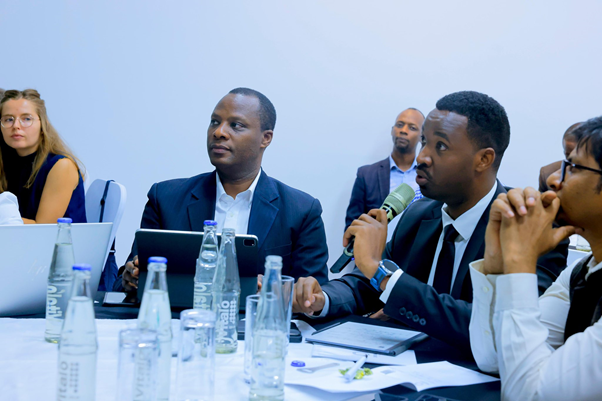
The Director General of the Rwanda Housing Authority, Mr. Alphonse Rukaburandekwe, called for stronger collaboration between government and the private sector to translate Rwanda’s sustainable construction policies into practical solutions at scale. He noted that Rwanda has already established an important policy direction for sustainable construction, but that the next priority is to strengthen the market and institutional systems needed to turn these commitments into practice.
He further emphasized that the transition to sustainable construction should contribute to local industry development, employment, innovation and the Made in Rwanda agenda, while maintaining the required standards of quality and performance. “For green building standards to translate into practice, the market must be able to provide the materials, equipment and technical solutions required to meet them,” he said.
The study also responds to some of the practical challenges associated with scaling green construction, including limited awareness of green materials, concerns about upfront costs, local production capacity and market availability. By linking market evidence with sustainable procurement, the initiative is expected to help strengthen the enabling conditions for wider adoption of green building solutions.