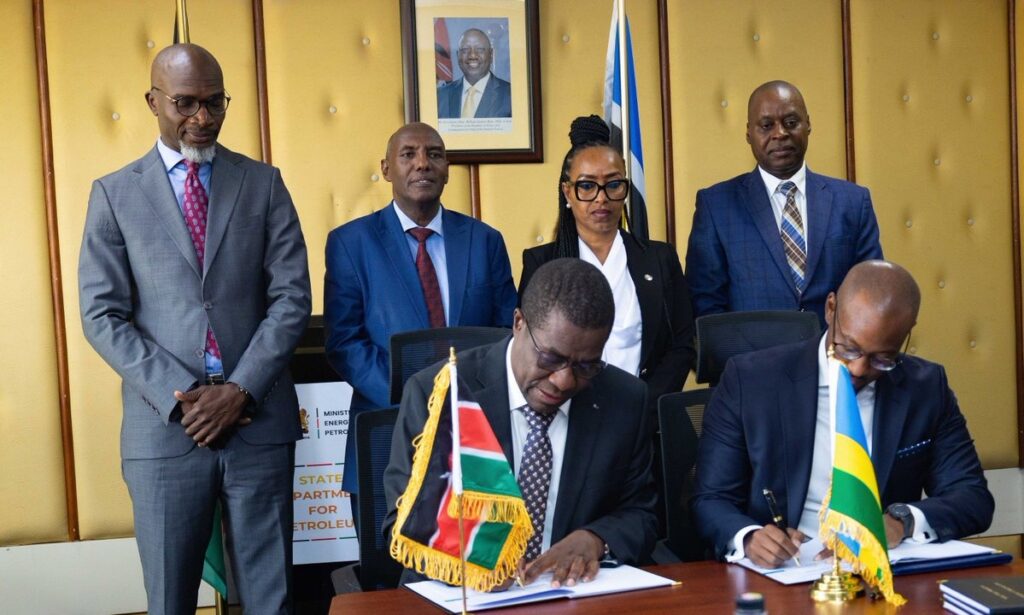
Rwanda and Kenya have signed a series of agreements aimed at strengthening the supply of petroleum products to Rwanda through the Northern Corridor, in a move expected to enhance the country’s energy security and deepen bilateral economic cooperation.
The agreements, signed on Monday June 29, 2026, are designed to improve the efficiency and reliability of petroleum imports into Rwanda by utilizing Kenya’s petroleum infrastructure and logistics network. Officials say the partnership will help safeguard fuel supplies, reduce the risk of market disruptions, and support Rwanda’s growing energy needs.
The framework comprises two key agreements. The first is a tripartite agreement involving the Government of Rwanda, the Government of Kenya, and the Rwanda National Energy Company (RNEC). The second is a commercial agreement between RNEC and the Kenya Pipeline Company (KPC), which sets out the framework for cooperation in the transportation and supply of petroleum products.
In a statement, Rwanda’s Ministry of Trade and Industry described the agreements as a major step toward strengthening trade and economic relations between the two countries while enhancing regional integration through strategic infrastructure partnerships.
The ministry said the agreements are expected to secure a more reliable supply of petroleum products for Rwanda, strengthen the country’s resilience to regional and global fuel market disruptions, and promote closer economic cooperation between Kigali and Nairobi.
The initiative also aligns with Rwanda’s broader strategy to diversify its petroleum import channels and improve the long-term sustainability of its energy supply. By expanding access to regional transport infrastructure, the government aims to ensure that petroleum products remain readily available to meet increasing domestic demand.
Implementation of the agreements will be led by the Rwanda National Energy Company and the Kenya Pipeline Company, working closely with relevant government institutions from both countries.
Rwandan officials say the partnership will contribute to building a more resilient energy sector capable of withstanding supply shocks while supporting economic growth through a stable and secure petroleum supply chain.
The Northern Corridor remains one of East Africa’s most important trade routes, linking the Port of Mombasa in Kenya to several landlocked countries, including Rwanda, Uganda, South Sudan, Burundi, and the Democratic Republic of the Congo. Strengthening cooperation along the corridor is expected to improve regional trade, logistics efficiency, and energy security.