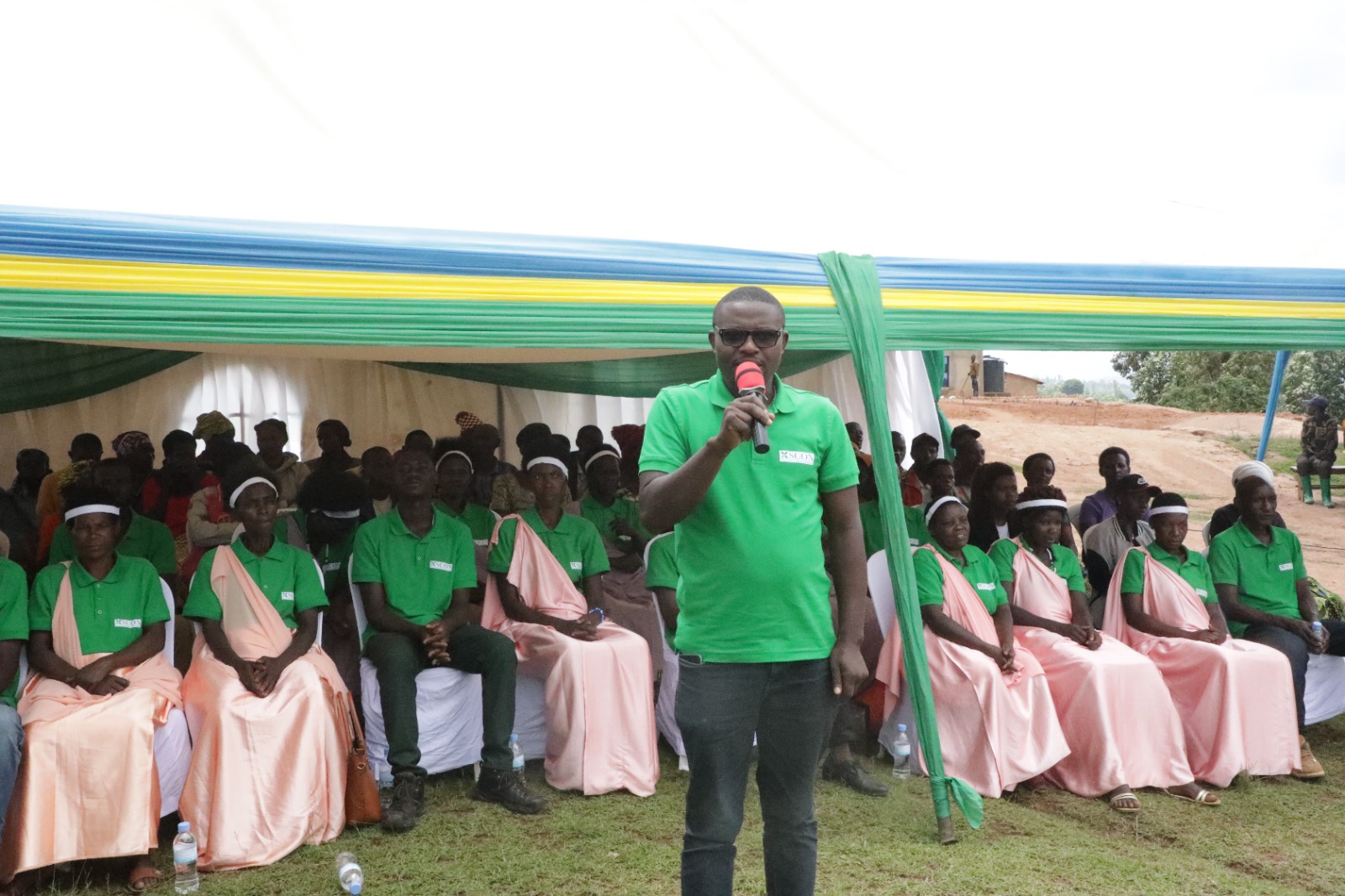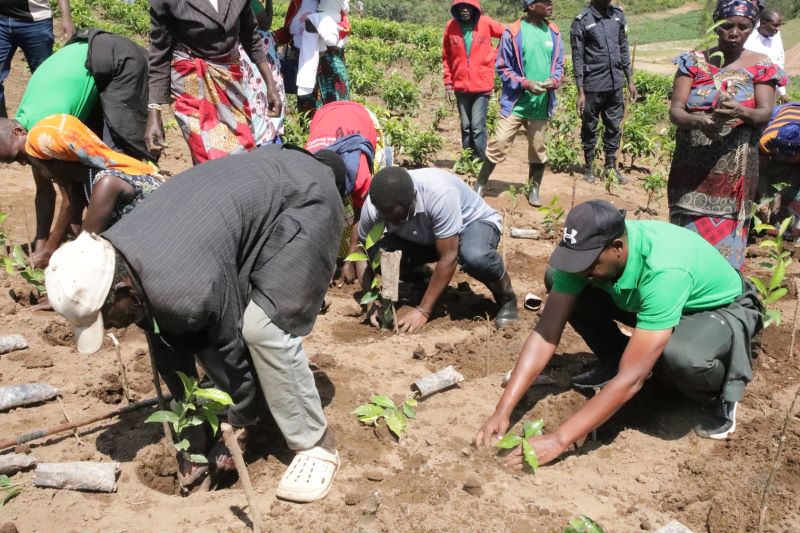
Tea farmers in Nyaruguru District have expressed deep appreciation to the President of the Republic of Rwanda, Paul Kagame, for attracting development partners to their district. These partners have helped farmers transform previously unused and highly acidic land,land that could not produce any crops into productive tea plantations that now generate sustainable income.
Nyandwi Marie Chantal, a tea farmer from Cyahinda Sector in Cyahinda Cell, Saburunguru Village, says she began tea cultivation in 2021 on her 40-acre plot after SCON arrived in the area. Before that, she used to grow eucalyptus trees on the same land and would earn only about 50,000 Rwf every three years, as the land could not support other crops due to acidity.
However, things changed drastically when SCON supported her to plant tea on the same land in 2021, as part of their program to help smallholder farmers with plots below 100 ares.
She said:“I used to plant trees on my 40 ares and would get only 50,000 francs in three years. Now I earn 180,000 francs every year from tea, after covering the expenses of maintaining the plantation. I thank the President of the Republic for identifying our challenge and bringing us partners who helped us make use of our acidic land. I can now pay school fees for my children and subscribe to community health insurance. I plan to expand the size of my tea plantation.”
Harerimana Evariste, also a tea farmer in Cyahinda Sector, expresses his gratitude to Rwanda’s leadership. He says the tea-growing project has lifted many households out of poverty by turning previously unproductive land into a reliable source of income.
He adds:“Today our lives and livelihoods have improved greatly. We thank our leadership because every problem we encountered as farmers has been addressed. Tea farming requires effort, but it provides long-term benefits. We encourage others to plant tea and those who already have it to take good care of their plantations.”
Phillipe Sijey, SCON’s regional manager for the Southern and Northern provinces, says SCON operates as a tea-growing company that also provides essential services to farmers. They came to Nyaruguru to help farmers use their land productively by planting tea, with a focus on farmers owning less than one hectare.
He explains that tea requires several years of investment before yielding income, which challenges farmers with limited funds. SCON therefore steps in to support farmers during the early years. He says:“If I have 100 hectares, it is more beneficial to support 100 farmers rather than working with just one. The more farmers we work with, the more positive impact we create.”
Sijey adds that tea can be harvested for up to 50 years without replanting, even though it takes nearly four years before the first harvest. This long waiting period is why SCON supports farmers who cannot afford to wait years without income.
He notes that countries like Kenya are celebrating over 100 years of tea cultivation, benefiting generations of farmers,a future Rwandan farmers can also look forward to. He also says that past challenges, such as farmers repaying loans in US dollars have been resolved. For the past two years, no farmer has faced that problem.
SCON is also working with the district to help farmers facing land-document issues so that they too can access the benefits of tea development.
Claude Bizimana, CEO of the National Agricultural Export Development Board (NAEB), applauded Nyaruguru District and its farmers for their strong contribution to national development. He emphasized that tea is one of Rwanda’s most important export crops.
He said:“Tea brings in foreign exchange, which contributes to national development, including roads, electricity, and other infrastructure. Rwanda’s economy depends heavily on producing more high-quality tea that fetches good prices internationally. There are now mechanisms in place to ensure farmers also benefit directly from global market earnings.”
Rwanda now has 19 tea factories, 21 cooperatives, and 4 service-providing companies in the tea sector including SCON.

Claude Bizimana, CEO of the National Agricultural Export Development Board (NAEB).
Bizimana assured farmers that the government will continue supporting tea production to ensure the country earns more foreign exchange. He also urged SCON to ensure that previously planted tea fields are well maintained, saying it is meaningless to encourage new tea plantations when existing ones are poorly managed.
Mayor of Nyaruguru District Dr Murwanashyaka Emmanuel, said the district is fortunate to have strong partners such as SCON and others who support tea farmers. The district already has four tea-processing factories.
He encouraged farmers to inspire others to plant tea, noting that many hillsides still contain forests that yield little income compared to tea. He said:“Tea is like a cow that gives milk every day. Today, tea is our economic engine. Please encourage others to join this journey.”
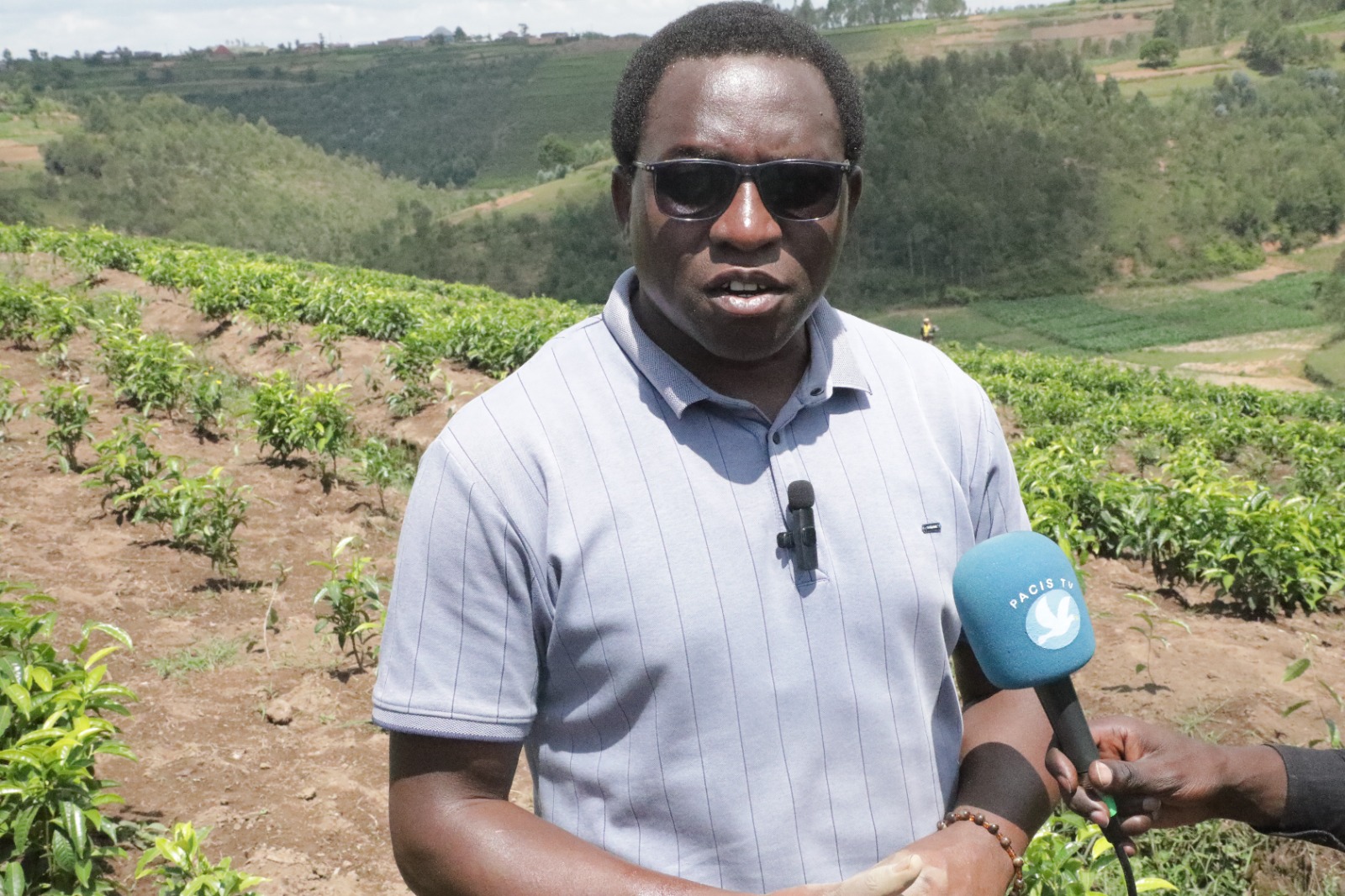
Dr Emmanuel Murwanashyaka, the mayor of Nyaruguguru district.
The district aims to expand tea cultivation to 12,000 hectares within the next five years. Achieving this requires close collaboration between farmers and local authorities. He also asked tea factories to set up demonstration farms where youth can learn proper tea-plucking skills. This would help reduce unemployment and encourage young people to cultivate their own or their parents' land.
So far, tea has been planted on more than 9,200 hectares in Nyaruguru District. During SCON’s celebration day in Nyaruguru, an additional 45 ares of new tea were planted, and 1.5 hectares of old plantations were replaced in Cyahinda Sector.Farmers say tea farming has significantly improved their livelihoods and continues to be a key driver of Nyaruguru’s development. Since 2017, SCON has helped plant more than 2,500 hectares of tea in Nyaruguru, working with over 3,250 farmers, and has invested nearly 75 billion Rwandan francs.
The tea-development project has created jobs for more than 7,800 people, both permanent and temporary. In 2024 alone, farmers working with SCON earned over 1.5 billion Rwandan francs.
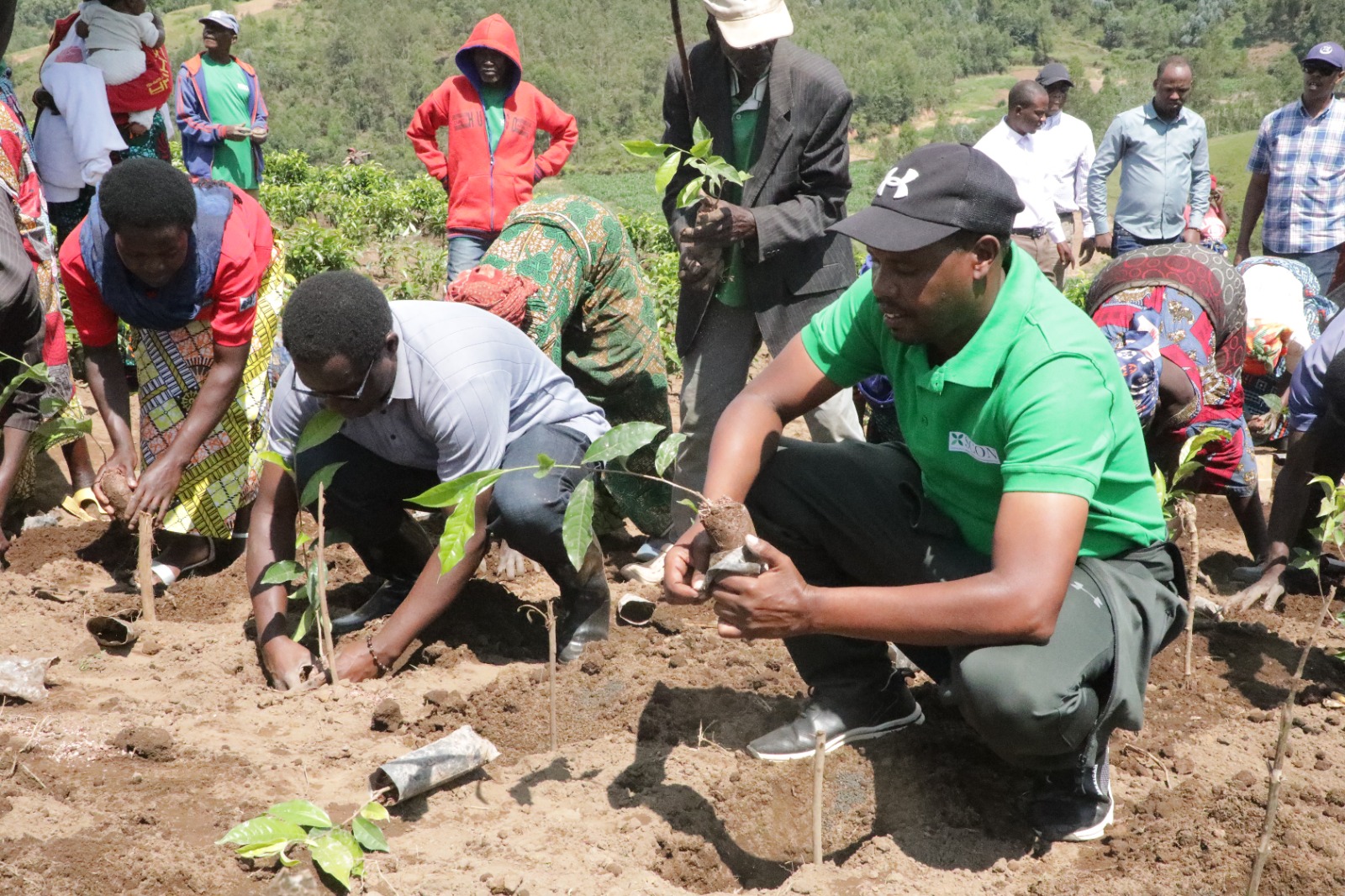
During planting the tea