


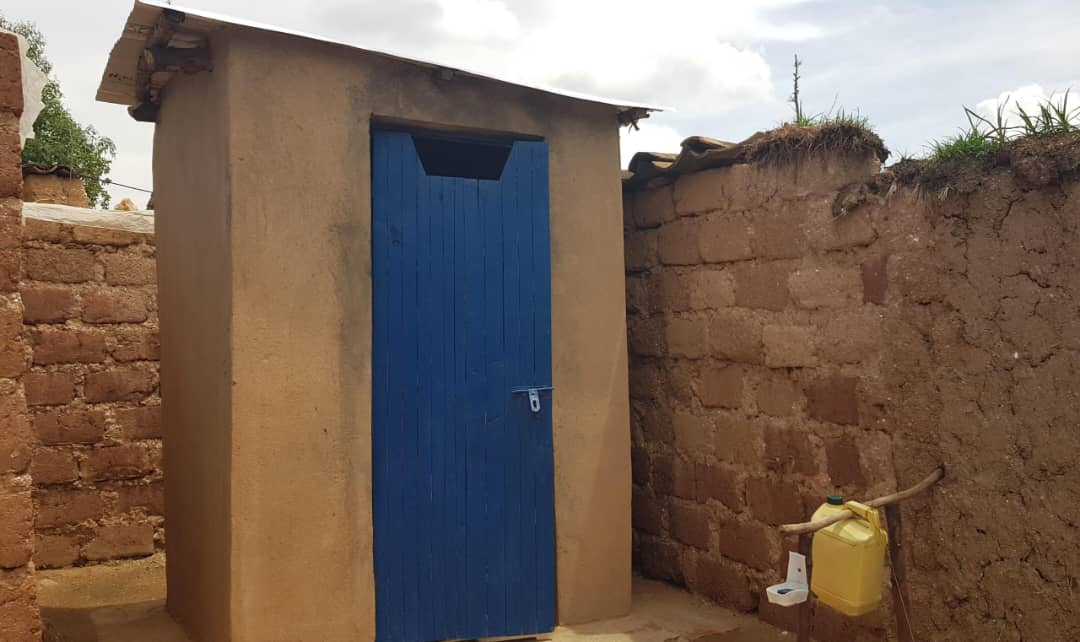
The Nyamagabe District administration, together with partners including WaterAid Rwanda, says significant progress has been made in addressing the challenge of households lacking proper toilets, following the construction of 1,000 improved latrines since April 2025.
The Director of Kigeme Hospital, Dr. Karemangabo Jean Marie Vianney, noted that having a standard toilet gives dignity to the household owner and reduces frequent hospital visits due to diseases caused by poor hygiene. He said, “When you are constantly at the hospital, your household economy declines, and even the national development suffers.”
Olivier Ndizeye, Monitoring, Evaluation, and Learning Manager at WaterAid Rwanda, said Nyamagabe was among the districts with a high number of who didn’t have toilets. “We came to strengthen sanitation and hygiene initiatives. Since April, we have built 1,000 toilets, and we continue to encourage residents to participate in constructing toilets through hygiene and sanitation clubs.”He added.
Ndizeye added that one of the reasons some residents still lack toilets is low awareness levels, with some believing that local leaders should be responsible for doing everything for them.
Uzabakiriho Beda, a resident of Nyamirama Village, Nyanzoga Cell, Cyanika Sector, said he used to feel ashamed for not having a proper toilet. “I had a toilet that leaked when it rained and had a foul smell. Whenever I had visitors, it was a problem. Now I have a good toilet, and I no longer feel ashamed.” He said:
His wife, Mukagasana Joséphine, also testified that improved hygiene brought positive changes in their family. She Said:“Our children used to frequently suffer from intestinal worms and other hygiene-related diseases. But since we built a proper toilet, none of them gets sick from such diseases anymore.”
Dr. Karemangabo also revealed that in February 2025, the hospital encountered an unusual case involving mothers who had undergone cesarean section, whose wounds showed infections traced back to latrines. “It was shocking laboratory tests conducted in Kigali confirmed that the microbes found in the wounds originated from a latrine. That’s when we introduced strict hygiene guidelines. “He Said.
Following this, the hospital required everyone entering to: Carry approved toilet tissue, Wash hands with clean water and soap, and Wear shoes to prevent transferring microbes from contaminated surfaces.
During the celebration of World Toilet Day held in Cyanika Sector, Niyomwungeri Hilderand the Mayor of Nyamagabe District, urged residents to view toilets as an essential part of their health. “Poor toilets cause diseases such as typhoid, tapeworm infections which can even reach the brain, and others spread through unclean hands. We must build toilets that are lockable and protected from flies.” He spoke.
He added that the district is committed to ensuring that by June 2026, all households with substandard toilets,including the 500 residents experiencing homelessness.will have access to improved sanitation. “We cannot talk about hygiene without mentioning toilets. We want Nyamagabe residents to have hygiene standards comparable to those of developed countries.” The mayor emphasized.
He commended WaterAid for building 1,000 toilets, renovating those at Tare Market and Musebeya, and promoting sanitation in schools and health centers. The district’s sanitation targets include, upgrading toilets for 3,000 households with substandard facilities, providing proper housing and toilets for 500 homeless individuals, Renovating all poorly constructed toilets before the end of the fiscal year.
Nyamagabe stresses that sanitation is not merely a government program, but the foundation of good health and community development.