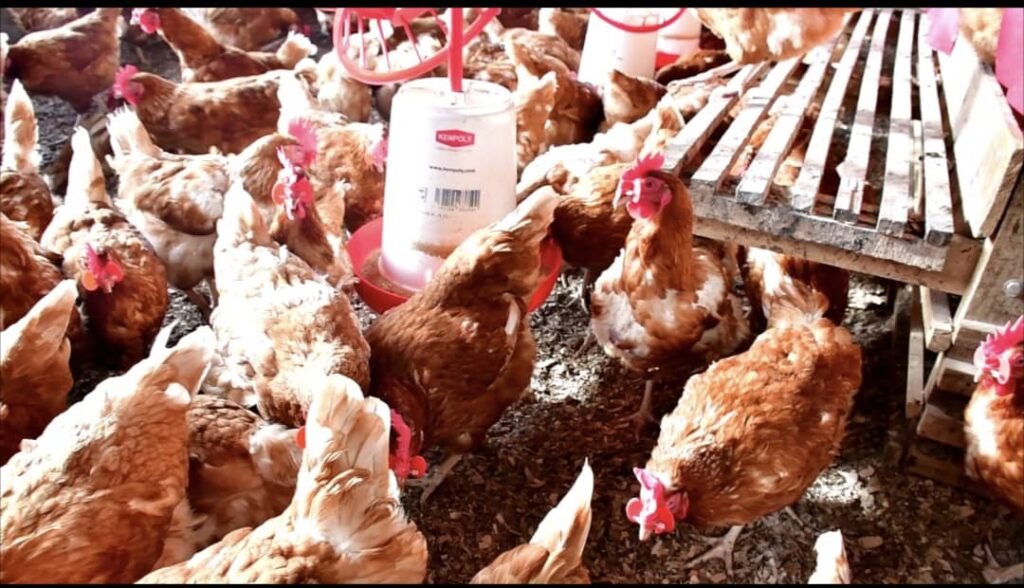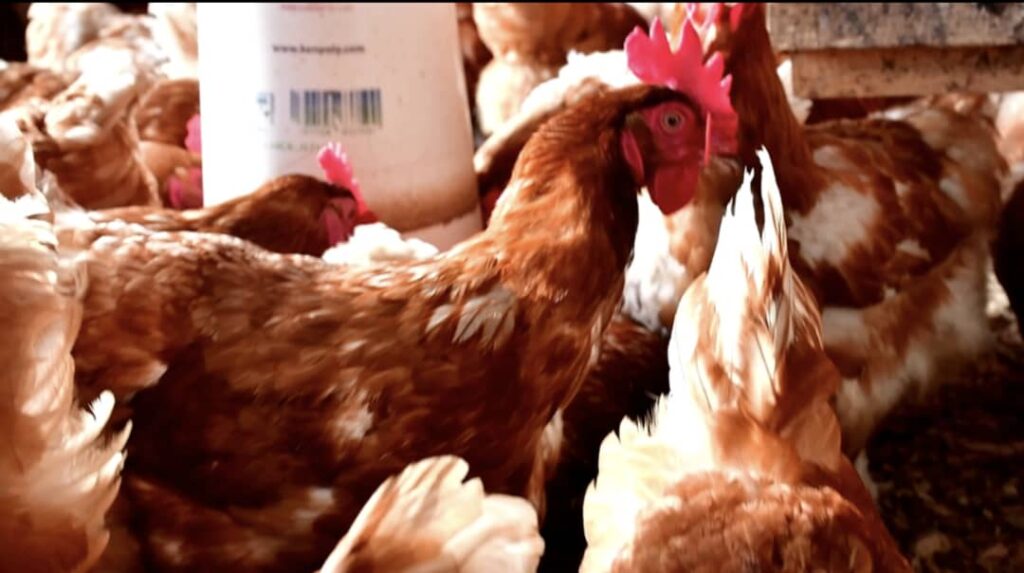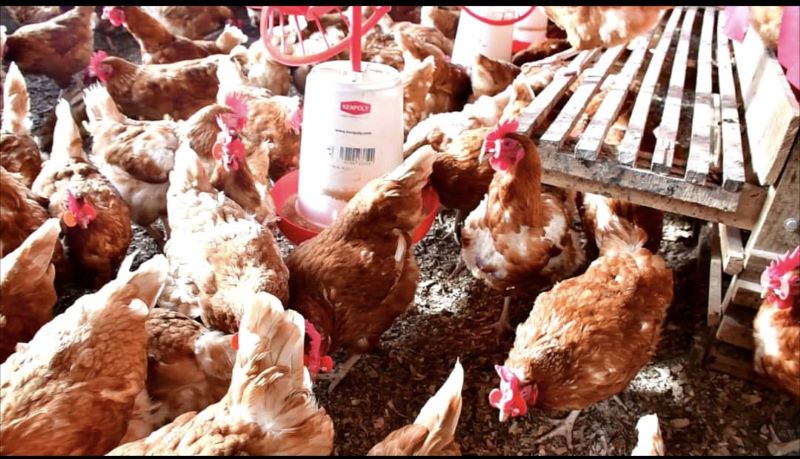
TUZAMURANE BYIMANA cooperative situated in RUHANGO district, is a cooperative which practice poultry farming, the cooperative which has helped a lot in reducing malnutrition through the eggs fund that it gives to BYIMANA health center.
This Cooperative which is composed of 20 members including men, women ,and youth ,started small with only 50 chickens with the aim of growing big ,buying Uzima chickens sold on bicycles was their first step ,but slow by slow the cooperative became big and built a small building as a farm for their chickens but fortunately ,they got the chance of receiving a fund from FAO in cooperation with Hand in Hand project ,the fund which changed the moderate level to which the farm was on ,to the modern farm it is now .
This cooperative received a funding of a building and 500 chickens, the funding which helped the cooperative to boost its production and be able to even participate in reducing malnutrition in the area it is functioning in.
Ingabire Doxia, the leader of the cooperative, described how the fund had been a solution to them and to nearby residents.
“FAO came and built this building for us ,they gave us chickens and necessary materials for the farm ,and after receiving that fund we invested all our strength in it ,and then they gave us the task of helping children with malnutrition issues .In our districts as in many districts in Rwanda we have malnourished children ,so for us we helped BYIMANA Health Center ,we give them 160 eggs per month.” She stated.
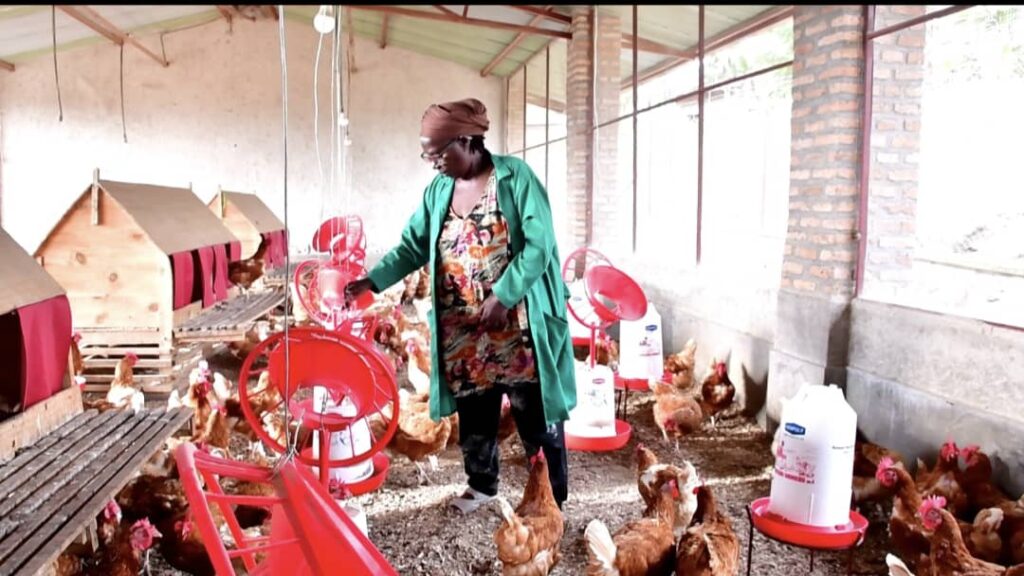
The cooperative has not only helped malnourished children but also youth who were unemployed. Tuyishimire Marie Claire who is a youth member of the cooperative described how important this poultry farm is for her “I have attained to many things because of this cooperative, now I can satisfy my basic needs, it is very important to us.”
Every body wants to develop and for the cooperative that is the target, their aim is to reach to 5000 chickens and expand their business.
2019-2020, Rwanda Democratic and health Survey report showed that 33% of children under 5 years had stunting problems ,1% of children under 5 years were thin, 8% of children under 5 years were underweight and 6% of children under 5 years were overweight.