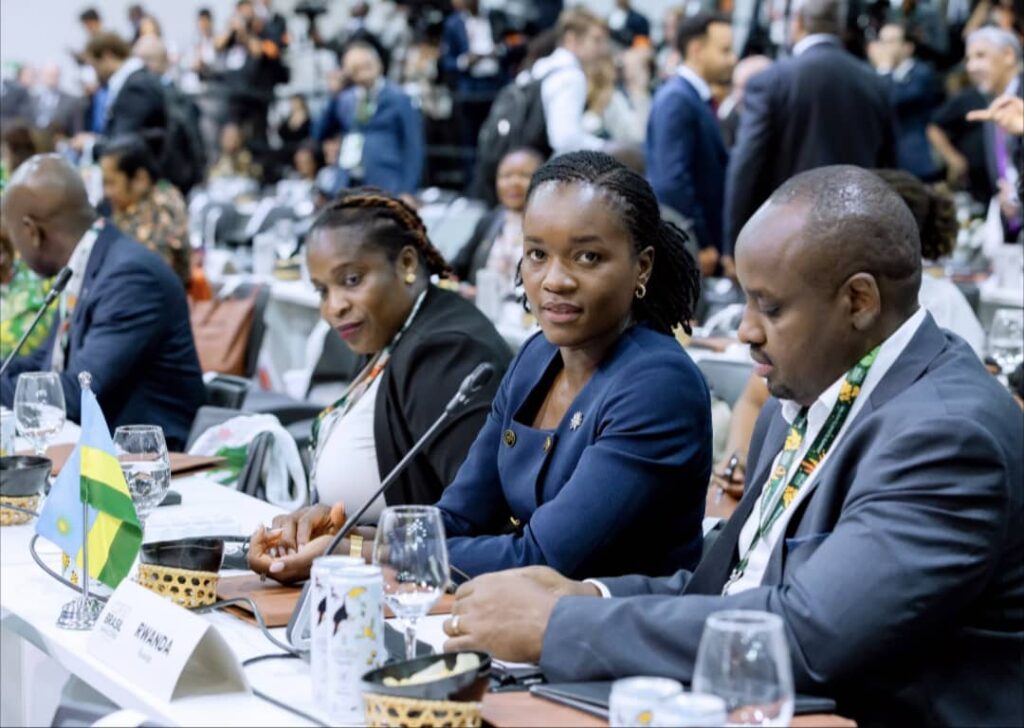
The Minister of Environment, Dr. Arakwiye Bernadette, held high-level talks with the Deputy Managing Director of the International Monetary Fund (IMF), Bo Li, to discuss strategies for integrating environmental sustainability into all aspects of Rwanda’s national development.
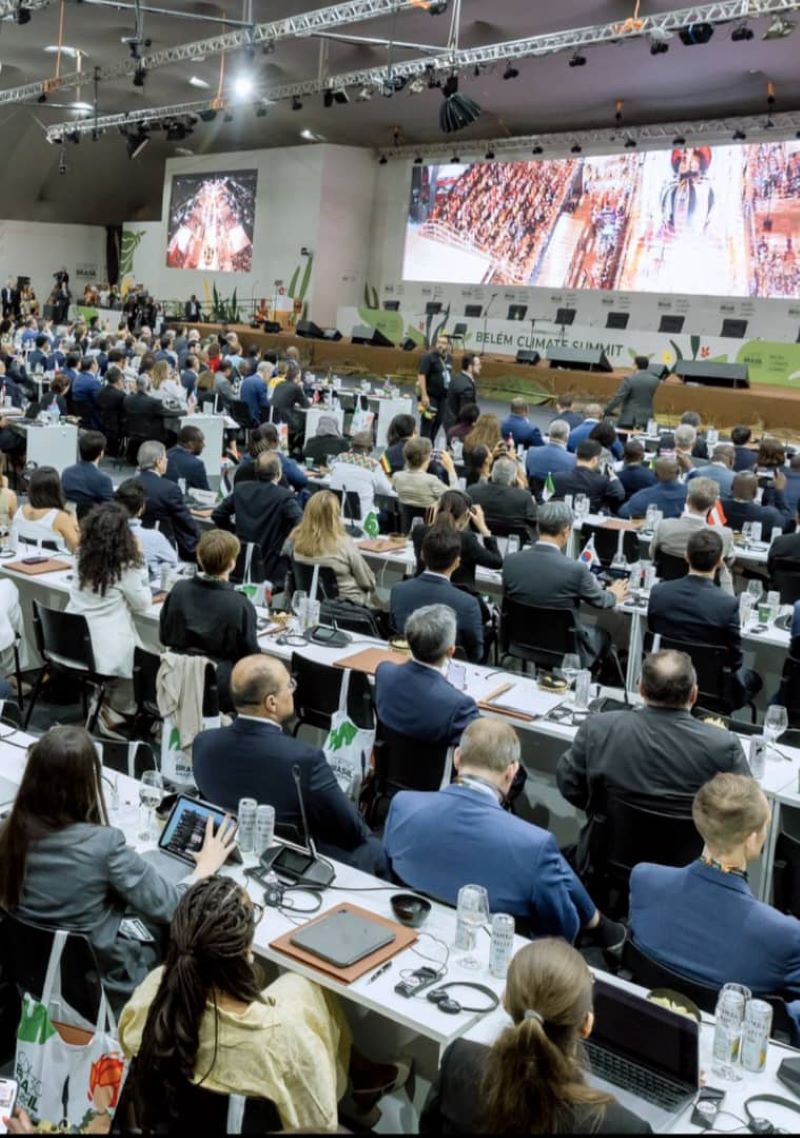
The discussions took place on the sidelines of the 30th United Nations Climate Change Conference (COP30) in Belém, Brazil, where global leaders are convening to strengthen climate action and advance sustainable development commitments.
Dr. Arakwiye emphasized that Rwanda has for years prioritized environmental protection, positioning it at the core of its economic development agenda. She highlighted that Rwanda has committed to reducing greenhouse gas emissions by 38% by 2030, in line with its Nationally Determined Contributions (NDCs) submitted to the United Nations.
She also noted that renewable energy sources including solar, wind and geothermal power currently contribute nearly 30% of the country’s total energy mix. The national target is to increase this to 60% by 2035, as outlined in the Rwanda Energy Policy 2022.
In advancing green economic transformation, Rwanda has established the Green Fund (FONERWA), which has invested over USD 250 million in environmental conservation and climate-resilient development projects. These investments have supported 46 major green initiatives and generated over 200,000 jobs across the country.
On his part, Bo Li commended Rwanda for its strong progress in sustainable economic development. He affirmed that the IMF will continue to support Rwanda by providing financial and technical assistance, particularly in climate innovation, emissions reduction technologies, and renewable energy expansion.
“Rwanda is setting an example for the rest of Africa demonstrating that rapid development can go hand-in-hand with environmental protection. The IMF remains committed to strengthening collaboration with Rwanda to expand green financing and advance a climate-resilient financial sector,” He stated.
Both leaders reiterated that environmental protection is not the responsibility of environmental experts alone, but a fundamental pillar of sustainable and resilient economic growth.
Rwanda is widely recognized as one of Africa’s leading nations in green economy policy implementation promoting waste management, renewable energy adoption, and forest and water conservation. The country’s forest cover currently stands at 30.4% of total land area, with an ambitious target to reach 35% by 2030.