Rwandan farmers are turning to a new kind of shelter not for themselves, but for their crops. With the changing climate wreaking havoc on traditional farming methods, greenhouse farming is quickly emerging as a beacon of hope for many agricultural professionals across the country.
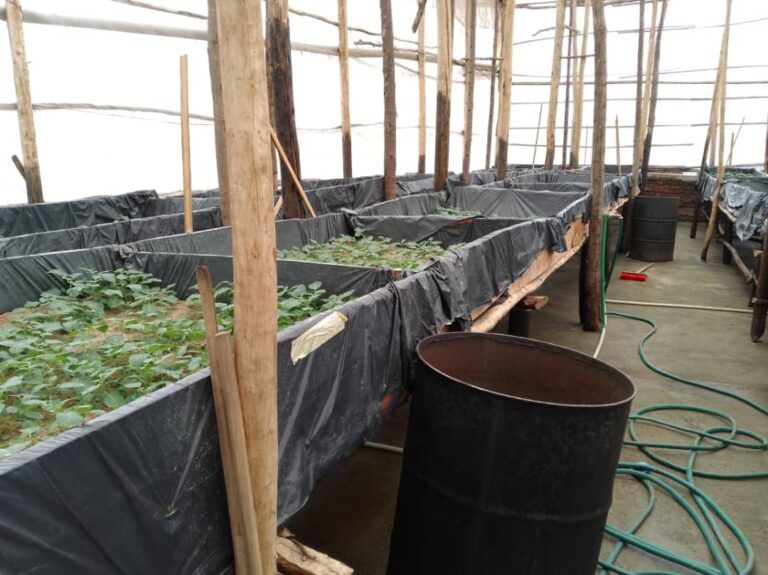
For decades, the rhythms of rain and sunshine dictated planting cycles. But as climate change distorts these once-reliable patterns, farmers like Isaac Nzabarinda, a potato seed multiplier from the Kinigi sector in Musanze District, says it’s time to adapt.
“Nowadays, you can trust the rains and they fail, or expect sunshine only to face heavy rainfall that destroys your harvest,” Nzabarinda explained. “Open-field farming no longer guarantees yields. That’s why we embraced greenhouse farming.”
According to Nzabarinda, greenhouses not only allow for year-round cultivation but also shield crops from harsh weather and support sustainable soil and environmental management.
From Desperation to Innovation
The need for innovation is echoed in Bugesera District, where tomato farmer Evariste Nsengimana struggled with severe droughts that wiped out crops despite working large plots of land.
“Despite cultivating a large piece of land, my tomato harvests were very poor due to prolonged sunshine,” he said. “As farmers, we are obliged to keep working, but often we don’t make any profit.”
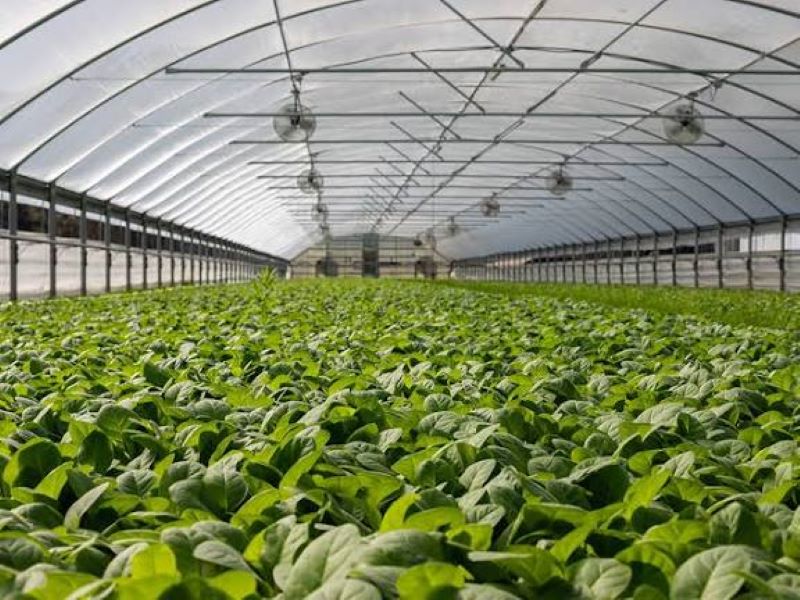
Greenhouses, by contrast, provide controlled environments that optimize water use and protect plants from disease and extreme weather. The difference is not just in survival but in thriving.
Vincent Twagirayezu, director of Agahozo Farm, has seen these benefits firsthand. His company started with one greenhouse and is now scaling up rapidly.
“With just one greenhouse, we’re already producing 10 to 15 tons of tomatoes,” he said. “Each plant yields thousands of fruits. We’ve rented a few more greenhouses for experience, but the vision is to expand to over 100.”
Crunching the Numbers
Despite the promise of higher yields and resilience, many smallholder farmers are still hesitant to adopt greenhouse farming due to the perceived high initial costs. A standard steel-structured greenhouse can be prohibitively expensive for most rural farmers.
But Pierre Damien Ndaguha, a training officer with the Sustainable Agricultural Intensification Program (SAIP), argues that more affordable options are within reach.
“We have a 480 m² wooden greenhouse (16 by 30 meters), which, together with seeds, costs about 17.5 million Rwandan francs,” he said. “While steel ones cost over three times as much, this wooden model lasts for five years. One harvest of 12 tons at just 800 RWF per kilogram can recover at least half of the investment.”
Through SAIP, the Ministry of Agriculture and Animal Resources provides up to 70% subsidies to help farmers transition into greenhouse farming.
Government Backing and National Strategy
The shift toward greenhouse technology is not just a grassroots movement it’s also central to Rwanda’s agricultural policy. Dr. Mark Cyubahiro Bagabe, Minister of Agriculture, emphasizes that the future of farming lies in intensification rather than expansion.
“A farmer who adopts modern inputs and irrigation will inevitably achieve higher yields,” he noted. “Our focus is on maximizing production per unit of land. This ensures both food security and surplus for markets.”
As part of its National Strategy for Transformation (NST2), Rwanda is aiming to boost annual agricultural growth to over 6%, up from 5% in 2004.
A Climate-Proof Future
As unpredictable weather becomes the new normal, Rwandan farmers are proving that resilience is possible with the right tools and support. From tomatoes in Bugesera to potatoes in Musanze, greenhouses are no longer a luxury they’re fast becoming a necessity.
For these forward-thinking farmers, it’s not just about surviving climate change it’s about cultivating prosperity in spite of it.