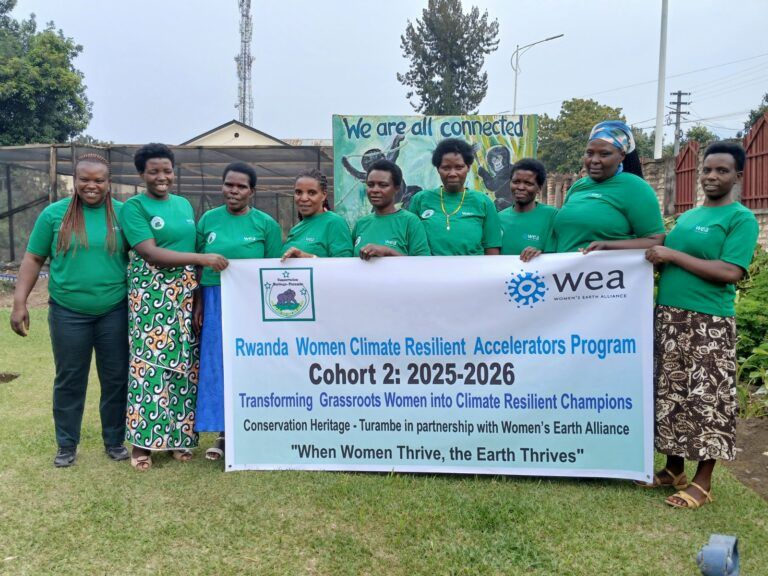
In the shadow of Rwanda’s Volcanoes National Park, a quiet but powerful transformation is taking root. Eight women from Kinigi and Nyange sectors in Musanze District are now on a mission not only to fight climate change, but to lead their communities into a more sustainable, climate-resilient future.
Armed with knowledge, vision, and determination, these women are the newest Climate Resilient Champions trained under the Rwanda Women Climate Resilient Accelerators Program, a joint initiative of Conservation Heritage Turambe and the Women’s Earth Alliance (WEA).
The program’s theme, “Transforming Grassroots Women into Climate Resilient Champions,” is more than a slogan. It’s a lifeline for women whose lives and livelihoods are already feeling the brunt of climate crises from unpredictable rainfall to soil erosion and food insecurity.
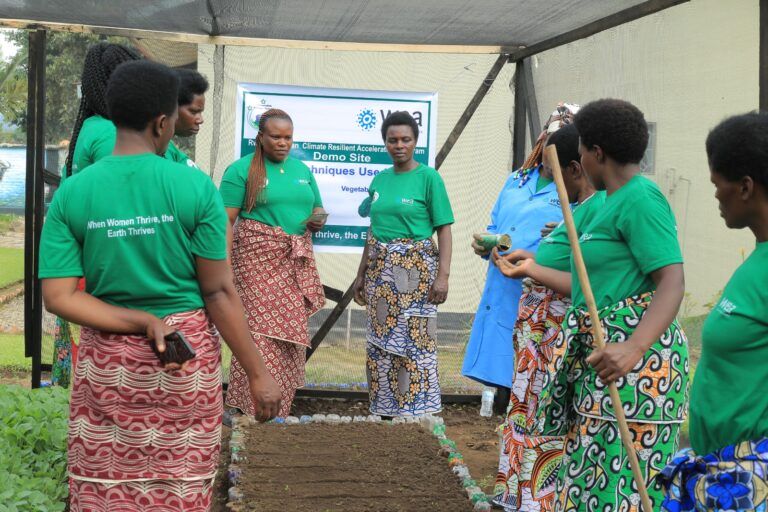
Over a two-day training held from September 11–12, 2025, followed by field visits on the third day, the women dove deep into climate change its causes, impacts, and most importantly, solutions rooted in local realities.
From Learners to Leaders
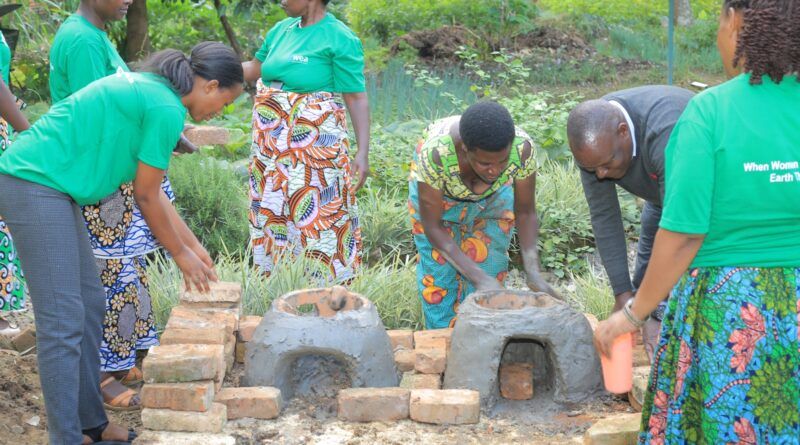
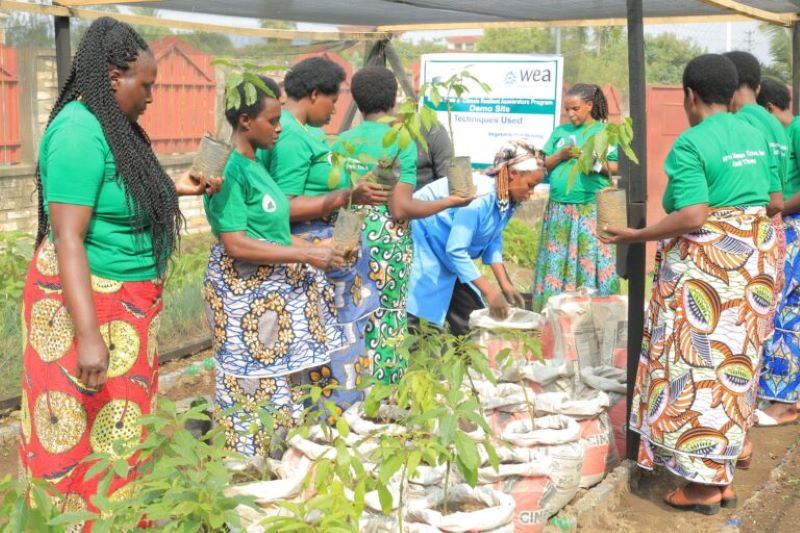
“Before this, I didn’t realize how much everyday actions affect the climate,” said Jolise Mukamazera, a participant from Nyange Sector. “Now I know that as women, we can be part of the solution by planting fruit trees, replacing cooking stoves, and starting income-generating projects that also protect the environment.”
Mukamazera’s voice is one among many in a growing chorus of women who are shifting from being victims of climate change to becoming agents of change.
The women were taught to introduce energy-saving stoves, engage in sustainable farming practices, and launch small-scale conservation projects like tree planting and organic gardening that can both preserve nature and boost their households’ income.
Seeds of Change
For Immaculée Nyiramahoro, leader of the Tubungabunge Ibidukikije (Let’s Protect the Environment) group in Kinigi, the training opened up new perspectives.
“We used to think climate change was just about the weather,” she said. “But now we understand how our own choices burning grasses, using traditional stoves, overusing land contribute to it. And more importantly, we know what we can do differently.”
These eight women are more than trainees they are Trainers of Trainees, tasked with transferring their newly gained knowledge to over 150 women they already lead in self-help groups. Their influence could spread well beyond their immediate circles, sparking a ripple effect across Musanze and beyond.
Empowerment with Purpose
According to Pacifique Abimana, the program’s coordinator, empowering women is essential to climate resilience.
“Women are often the most affected by climate change, especially in rural areas. But they are also powerful changemakers,” he said. “This program is about giving them the tools and confidence to lead climate solutions that benefit everyone.”
Valérie Akuredusenge, Program Director at Conservation Heritage Turambe, emphasized how the sessions filled critical knowledge gaps.
“Many women had no idea that something as simple as burning old clothes or clearing land with fire releases harmful emissions,” she explained. “Through this training, they came to understand that climate change is not some distant problem it’s right here, and they can do something about it.”
A Local Solution to a Global Crisis
The initiative aligns with Rwanda’s national climate goals, including its Nationally DeterminedContributions (NDCs), the Green Growth and Climate Resilience Strategy, and Vision 2050 which envisions a green, inclusive economy with over 50% renewable energy and a 38% reduction in greenhouse gas emissions by 2030.
“This local action directly contributes to national and global goals,” said Jean Ngendahayo, Musanze District’s officer for agriculture, livestock, and natural resources. “Women have a unique capacity to pass this knowledge on to their children, ensuring long-term behavioral change. And with eco-friendly farming practices, they can protect the soil, biodiversity, and their own health.”
Looking Ahead
The journey has just begun, but the impact is already visible. With their new understanding, these women are returning to their communities not only with hope, but with a plan to plant, to teach, and to lead.
Their efforts show that climate action doesn’t have to begin in high-level conferences or government offices. Sometimes, it begins in a small village, with a woman planting a tree and teaching others to do the same.