Rwanda continues to strengthen its commitment to environmental protection and climate resilience through the implementation of the National Environment and Climate Change Policy and the updated Climate Action Plan. These policies aim to safeguard natural resources, reduce greenhouse gas emissions, and build a climate-resilient economy capable of withstanding the growing impacts of climate change.
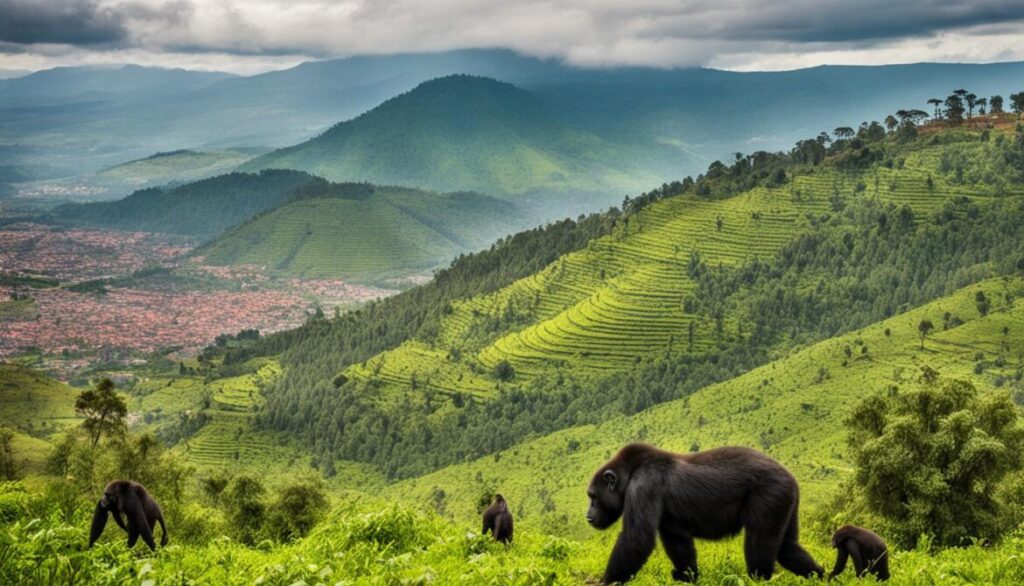
The country has registered significant achievements in environmental conservation. Current government statistics indicate that forest cover stands at 30.4% of Rwanda’s total land area, reflecting sustained efforts in afforestation, reforestation, and ecosystem restoration. Millions of trees are planted annually to maintain and expand forest resources, which play a critical role in carbon sequestration, biodiversity conservation, and watershed protection.
Rwanda has also made notable progress in the transition toward a green economy. Recent data show that 51% of the country’s energy comes from renewable sources, while climate-related investments have mobilized approximately US$4.7 billion. In addition, climate initiatives have contributed to the creation of more than 176,000 green jobs, providing economic opportunities while promoting environmental sustainability.
Climate change remains a major challenge for Rwanda, particularly because the economy relies heavily on climate-sensitive sectors such as agriculture. The Government has therefore prioritized adaptation and mitigation measures through its Climate Action Plan. Under its current commitment, Rwanda aims to reduce greenhouse gas emissions by 38% by 2030 compared to the business-as-usual scenario, equivalent to approximately 4.6 million tonnes of carbon dioxide emissions avoided. The target covers key sectors including agriculture, energy, waste management, industry, forestry, and land use.
Looking beyond 2030, Rwanda’s updated Climate Action Plan (NDC 3.0) has raised the country’s ambition even further. The plan targets a reduction of up to 53% of net greenhouse gas emissions by 2035, representing approximately 14.86 million tonnes of CO₂ equivalent. This demonstrates Rwanda’s determination to align national development with global climate goals under the Paris Agreement.
Environmental experts emphasize that policy implementation, community participation, and private-sector investment remain essential to achieving these goals. Through initiatives such as landscape restoration, climate-smart agriculture, renewable energy expansion, clean cooking technologies, and sustainable land management, Rwanda continues to position itself as a leader in environmental protection and climate action in Africa.