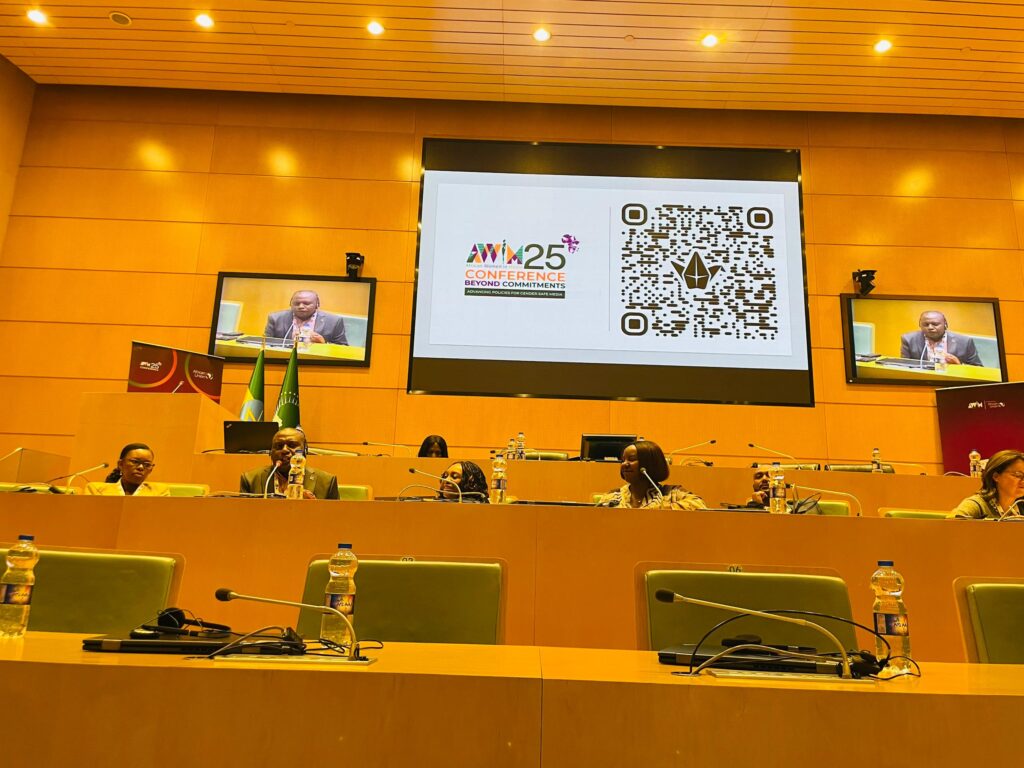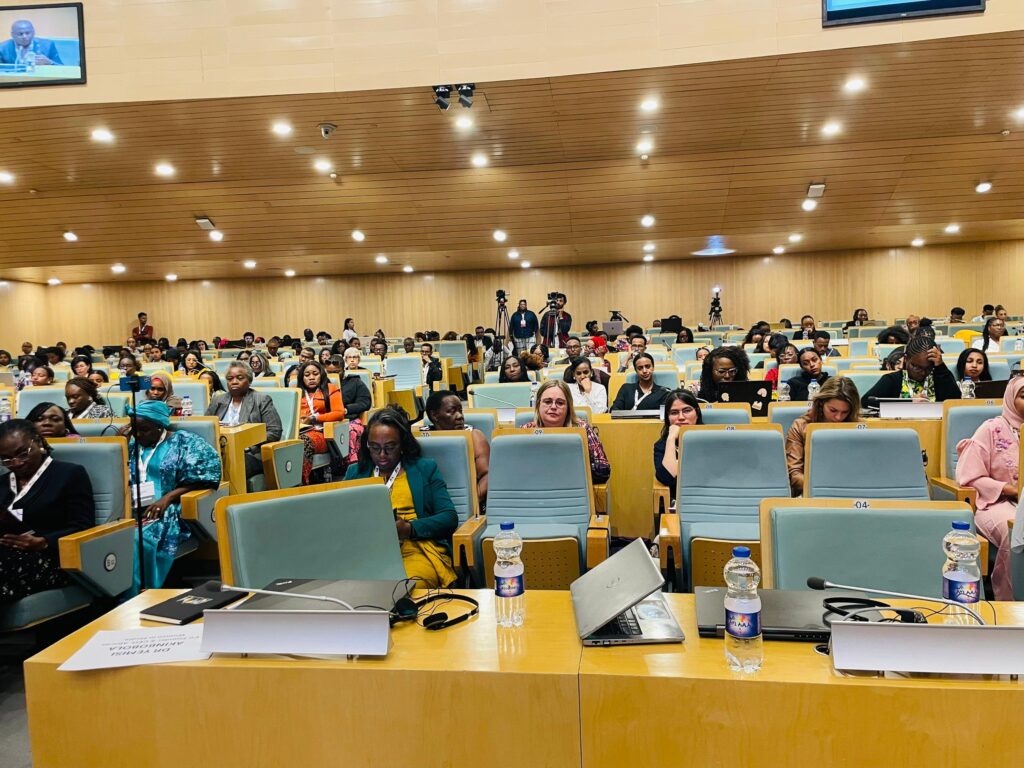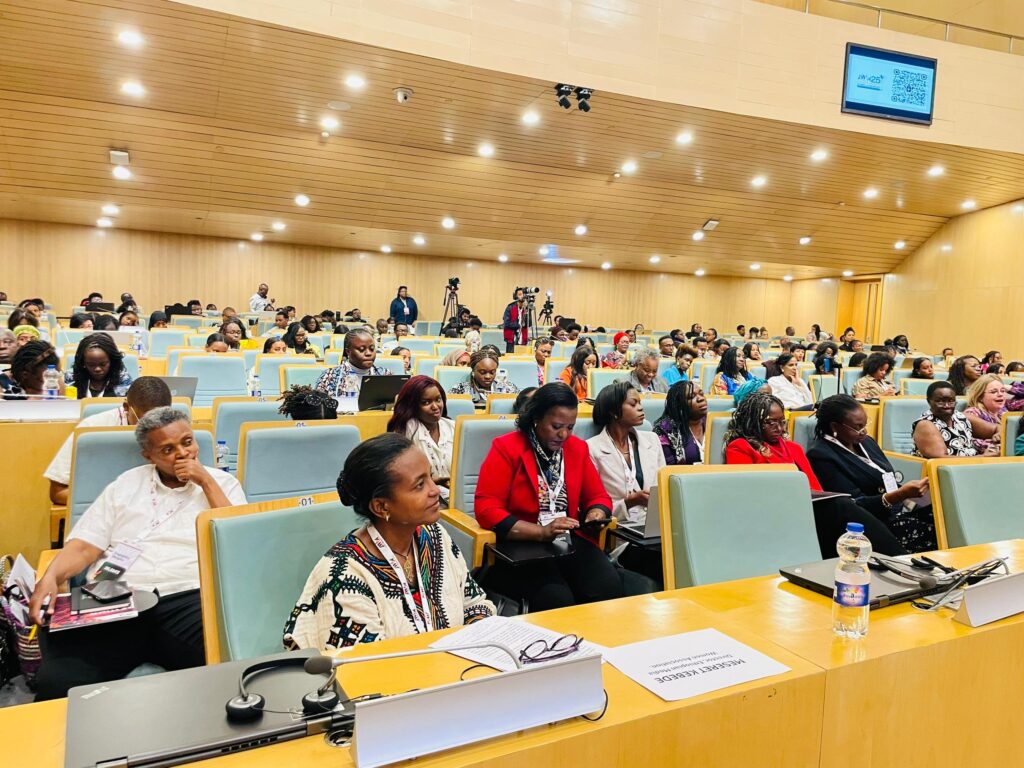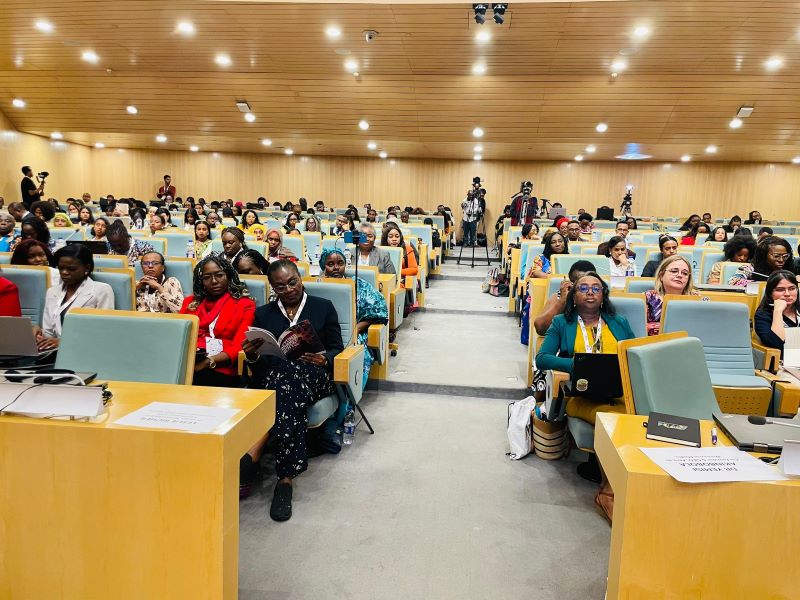
At the African Women in Media (AWiM25) Conference in Addis Ababa, held from 4–5 December 2025, conversations around gender-based violence took center stage. Two powerful voices, from Nigeria and Kenya, offered an urgent reflection on how African media report on GBV, and why accountability must become a core journalistic responsibility. Their insights resonated sharply with realities across the continent, including Rwanda, where similar gaps persist.
Speaking with both scholarly clarity and the urgency of lived experience, Ifeayinwa Awagu from Nigeria highlighted a striking disconnect between policy frameworks and the journalism meant to reinforce them. She contrasted Nigerian reporting with U.S. media practice: “In the U.S., even in straight news, journalists reference laws, court documents, and professional sanctions. In Nigeria, we simply say what happened.”
Her research shows that many African newsrooms restrict their reporting to police statements or eyewitness accounts. Articles are often brief, factual summaries that rarely mention the laws violated, the protections available to survivors, or the institutional mechanisms meant to address abuse. “You hardly see any reference to accountability mechanisms,” she observed. “But a reader in the U.S. encounters the law almost every time domestic violence is reported.”
Awagu also warned that online gender-based violence is almost invisible in African media coverage. While U.S. reporters document cases of tech-facilitated abuse, like partners secretly tracking women’s movements, she found no similar reporting in Nigeria over a two-year review. “Policies and mechanisms exist, but without institutional accountability, advocacy cannot be effective.” She said.
Her reflections echo the landscape in Rwanda, where journalists often report what but not the why or whatshould happen next. Stories on conflicts, killings, or domestic violence frequently end where the incident ends. Rarely do they interrogate the laws that have been broken, the policies meant to protect victims, or the systems responsible for redress. By limiting reporting to the event itself, journalists miss an opportunity to educate the public on legal frameworks and to show that such acts are punishable by law. The absence of this deeper layer leaves citizens informed about incidents, but not necessarily about their rights or the responsibilities of institutions.
In the same conference, Queenter Mbori of Kenya offered another unsettling reality: sexual harassment within the media industry is not declining, it is rising. “Back in 2021, in Kenya, the prevalence was 56%. Our latest data shows 60%. Something is deeply wrong,” she warned.
Kenya’s vibrant media landscape, with more than 50,000 practitioners and hundreds of outlets, still struggles with safety and accountability. Mbori noted that interns remain the most vulnerable, often unaware that they are being harassed. “Newsrooms have open settings; supervisors interact freely. Some take advantage of that openness,” she explained.
Her association, AWMiK, has made notable progress: 20 media houses have now adopted a model sexual-harassment policy. Yet awareness remains limited, nearly 70% of journalists do not know such policies exist. Even more troubling, half of the men surveyed believed that women were responsible for the harassment they experienced.
To shift the culture, AWMiK has launched national dialogues, including conversations specifically designed for men. “We cannot preach only to survivors. Perpetrators must also be in the room,” Mbori emphasized. The organization now pushes for a broader national framework addressing safety, mental health, and online protection for media workers.
Across the testimonies, a common thread emerged: Africa has policies, but they remain dormant without implementation, visibility, and institutional cooperation. Journalists, whose work shapes public understanding, play a decisive role in bridging this gap.
Awagu urged media practitioners to deepen their reporting: “When journalists frame accountability properly, their work influences public debate, both online and offline.It is possible to end sexual harassment. What we lack are resources and consistent sensitization.”
Their reflections, amplified at AWiM25, reveal a continent where gender-based violence; offline and online, persists not only because the acts occur, but because systems remain unquestioned. Transformative change will require journalists to move beyond incident-reporting and embrace their power as educators, watchdogs, and catalysts for institutional accountability.