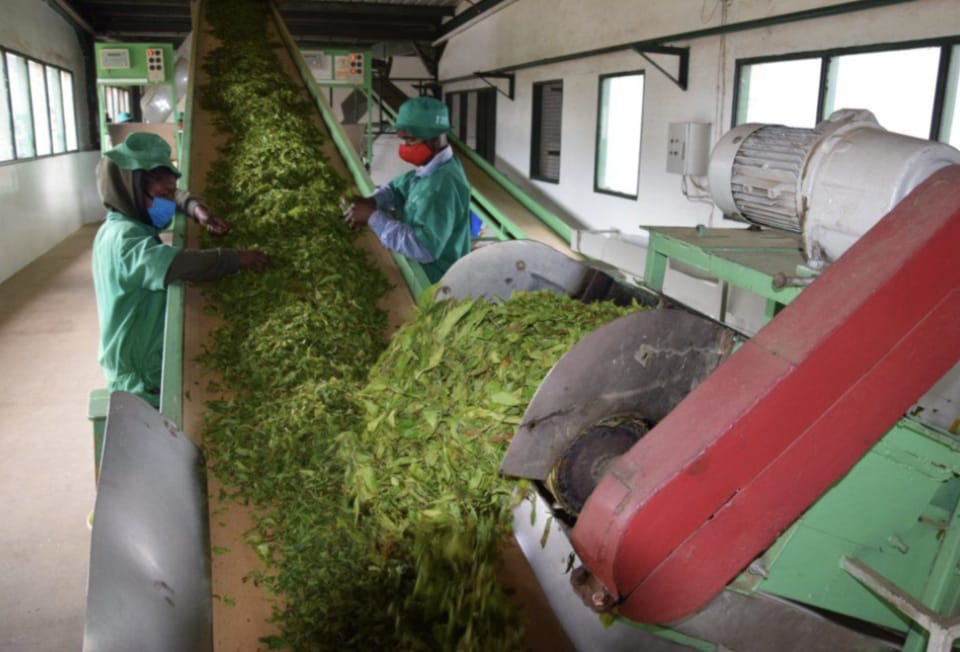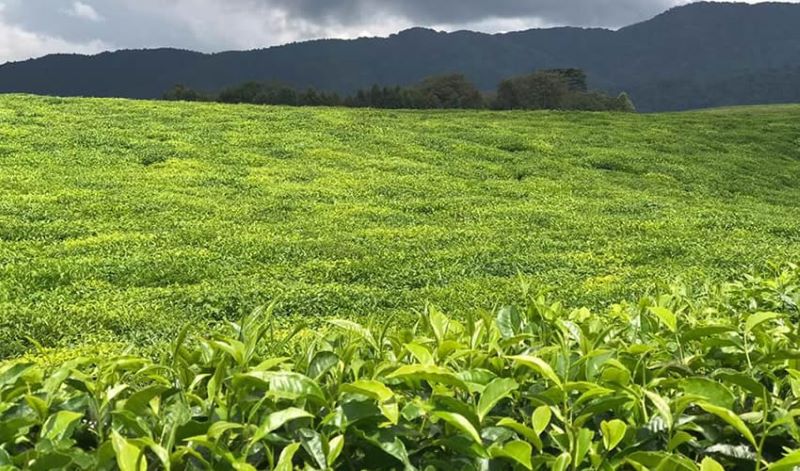
Figures from the National Agricultural Export Development Board (NAEB) show that by 2029, Rwanda’s tea production is expected to generate $164 million in export revenue, from 58,600tons of tea exported.
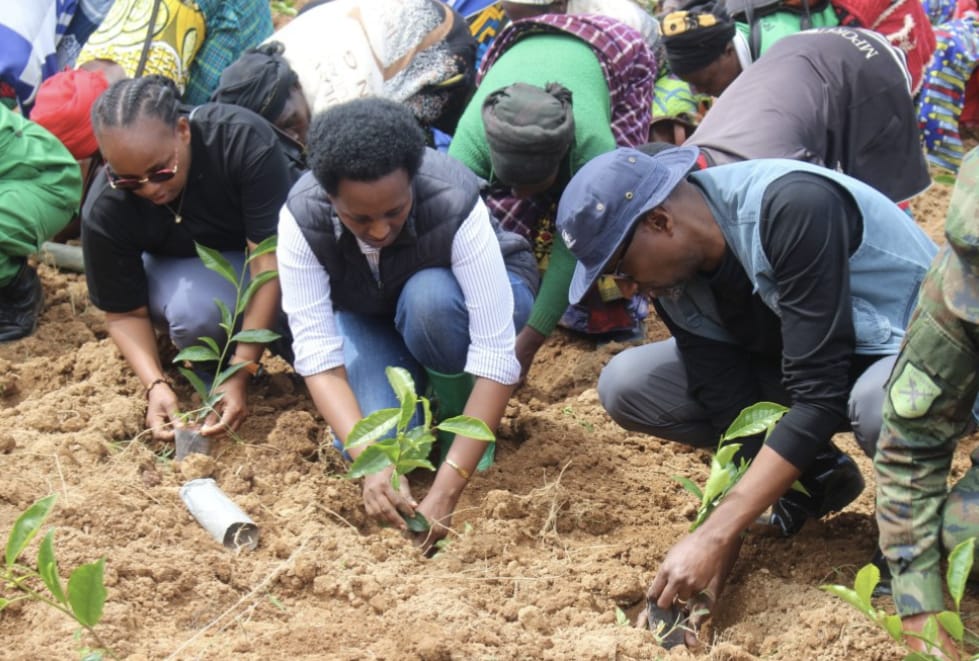
The importance of tea to Rwanda’s economy was highlighted again on November 12, 2025, when officials from NAEB joined tea farmers from the Rutsiro Tea Growers Cooperative (RUTEGROC) in an activity aimed at filling gaps in tea plantations (replanting where crops failed to grow) and expanding cultivation areas.
This activity was conducted under the PSAC project, which aims to support smallholder farmers producing export crops by increasing both the quantity and quality of their yields so they can compete better in international markets. The project operates in six districts that grow tea and coffee: Nyaruguru, Karongi, Nyamasheke, Rutsiro, Nyabihu, and Rulindo.
Alex Nkurunziza, Head of the Coffee and Tea Division at NAEB, said that through the PSAC project, the institution will help tea farmers to replant in areas where tea failed to grow.
“Tea continues to improve people’s livelihoods, which is why we decided to fill in the gaps in tea plantations and expand the cultivated area through the PSAC project,” he explained. “We will work closely with agronomists and farmers to increase production so that by 2029, the country earns $164 million from tea exports.” He also acknowledged that tea farmers still face challenges, mainly due to climate change, but emphasized NAEB’s commitment to working closely with them daily to achieve their targets.
Aloys Nzamwita, President of the Rutsiro Tea Growers Cooperative (RUTEGROC), said that when tea farming first started, local residents were reluctant, but over time they came to understand its benefits.
“At first, farmers didn’t see the value of growing tea,” he said. “Back in 2015, one kilogram sold for 100 Rwandan francs, but today it sells for 460 francs. We now consider tea farming a ‘cow that never stops giving milk’ since it provides income throughout the year. We are continuing to expand our fields in 2024 we planted 74 new hectares, and by 2027 we plan to add another 200 hectares.” Nzamwita added that farmers replanting tea will benefit from reduced maintenance costs and higher yields once the new plants mature.
Boniface Bitonda, another tea farmer, said: “More and more of us are engaging in tea farming, and it is profitable. At the beginning, we hesitated because we were used to planting only potatoes. But since more seedlings were provided after the first ones failed, once these new plants start producing, they will greatly increase our harvest.”
Bitonda confirmed that tea farming has lifted many families out of poverty, as it provides steady monthly income to pay for school fees and other needs.
In the six districts covered by the PSAC project, 8 million tea seedlings will be planted this year on 520 hectares both to expand production and to replace poorly performing crops.
In Rutsiro District alone, 150 hectares will be planted in 2025, and by 2029, the district will have 40 million seedlings covering 2,410 hectares. Currently, tea exports bring in around $110 million from 35,000 tons exported annually.