


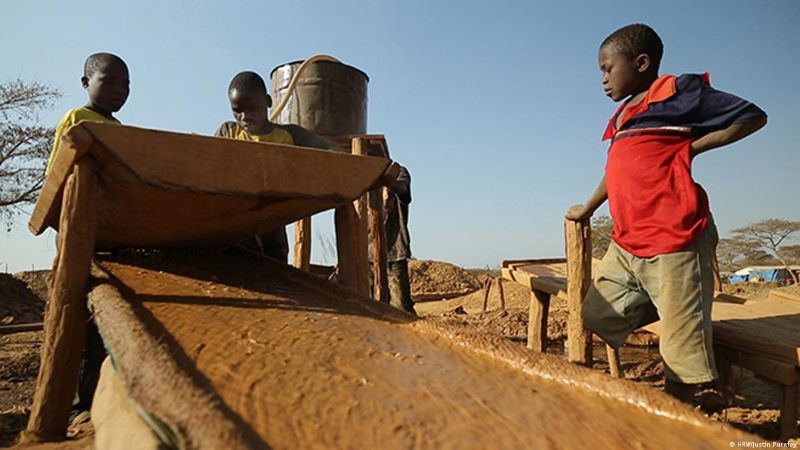
A recent report from the International Labour Organization (ILO) and the United Nations Children’s Fund (UNICEF) shows that child labor remains a major challenge, despite notable progress.
In 2015, the world committed to ending all forms of child labor by 2025, a deadline that is fast approaching. Currently, at least 138 million children worldwide are still engaged in child labor, and 54 million of them are involved in hazardous work that puts their lives at risk.
These hazardous activities include operating heavy or vibrating machinery, carrying heavy loads, working in environments exposed to chemicals or dust, night shifts, mining work, and other tasks that endanger children’s health and development.
Although there is still a long way to go, the report highlights some progress the number has dropped from 160 million to 138 million in the past four years.
Globally, child labor rates have declined in all regions between 2020 and 2024, though not at a fast enough pace to meet the 2025 target: Asia and the Pacific: from 5.6% to 3.1%, Sub-Saharan Africa: from 23.9% to 21.5%, Latin America and the Caribbean: from 6.0% to 5.5%.
Compared to the year 2000, the number of children in child labor has overall decreased by 100 million worldwide. Following the alarming rise recorded in 2020, there were fears that the COVID-19 pandemic would trigger a severe increase in child labor. However, the situation did not worsen as initially expected.
Data also indicates that younger children are mostly engaged in agriculture and livestock work, while older children tend to shift into industry and service sectors. To eliminate child labor, the report emphasizes the importance of: Ensuring access to education, strengthening financial stability for families, providing free and quality schooling, creating systems that lead children into decent employment after school, enforcing laws that penalize child labor employers Implementing poverty reduction programs, raising awareness through community campaigns Mobilizing efforts to prevent child labor in the private sector
Child labor situation in Rwanda
Although the ILO-UNICEF report does not present individual country statistics, Rwanda has documented its own findings.
In 2020, the National Commission for Human Rights reported 421 children involved in prohibited forms of child labor across 11 districts. Most were in urban areas, particularly in markets and parking zones for public transport and goods vehicles.
According to the Commission’s latest report on human rights compliance in the private sector, 5.94% of children working in private institutions are involved in prohibited labor.
Sector distribution includes:Transport sector: 8.8%, Tourism and hospitality: 7.5%, Small and medium businesses: 6.4%, Industries: 4.1%, Construction: 2.9%. An analysis by the Ministry of Public Service and Labour (MIFOTRA) shows regional distribution as follows: Kigali City: 5.8% (highest), Eastern Province: 3.8%, Western Province: 3.6%, Southern Province: 2.6% (lowest)
Rwanda has established systems and laws to prevent child labor, in line with ILO and UNICEF recommendations. Article 6 of Rwanda’s Labour Law prohibits employing children under 18 in jobs that: Harm their physical or psychological development,Are performed underground, underwater, at dangerous heights, or in confined spaces, Involve heavy or harmful machinery, Require carrying heavy loads, Take place in extreme temperatures, noise, vibration, or other hazardous conditions, Involve night shifts, excessive working hours, or unsafe environments.