


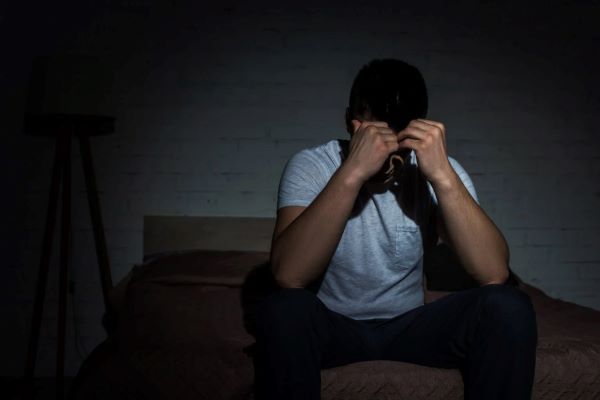
“Sometimes I cry at night, and I don’t know why,” says 23-year-old Bernard Nshimyumukiza, his voice barely above a whisper. He was born years after the 1994 Genocide against the Tutsi, yet he lives in the shadows of a past he never witnessed. For Bernard and many like him, the wounds of genocide are inherited, passed down not through stories or photographs, but through silence, anxiety, fear, and psychological scars etched deep within.
The Silent Burden of Youth
More than three decades have passed since the genocide, but for many Rwandan youths, trauma is not confined to history books. According to the 2018 Rwanda Mental Health Survey by the Rwanda Biomedical Centre (RBC), 27.4% of young people aged 14–25 suffer from psychological disorders, including trauma, depression, and anxiety. Behind these statistics lie broken homes, fearful childhoods, and unspoken suffering.
“It’s not unusual to see children of genocide survivors exhibiting symptoms of trauma they’ve never personally experienced,” explains Dr. Chaste Uwihoreye, a clinical psychologist and researcher. “Trauma can be passed on biologically, emotionally, and socially. Silence in families doesn’t protect children, it isolates them.”
Biological transmission includes changes in stress hormones passed from mother to child during pregnancy. Emotionally, children absorb their parents’ fears and behaviors. Socially, they inherit community narratives of survival and loss.
Mwungeri Regis, 21, says his mental health struggles began in his early teens. “My father never talked about his past, but he screamed in his sleep. I became scared to ask questions,” he recalls. “I started feeling like I was living someone else’s pain.” He later suffered panic attacks and depression but found mental health services lacking in his rural district.
Angelique Tuyisenge, a 19-year-old university student in Kigali, shares a similar journey. “I felt anxious all the time, cried without reason, and avoided people,” she says. It wasn’t until she saw a school counselor that she learned her mother had survived extreme violence during the genocide. “I realized I was carrying her pain without knowing it.”
Parents, too, are caught in trauma cycles. Rwigema Alphonse, a genocide survivor and father of four, confesses: “I thought silence protected my children, but my anger and mood swings became part of their lives. Trauma isn’t personal, it’s generational.”
Dr. Uwihoreye emphasizes that without treatment or open communication, trauma becomes embedded in family life. Children grow up emotionally unstable, mirroring their parents’ unresolved pain.
A Mental Health System Under Strain
Though Rwanda has made progress in mental health care, challenges persist. There are fewer than 15 psychiatrists for over 13 million people. Child psychologists are even scarcer. Most services remain concentrated in urban areas, leaving rural youth underserved.
“We have a strong community health network, but mental health is still under-prioritized,” says a social worker from a Kigali-based NGO. “Students are often misdiagnosed or dismissed because schools and parents lack awareness.”
Cultural stigma remains a hidden barrier. Admitting emotional distress is often seen as weakness or spiritual failure. “I was told to pray more, not to see a therapist,” Angelique says. “But prayer didn’t stop the panic attacks.”
Dr. Uwihoreye urges society to normalize therapy. “Mental illness isn’t a curse. It’s a medical condition, and it’s treatable.”
Government efforts, with support from RBC and partners like ARCT RUHUKA and UNICEF Rwanda, are growing. Public campaigns now promote mental health, and the national insurance scheme (Mutuelle de Santé) covers basic psychiatric services and some therapy.
Youth-led support groups are forming in schools and universities. “Talking saved me,” says Regis. “It made me feel human again.”
In rural Nyagatare, a youth-led initiative known “NGIRA NKUGIRE Club” uses art therapy and storytelling to help teens open.
Some youths are healing through arts, activism, and education. Nadine, 22, created a poetry collective focused on trauma recovery. “Writing gave me a voice,” she says. “We share our pain and our hope.”
Healing the Next Generation
The legacy of genocide is not just national memory; it’s a daily reality. Rwanda’s youth carry stories they never lived, emotions they can’t name, and pain they didn’t choose. Yet they also carry courage.
Healing intergenerational trauma takes more than clinics. It requires compassion, education, policy, and space to speak. It requires us all.
“By facing our pain,” says Rwigema, “we give our children a chance to live free from it.”
In telling these stories, we honor that promise.
Elia Antony Dukorerimana