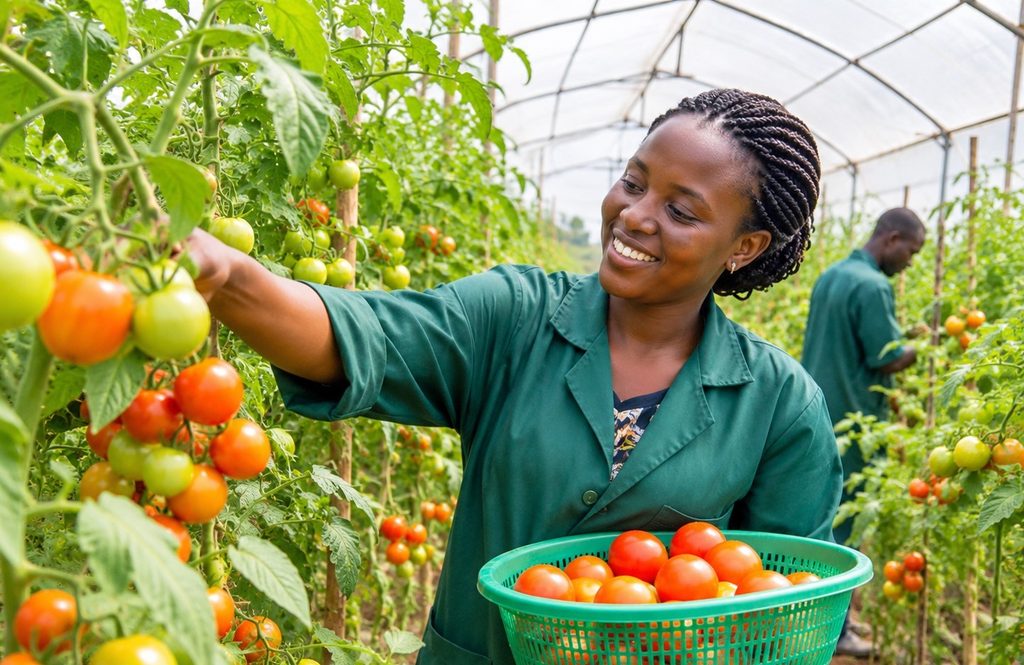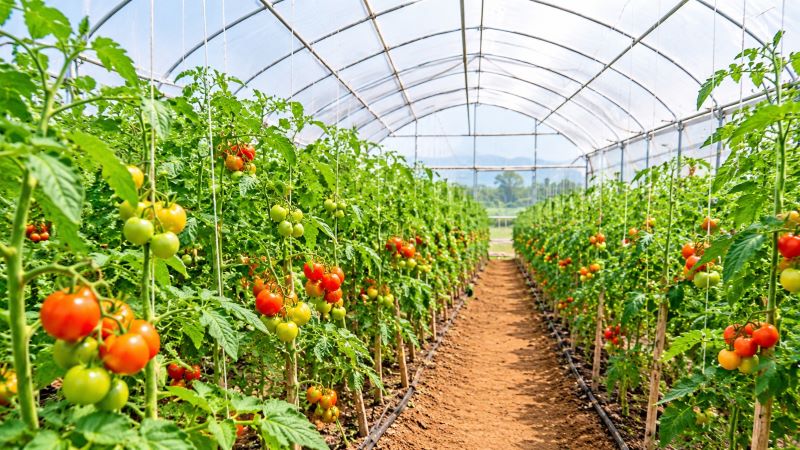
Greenhouse farming is increasingly becoming an important approach to modernising agriculture in Rwanda, offering farmers opportunities to increase production, improve the quality of agricultural products and adapt to changing weather conditions. As the country continues to promote sustainable agricultural development, greenhouse technology is emerging as a practical solution to challenges associated with limited agricultural land, unpredictable rainfall and growing demand for quality food.
Agriculture remains one of the main pillars of Rwanda’s economy, supporting millions of livelihoods and contributing significantly to national food security. However, farmers continue to face challenges, including climate variability, soil degradation, limited access to irrigation and the effects of pests and diseases. These challenges can affect crop production, farmers’ incomes and the availability of agricultural products in local markets.
Against this background, greenhouse farming provides an opportunity to improve agricultural productivity through controlled growing environments.
Increasing agricultural productivity throughout the year
One of the major advantages of greenhouse farming is its ability to create favourable conditions for crop growth. Unlike traditional open-field farming, greenhouses allow farmers to regulate important growing conditions, including temperature, humidity, ventilation and water supply.
This enables farmers to grow vegetables and other horticultural crops under more controlled conditions, reducing their dependence on unpredictable weather patterns.
In Rwanda, where rainfall patterns can affect agricultural production, greenhouse farming offers an opportunity to maintain more consistent production throughout the year. Crops such as tomatoes, sweet peppers, cucumbers and melons can benefit from this technology.
According to the World Bank, greenhouse farming can reduce the effects of unfavourable weather conditions, minimise pest and disease damage and increase agricultural yields. The institution also highlights the potential of greenhouse technology to improve farmers’ earnings through more productive horticultural farming.
Improving farmers’ incomes and creating employment opportunities
Beyond increasing production, greenhouse farming can contribute to improving the economic well-being of farmers, particularly smallholder farmers and young people interested in agribusiness.
By producing higher-quality crops and increasing the frequency of harvesting, farmers can supply markets more consistently and potentially earn better incomes. Greenhouse production also creates opportunities for agricultural businesses involved in seed supply, irrigation equipment, installation, packaging, transportation and marketing.
Furthermore, the development of greenhouse farming can create employment opportunities for young people and women in rural communities, encouraging them to participate in modern agricultural enterprises rather than depending exclusively on traditional farming methods.
Strengthening food security and improving nutrition
Greenhouse farming can also contribute to strengthening food security by increasing the availability of fresh vegetables and other nutritious agricultural products. With controlled production conditions, farmers can reduce losses associated with extreme weather and produce crops more consistently. This can help improve the supply of vegetables in local markets, schools, hotels, restaurants and other institutions.
Rwanda’s horticulture sector has considerable potential to contribute to poverty reduction, economic development and improved nutrition. According to the National Agricultural Export Development Board (NAEB), horticulture production takes place across all 30 districts, covering vegetables, fruits, nuts and flowers.
Expanding greenhouse farming could therefore strengthen this sector by enabling farmers to produce quality horticultural products for both domestic consumption and commercial markets.
Promoting climate-resilient and sustainable agriculture
Another important contribution of greenhouse farming is its potential to strengthen agricultural resilience to climate change. Rwanda’s agricultural sector is increasingly affected by unpredictable rainfall, prolonged dry periods and extreme weather events. These conditions can disrupt farming activities and reduce crop yields, particularly among farmers who depend on rain-fed agriculture.
Greenhouses, particularly when combined with efficient irrigation systems such as drip irrigation, can help farmers manage water resources more effectively and protect crops against certain weather-related risks.
The Government of Rwanda has continued to promote climate-smart agriculture as part of its efforts to build a more productive and resilient agricultural sector. In June 2025, the Ministry of Agriculture and Animal Resources, Rwanda Green Fund and the International Finance Corporation launched the Climate Smart Agriculture Investment Plan to mobilise investment in sustainable and climate-resilient agricultural production.
Supporting agricultural exports and market competitiveness
Greenhouse farming also presents opportunities for Rwanda to strengthen its position in regional and international agricultural markets.
The production of high-quality vegetables, fruits and other horticultural products can help farmers and agricultural businesses meet market requirements regarding quality, consistency and supply. This is particularly important as Rwanda seeks to expand its export-oriented agricultural production and increase the contribution of horticulture to economic growth.
On 7 May 2026, Rwanda officially launched Greenhouse Crop Insurance to protect farmers’ investments in greenhouse structures, equipment and crops against specified risks, including storms, hail and accidental damage.
Under the scheme, the Government subsidises 40 per cent of the insurance premium, while farmers contribute the remaining 60 per cent. The initiative is intended to strengthen farmers’ confidence in investing in greenhouse production and improve access to agricultural financing.
Addressing challenges to expand greenhouse farming
Despite its potential benefits, greenhouse farming in Rwanda still faces challenges that require attention.
The initial investment required to establish greenhouses can be relatively high, particularly for smallholder farmers with limited financial resources. Other challenges include limited technical knowledge, the cost of agricultural inputs, access to reliable irrigation systems and difficulties accessing profitable markets.
Addressing these challenges requires coordinated efforts from the Government, financial institutions, agricultural organisations, development partners and private investors.
Expanding farmers’ access to affordable financing, agricultural insurance, technical training and modern farming equipment would help make greenhouse technology more accessible.
Additionally, strengthening agricultural cooperatives and market linkages could enable smallholder farmers to benefit from collective production, improved bargaining power and more reliable market opportunities.
A promising future for Rwanda’s agricultural sector
As Rwanda continues its journey towards agricultural transformation, greenhouse farming represents an important opportunity to increase productivity, strengthen food security and improve rural livelihoods.
Its contribution goes beyond growing crops in protected structures; it offers a pathway towards more efficient land use, improved agricultural practices, employment creation and competitive horticultural production. However, achieving these benefits will depend on making the technology affordable, strengthening farmers’ technical capacities and ensuring access to finance, irrigation and markets.
With sustained investment and collaboration among agricultural stakeholders, greenhouse farming could become an increasingly important component of Rwanda’s efforts to build a modern, productive, climate-resilient and economically sustainable agricultural sector.