


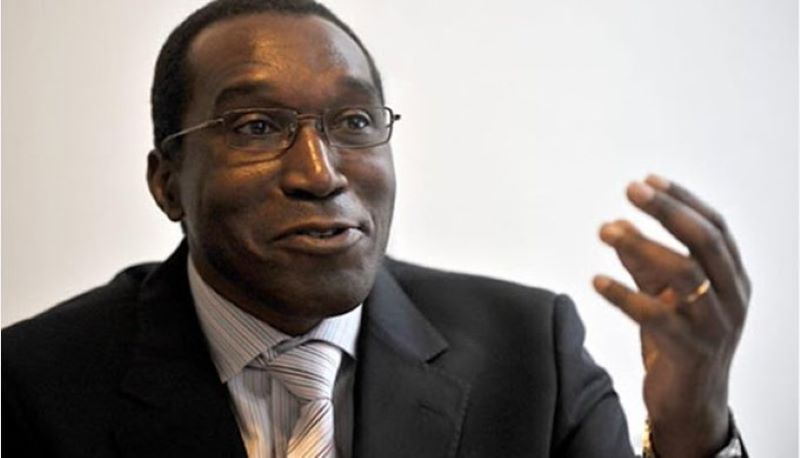
As the appeal trial of Dr. Eugène Rwamucyo before the Paris Assize Court in France approaches its conclusion, French prosecutors have requested that the court convict him of genocide, complicity in genocide, and complicity in crimes against humanity. They have also asked the court to sentence him to 30 years in prison.
Dr. Rwamucyo’s appeal trial opened on 9 June 2026 and is scheduled to conclude on 17 July2026. On 15 July 2026, the prosecution presented its final submissions, arguing that the evidence presented throughout the proceedings demonstrates his significant role in the 1994 Genocide against the Tutsi, particularly in the former Butare Prefecture.
Lead prosecutor Aude Duret told the court that Dr. Rwamucyo was among the intellectuals who worked with the government responsible for planning and implementing the genocide. According to the prosecution, he fully understood the consequences of his actions and knowingly participated in the execution of the genocidal campaign.
The prosecution relied on evidence showing that Dr. Rwamucyo attended a meeting of intellectuals held on 14 May 1994 at the National University of Rwanda. The meeting, convened by then Prime Minister Jean Kambanda, was allegedly intended to encourage academics and professionals to support the genocide against the Tutsi. Prosecutors argued that Dr. Rwamucyo delivered remarks during the meeting that promoted the ongoing killings.
Prosecutor Duret further informed the court that testimony presented during both the initial trial and the appeal established Dr. Rwamucyo’s close association with government supporters during the genocide. She also stated that he belonged to the extremist Coalition pour la Défense de la République (CDR) political party and had made statements targeting Tutsi.
According to the prosecution, Dr. Rwamucyo also supervised the burial of more than 214,000 Tutsi victims in Butare. Witnesses testified that some victims were buried while still alive, a claim the prosecution argued further demonstrated the gravity of his alleged involvement.
Representing the civil parties seeking damages, lawyer Me Clothilde Hazard argued on 13 July 2026 that Dr. Rwamucyo organized the burial of Tutsi victims in a manner that stripped them of dignity.
“What emerged during the trial is that he identified where the graves should be dug, bodies were thrown in without any respect, the graves were left without even a cross, and there was no burial that could be described as dignified. Even today, those graves still exist.”
The prosecution argued that these burial operations were not humanitarian efforts but were instead intended to conceal evidence of the Genocide against the Tutsi.
Another lawyer representing the civil parties, Me Alice Zarka, rejected Dr. Rwamucyo’s argument that the burials were carried out for public hygiene and sanitation purposes.
She argued that physical evidence of the genocide remains visible today and that such a justification cannot be accepted by survivors.
“Today we can still see the mass graves. We can still see the evidence of the genocide. The crimes committed during the genocide remain visible, and new evidence continues to be uncovered. Attempting to hide behind a public health argument in order to conceal his role in directing mass killings is something that victims simply cannot accept.”
In his defence, Dr. Eugène Rwamucyo denied concealing the bodies of Tutsi victims. He argued that it would have been impossible to hide massacres that lasted for several weeks and were witnessed by the public.