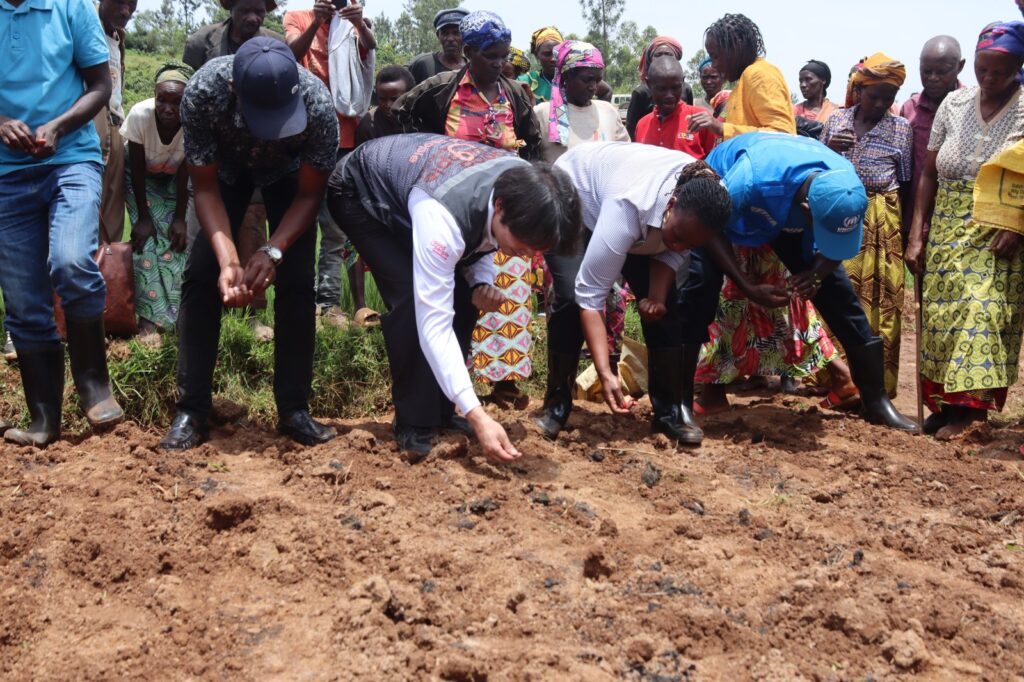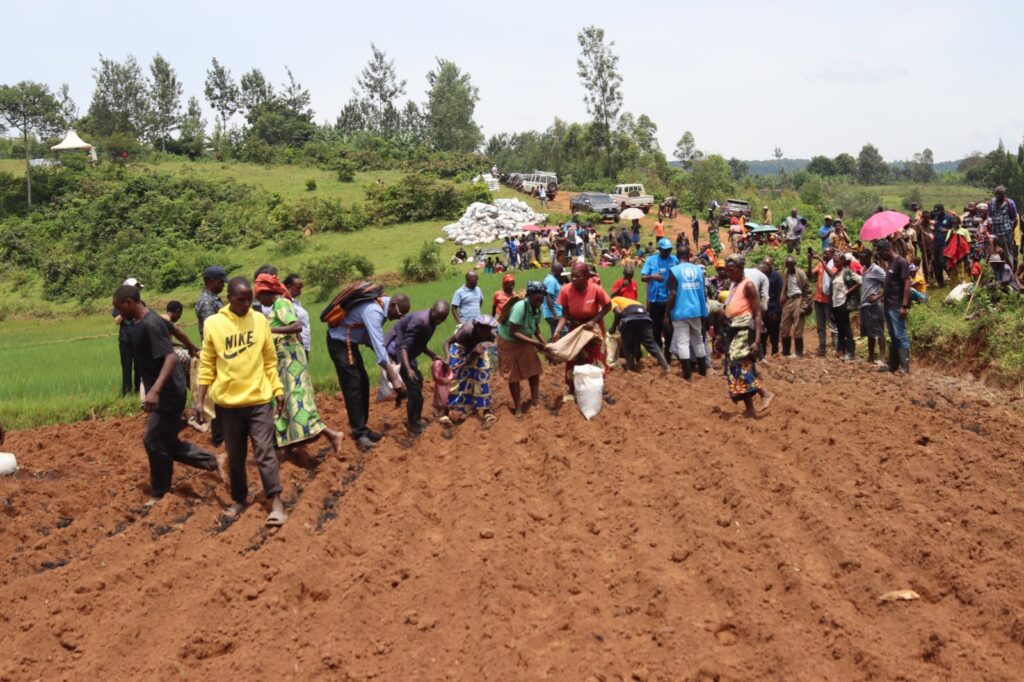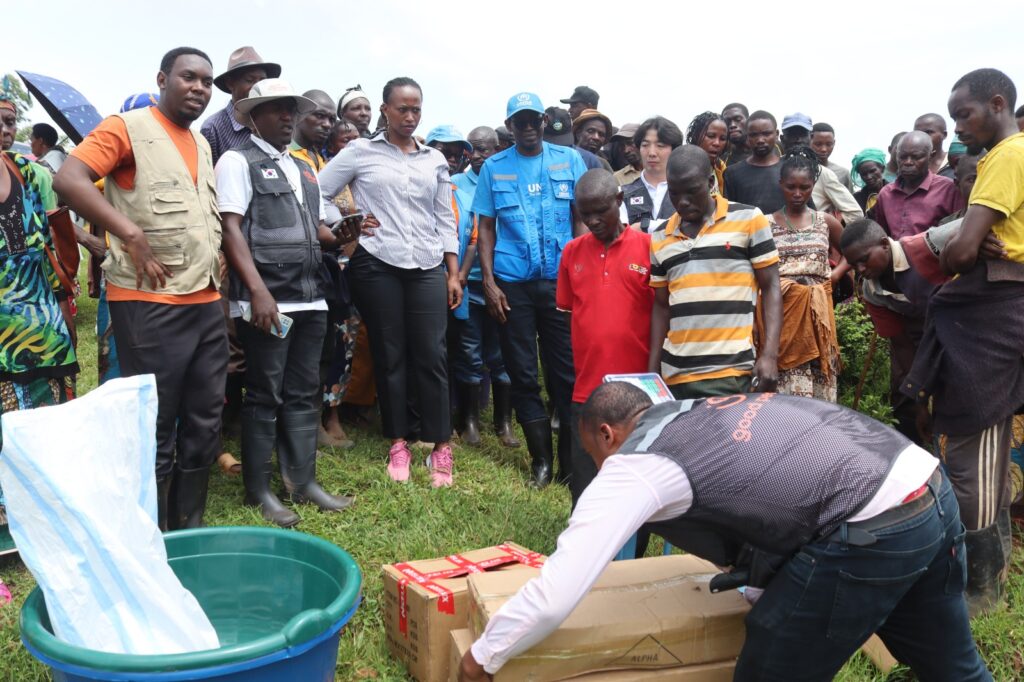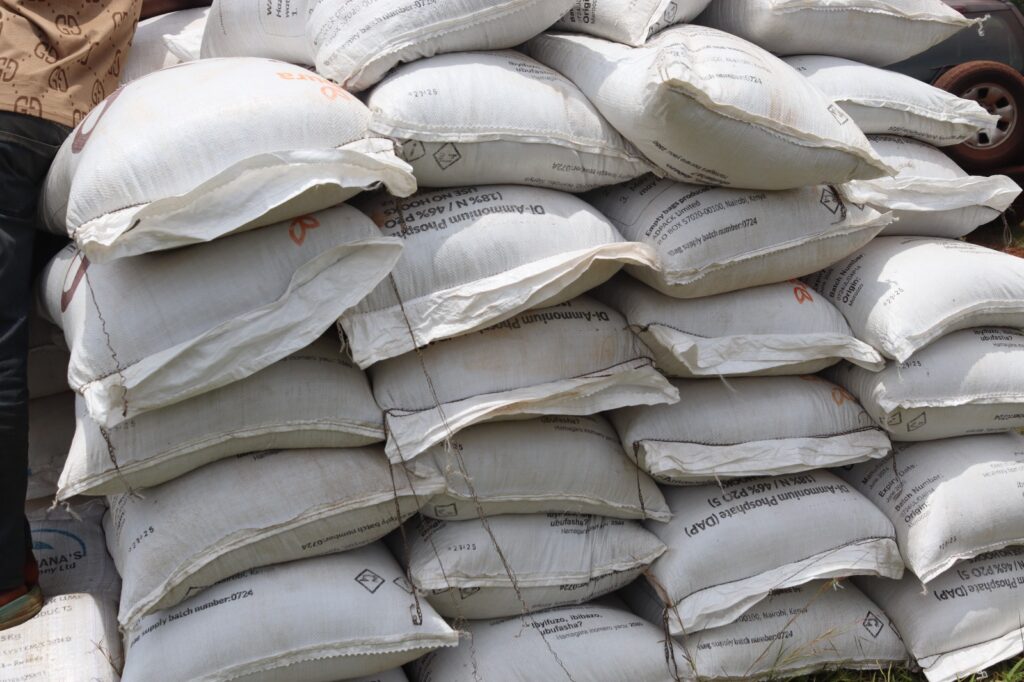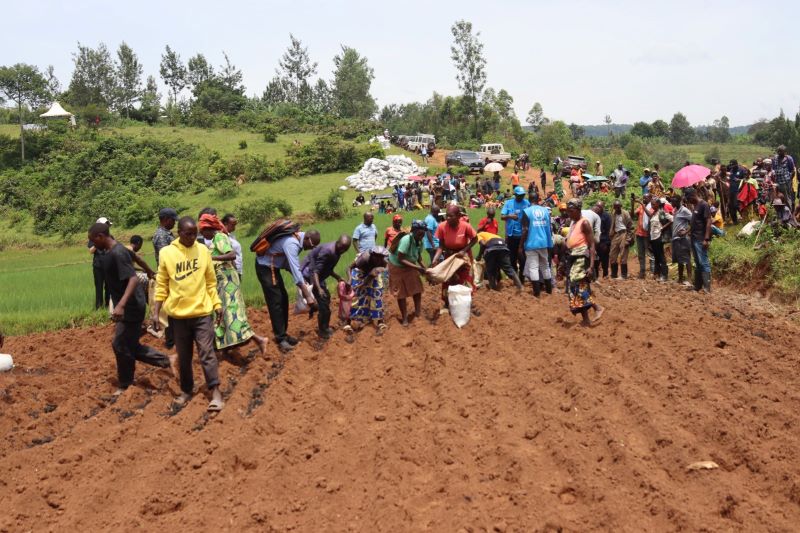
In Gisagara District, a new initiative to multiply climate-resilient soybean seeds has been launched in the Misizi marshland, located in Mugombwa Sector. The project is expected to increase agricultural productivity and improve the livelihoods of both refugees from Mugombwa camp and host community members.
The initiative, implemented by Rumbuka, will see soybean seeds multiplied on 14 hectares in an area known as Misizi Zone 2. The site is cultivated by farmers organized under the Icyerekezo Misizi Cooperative. Farmers say the new soybean variety is unique because it can withstand climate change effects, which is expected to significantly improve yields compared to traditional varieties.
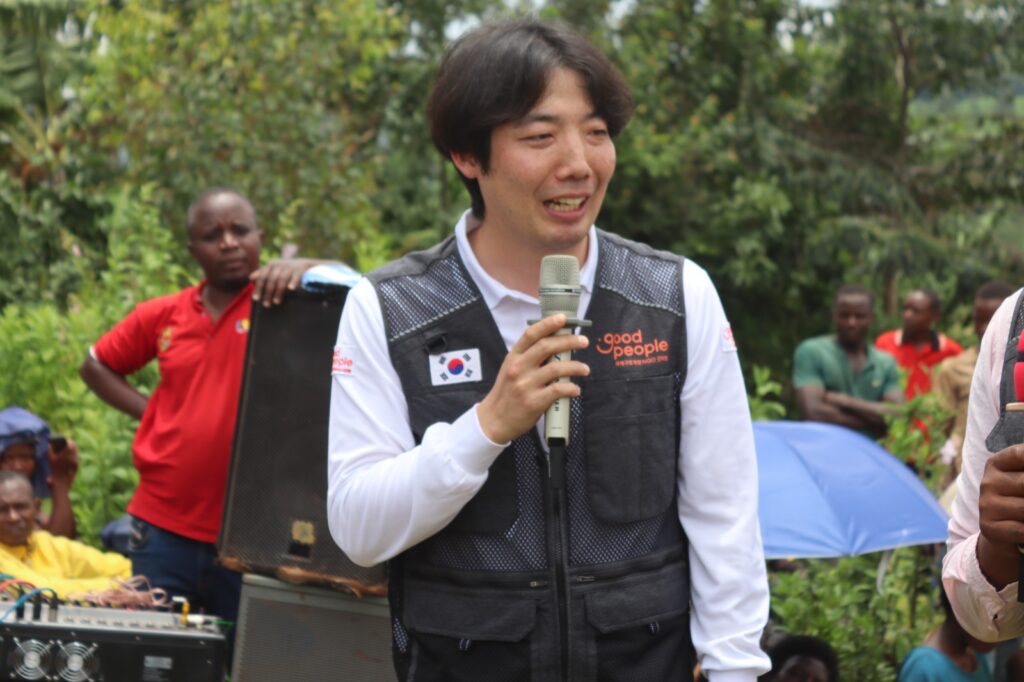
Kim Sungbeen, the Country Director of Good People in Rwanda, described the project as an investment in a better future. “Planting this soybean is planting the future. It is a climate-resilient seed that will produce high yields and help communities improve their economic status,” he said, urging farmers to follow technical guidance to achieve expected results.
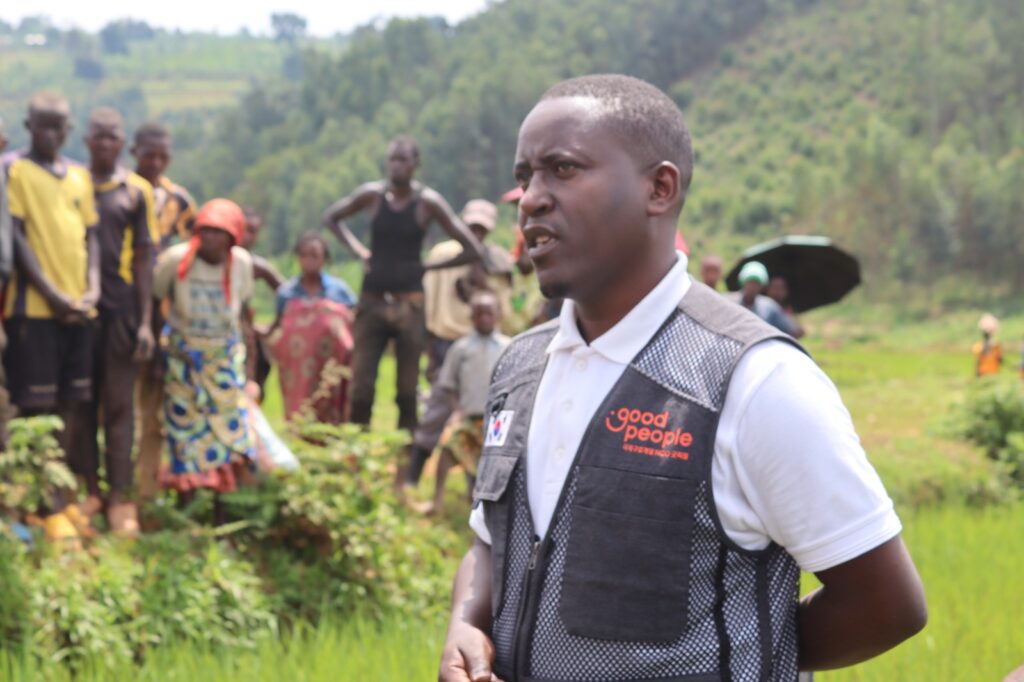
Jean Bosco Ngendahayo, a farmer working in the marshland, explained that low yields previously led to losses. “I used to invest about 30,000 Rwandan francs and harvest only 30 kilograms, which brought no profit. But now, having access to improved seeds that yield more is a great opportunity for us,” he said.
Another farmer, Ildephonse Nyaminani, echoed similar optimism. “We used to get very low yields. Having access to improved seeds nearby will help us increase production and earn sustainable income,” he noted.
Prosper Murwanashyaka, an agronomist of Good People supporting farmers in the area, said production is expected to rise significantly. “From 500 kilograms per hectare, we expect farmers to reach 1.2 tons per hectare, and within three years, up to 2 tons per hectare. This will be achieved through improved farming practices such as row planting and proper spacing,” he explained.
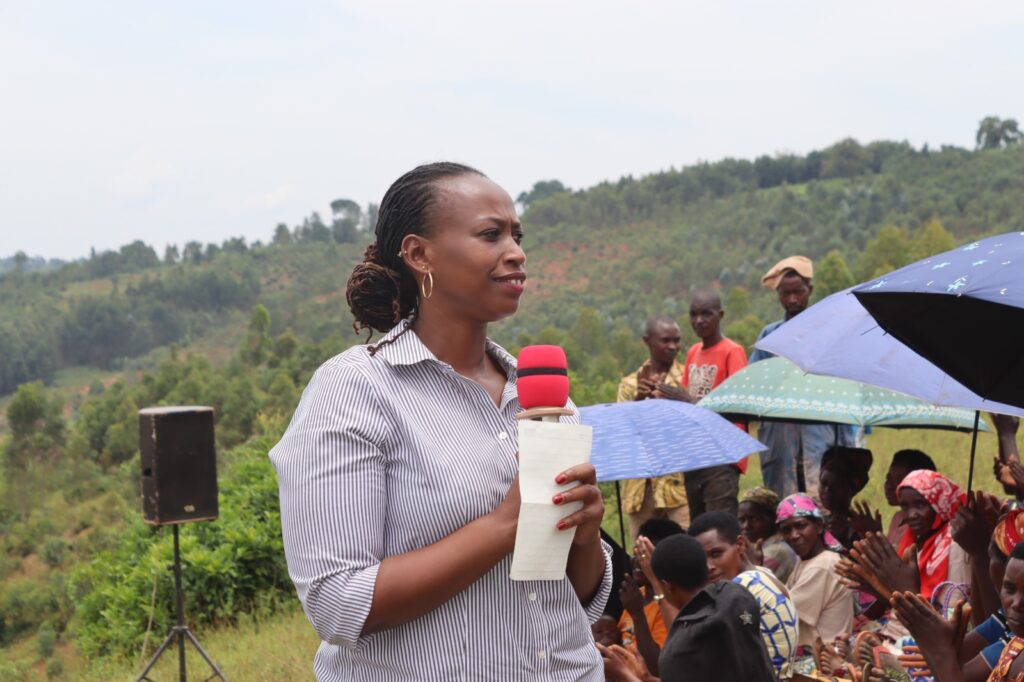
Denise Dusabe, Vice Mayor in charge of Social Affairs in Gisagara District, said the initiative aligns with the government’s inclusive agriculture policy.
“The government is committed to leaving no one behind. That is why this marshland is shared by both refugees and host communities. This soybean initiative will not only increase production but also position our district as a hub for soybean seed production,” she said.
soybeans are highly nutritious and economically valuable. “Soybeans are rich in protein and can be processed into products such as milk, tofu, and animal feed. When well utilized, they improve household nutrition and create business opportunities,” She added.
The Icyerekezo Misizi Cooperative has 1,427 members, including 300 refugees and 1,127 host community farmers. All members are optimistic that the project will help them escape poverty and achieve sustainable development.
Both leaders and farmers emphasize that adhering to technical advice and adopting modern farming methods will be key to maximizing productivity and profitability. This initiative also supports Rwanda’s national target to increase soybean production from 36,220 tons in 2024 to 53,019 tons by the 2026/27 season.
As climate-resilient seeds become widely available, farmers in Gisagara are hopeful that this innovation will provide a lasting solution to low yields and strengthen their economic resilience.