


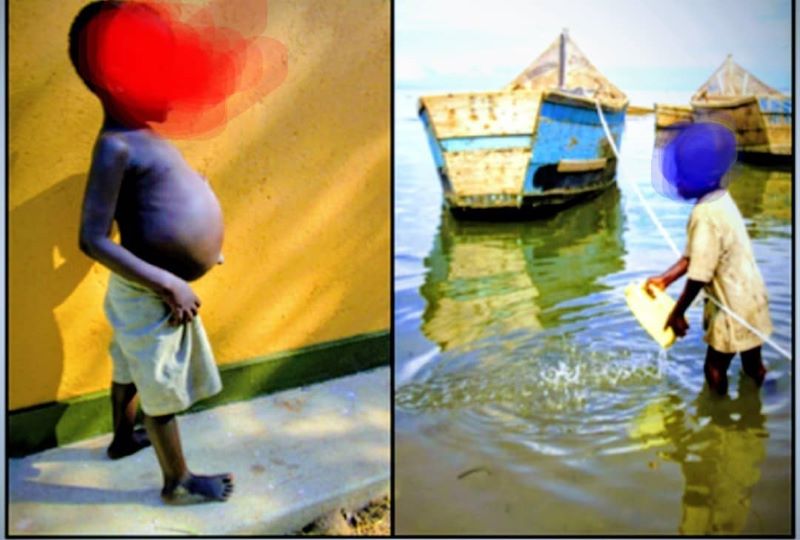
As some citizens continue to show limited understanding of how to prevent intestinal worm infections such as Bilharzia, health authorities in Rwanda have strengthened public awareness campaigns aimed at increasing community knowledge particularly among farmers working in marshlands.
Rwanda has set a target to completely eliminate Bilharzia by 2030. Meanwhile, the districts of Bugesera and Ruhango are expected to achieve elimination by 2027 through community training and the promotion of preventive measures.
Despite these efforts, some residents say they still lack sufficient knowledge about the disease and how it spreads.
Mukamana Claudine, a resident of Bugesera District who works in agriculture, says she had never heard of Bilharzia before awareness activities began.
“We used to hear about stomach diseases, but I did not know that one could be caused by working in swampy water. We used to farm while standing in water without protective boots,” She said.
Nshuti Jean Bosco, a resident of Ruhango Sector, says he had heard the name Bilharzia but did not understand how it is transmitted. “I had heard about Bilharzia, but I didn’t know how someone gets infected or how to prevent it. We thought it was an ordinary disease that only affects children.” He explained.
Mukeshimana Beatha, a mother of three, says lack of information made people careless. “When you don’t know a disease, you also don’t know how to protect yourself. We used to work in wetlands without enough information about the health risks involved.” She spoke.
Eric Salamba, an officer in the Neglected Tropical Diseases department at Rwanda NGOs Forum, says targeted awareness campaigns were designed to reach populations most at risk. “We organized various awareness activities to educate communities about Bilharzia, especially farmers working in marshlands. Those we train are prepared to pass on the knowledge to other residents in their villages.” He said.
He added that the program aims to ensure that communities themselves become active participants in preventing and controlling the spread of the disease.
On behalf of the Rwanda Biomedical Centre (RBC), Hitiyaremye Nathan noted that Bilharzia remains one of the diseases of concern, prompting the institution to establish long-term prevention strategies.
“Bilharzia is among the diseases that still worry us. Although we provide preventive medication, we realized that medicine alone is not enough. The sustainable solution is to equip citizens with knowledge on prevention and proper behavior when working in wetlands.” He explained.
He further explained that RBC has focused on training farmers and local leaders so they can act as community ambassadors. “We train farmers and local administrative leaders to become key messengers in raising awareness about Bilharzia prevention.” He added.
So far, RBC in partnership with Rwanda NGOs Forum has implemented various interventions in Bugesera and Ruhango districts aimed at stopping the spread of Bilharzia.
Through these initiatives, more than 3,000 residents have been trained, including youth, community health workers, religious leaders, healthcare providers, journalists, and other stakeholders.The institutions emphasize that continued awareness campaigns, access to accurate information, and strong community engagement are essential for Rwanda to achieve its goal of fully eliminating Bilharzia in the coming years.