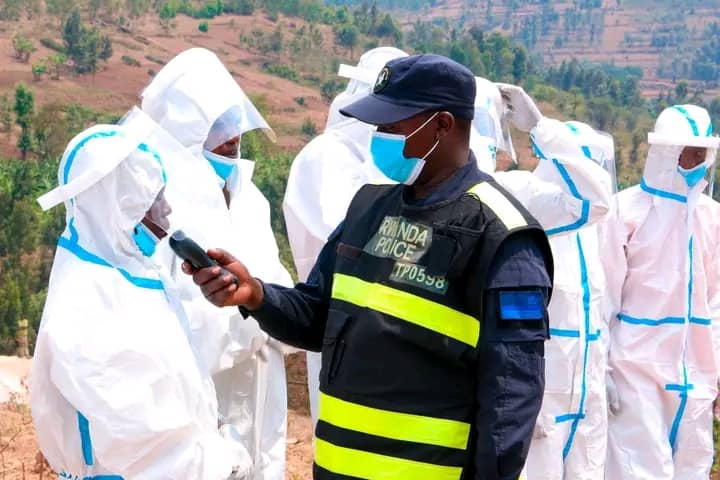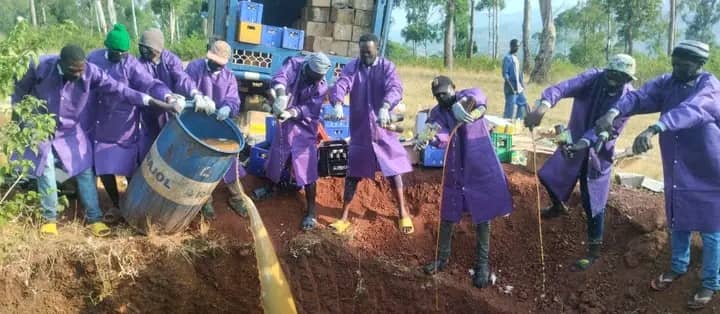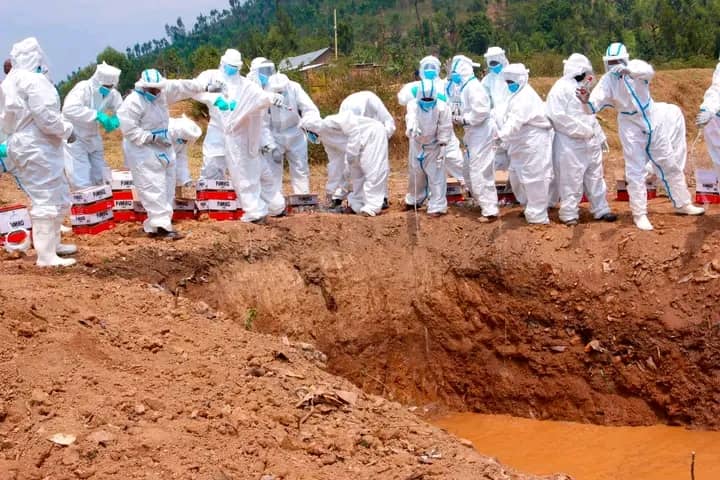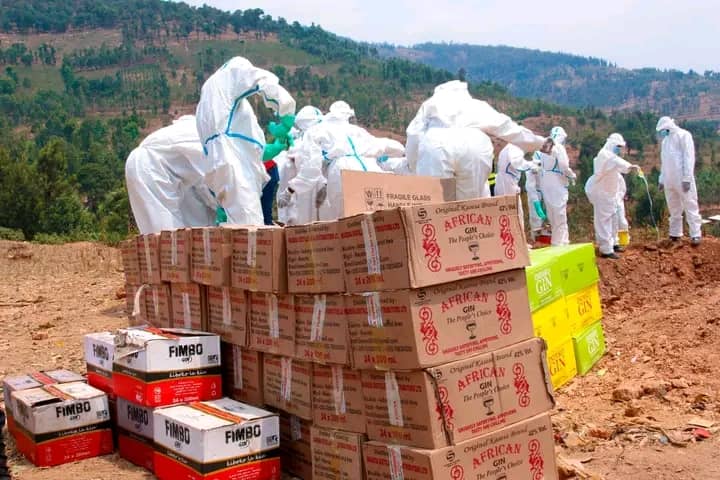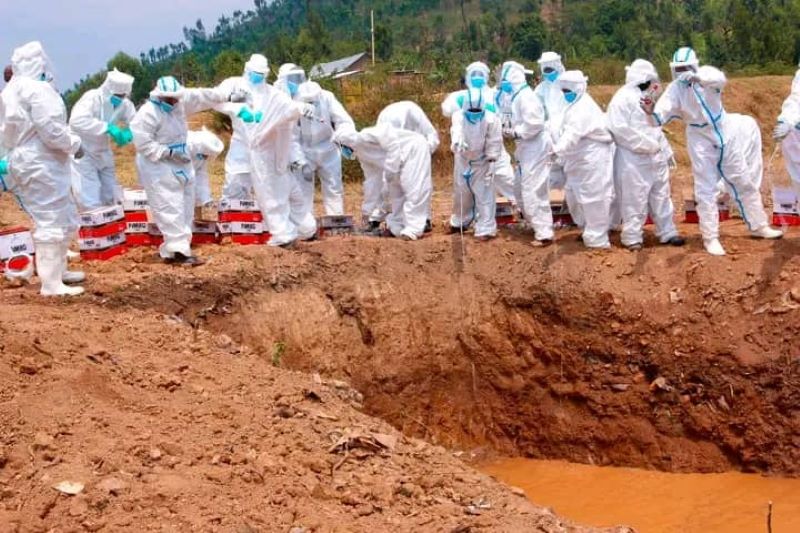
In a continued effort to combat substandard and counterfeit alcoholic beverages, the Rwanda National Police, in collaboration with other government institutions, has destroyed a large quantity of illicit alcohol seized during various operations across the Southern Province. Authorities say the exercise is aimed at protecting public health and preventing crimes linked to the consumption of unsafe alcoholic drinks.
The destroyed products included 1,313 cartons of assorted alcoholic beverages, 3,179 bottles, and 31,269 litres of locally brewed illicit liquor commonly known as igikwangari. One of the destruction sites was in Huye District, where authorities disposed of a significant amount of the notorious homemade alcohol popularly referred to as “Ibyuma,” which has been associated with severe health risks.
The spokesperson for the Rwanda National Police in the Southern Province, Chief Inspector of Police (CIP) Hasani Kamanzi, said that eliminating illicit alcohol requires the collective responsibility of all citizens because of its devastating impact on public health and security.
“Everyone has a role to play in preventing and fighting substandard and counterfeit alcoholic beverages. These drinks are poisonous and pose a serious threat to people’s health, particularly young people who represent Rwanda’s future. They impair brain function, affect sound judgment, and often lead consumers to engage in criminal activities such as assault, physical violence, and other offences,” he said.
CIP Kamanzi added that the harmful effects of illicit alcohol extend beyond individual consumers, contributing to domestic conflicts, gender-based violence, and increased criminal activity within communities.
Residents of Huye District echoed these concerns, saying homemade alcoholic drinks have negatively affected many families by fueling violence, theft, and irresponsible behaviour.
One resident, Uwimana Irene, welcomed the government’s crackdown.
“These ‘Ibyuma’ drinks have destroyed the lives of many young people and families. Some intoxicated individuals become violent toward their family members, while others resort to theft and other crimes. We are pleased that the authorities are destroying them because it helps protect our communities,” she said.
Annociata Kankesha, The Vice Mayor of Huye District in charge of Social Affairs, emphasized that addressing the problem requires cooperation between government institutions and the public.
“We urge residents to continue working closely with security agencies and local authorities by reporting anyone involved in the production or sale of illicit alcohol. Together, we can safeguard public health and build safer communities,” she said.
Medical experts have also warned about the dangers posed by illegally manufactured alcohol.
François Nsabimana, a physician at Kabutare Hospital, explained that these drinks may contain toxic chemicals capable of causing serious health complications.
“Illicit alcohol can severely damage the liver, kidneys, and brain, and in some cases, it can even lead to death. We strongly advise the public to avoid consuming these beverages,” he warned.
The Commander of Rwanda National Police in Huye District, Superintendent of Police (SP) A. Habimana, reaffirmed the Police’s commitment to cracking down on anyone involved in producing, distributing, or selling illegal alcoholic beverages.
“We will not tolerate individuals who manufacture, distribute, or sell substandard and counterfeit alcoholic drinks. We call upon every citizen to avoid anything that endangers their own lives or the lives of others and to continue providing information that will help eliminate these crimes completely,” he said.
The Rwanda National Police said operations targeting illicit alcohol will continue throughout the Southern Province and across the country. Authorities are urging the public to refrain from consuming or trading in illegal alcoholic beverages and to report any locations where such products are manufactured or sold.
Officials stressed that sustained cooperation between citizens and security agencies remains the most effective way to protect public health and maintain lasting community safety.