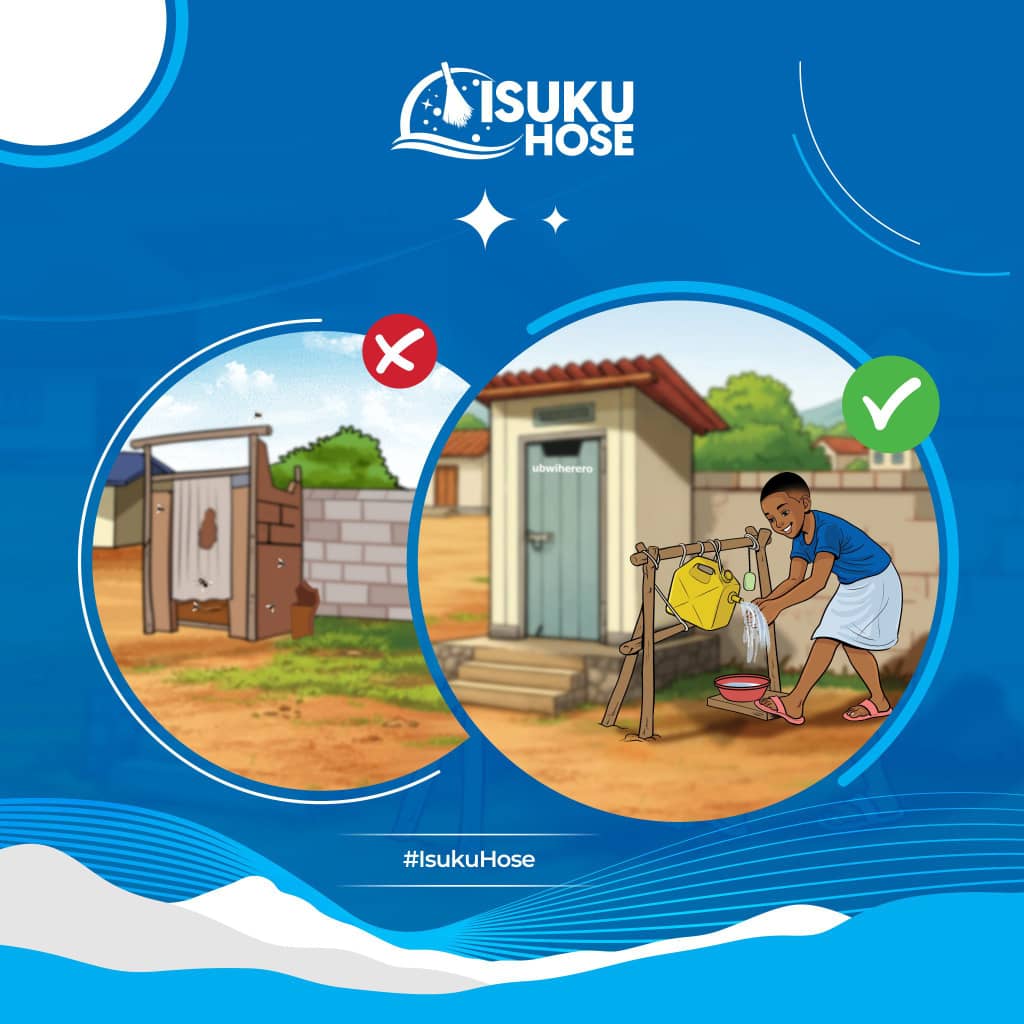
Hygiene is a cornerstone of good health and family development. One of the most effective ways to prevent diseases caused by poor sanitation is to build and properly use a latrine that meets required standards.
The Rwanda Biomedical Centre (RBC) reminds the public that a poorly constructed or unhygienic latrine can become a source of various diseases, including diarrhea, cholera, and other sanitation-related illnesses. RBC emphasizes that building and correctly using a standard latrine is one of the key measures for protecting public health and safeguarding the environment.
RBC further notes that constructing and properly using a standard latrine plays a significant role in reducing diseases linked to poor sanitation. It therefore calls on every household to have a latrine that meets required standards and to ensure regular handwashing after using it.
According to RBC, a latrine that meets standards should be dug to a depth of at least six meters where possible, to prevent waste from contaminating surface soil and water sources. It should have strong, well-built walls to ensure safety and durability, be fitted with a cover to reduce bad odors and prevent flies and other insects, be securely closed to keep out animals and disease-carrying insects, be kept clean at all times, and have a nearby handwashing facility with clean water and soap or an appropriate disinfectant.
Some residents say that using a standard latrine has significantly improved their lives. Mukamana Chantal, a resident of Nyamagabe District, says: “Since we built a latrine that meets standards, our children no longer miss school because of diarrhea as they used to. Hygiene in our household has greatly improved.”
Habimana Jean de Dieu, from Gisagara District, adds: “We learned the importance of hygiene after being educated by community health workers. A good latrine has given us peace of mind and helped us protect the water we use at home.”
Building and using a standard latrine has many benefits, including preventing sanitation-related diseases, promoting hygiene within households and the wider community, protecting the environment and sources of clean water, and improving family well-being, dignity, and overall quality of life.
Hygiene is not the responsibility of one person alone; it is everyone’s responsibility. Every household is encouraged to invest effort in building and maintaining a standard latrine so that communities can be safe, healthy, and resilient.