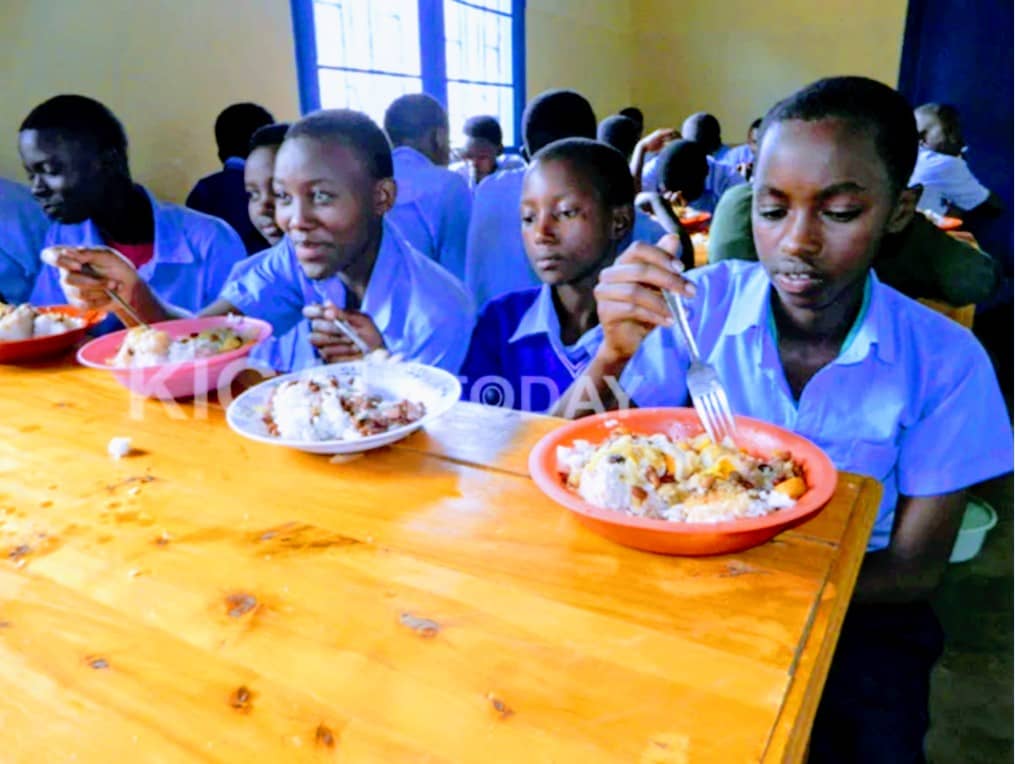
The Ministry of Agriculture and Animal Resources (MINAGRI) and the Ministry of Education (MINEDUC) have encouraged schools to start serving students nutrient-enriched beans as part of school feeding programs. These beans are rich in iron and zinc, which are essential for children’s growth and cognitive development.
Schools have been asked to start using these beans in the 2025/2026 academic year, beginning in September.
The beans are enriched through breeding crossing regular beans with varieties naturally high in iron and zinc resulting in seeds that carry these additional nutrients.
Distribution to schools is being carried out under a three-year initiative known as Sustainable School Feeding Innovations in Kigali (SSFI), which runs until 2026. The program, launched in 2024, has already reached 277,566 students in 195 schools across the City of Kigali.
A report on the project shows that 73% of the schools involved have already established gardens to grow these beans.
Sam Ngabire, an expert in school feeding programs at MINEDUC, explained that some schools have already received bean seeds and started preparing their fields.
“Some schools have already benefited from the program, especially in Kigali, where the cultivation of these beans has already begun in school gardens,” he said.
Minister of Agriculture and Animal Resources, Dr. Mark Cyubahiro Bagabe, noted that this initiative is part of a broader strategy to promote improved, nutrient-rich crops grown through modern farming methods.
“Our focus has been on addressing agricultural challenges, particularly financing, while promoting modern farming practices such as cultivating nutrient-enriched beans and introducing high-yield, disease-resistant crops,” he stated.
Statistics show that beans are among the most consumed foods in Rwanda, with each person eating an average of 34 kilograms of beans annually.
By introducing nutrient-enriched varieties into school feeding programs, the government hopes not only to improve children’s health and educational performance but also to encourage schools and communities to adopt more nutritious and resilient crops.