



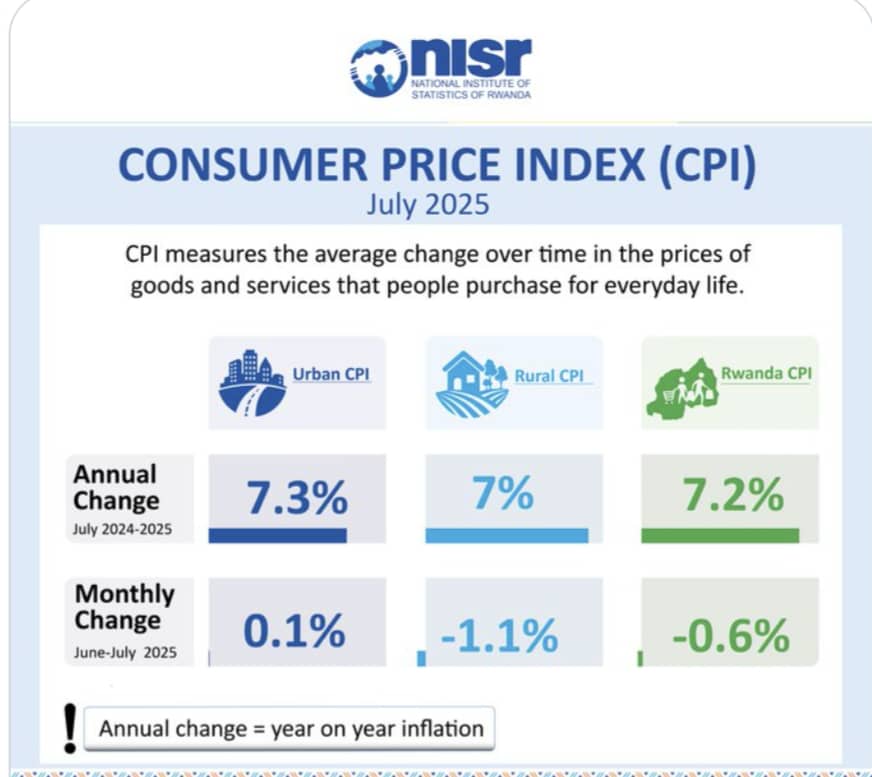
The National Institute of Statistics of Rwanda (NISR) has released new inflation data indicating that consumer prices in urban areas rose by 7.3% in July 2025 compared to the same month in 2024. This marks a slight increase from the 7% inflation rate recorded in June 2025, signaling sustained upward pressure on the cost of living.
Key Drivers of Annual Inflation (July 2024 to July 2025)
The increase in prices was driven by several sectors, with the following year-over-year changes:
- Food and non-alcoholic beverages increased by 6.4%, reflecting continued pressure on household essentials and daily consumption items.
- Alcoholic beverages and tobacco prices went up by 12.2%, which may reflect higher excise duties, increased import costs, or supply chain issues.
- Healthcare-related costs experienced a dramatic surge of 70.7%, marking the most significant contributor to inflation. This sharp rise could be due to increased demand for medical services, policy changes, or higher costs of medical supplies and medications.
- Transport costs rose by 7%, likely influenced by fuel price fluctuations, public transport fare adjustments, or global supply chain dynamics.
- Restaurants and accommodation services (meals and lodging) jumped by 20.1%, indicating rising prices in the hospitality sector, possibly due to increased tourism demand or higher operational costs.
Core Inflation
Excluding food and energy-related items, core inflation stood at 7.7% compared to July 2024. This suggests that underlying inflationary pressures are broad-based and not just limited to volatile categories like food and fuel.
Monthly Inflation (June 2025 to July 2025)
On a month-to-month basis, overall consumer prices increased by a modest 0.1% between June and July 2025. However, within that small overall rise were significant changes in key sectors:
- Healthcare costs rose dramatically by 69.6% in just one month, raising concerns about affordability and access to medical services.
- Transport prices increased by 2.7%, contributing to the month-on-month inflation.
Economic Implications
These figures suggest that while headline inflation is moderate on a monthly basis, certain essential sectors, especially healthcare and food, are experiencing sharp price increases. This could place considerable strain on household budgets, particularly for low- and middle-income families.