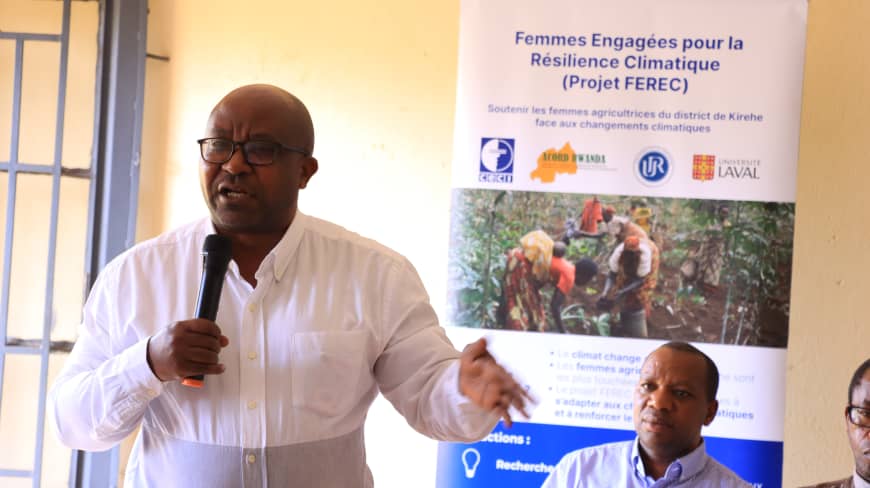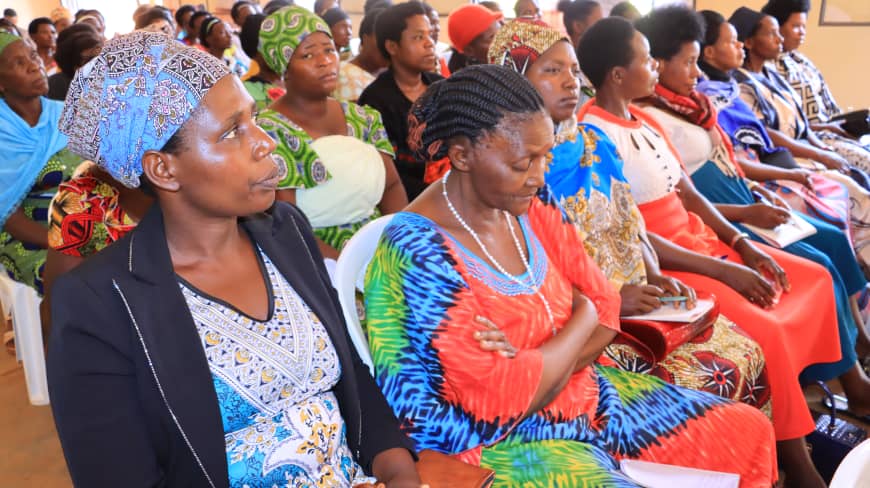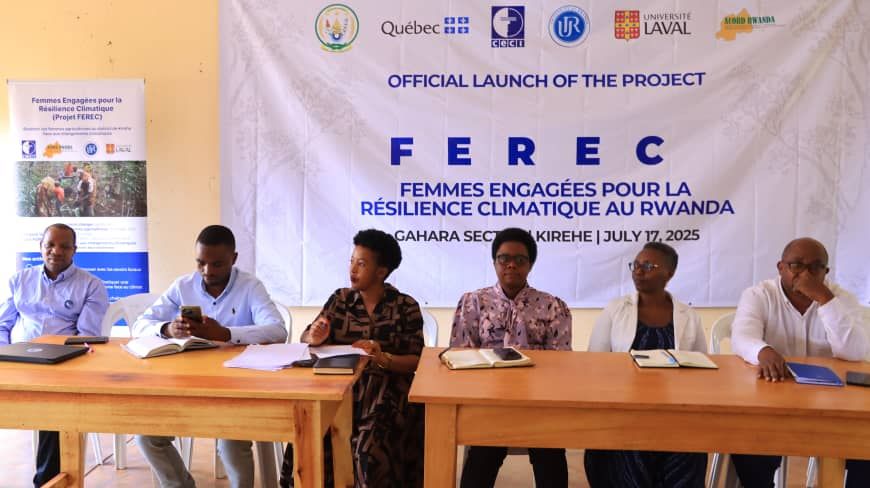
In Kirehe District, a new initiative is set to begin, aiming to tackle the effects of climate change. The activities will include the production of environmentally friendly fuel, cultivation of soil-preserving crops, tree planting, and the use of eco-friendly fertilizers. These efforts will be accompanied by education on gender equality and peaceful family coexistence to prevent domestic conflicts.
This was highlighted on July 17, 2025, during the official launch of the FEREC Project (Femmes Engagées pour la Résilience Climatique au Rwanda), held in Gahara Sector. The project is funded by CECI (Centre for International Studies and Cooperation) and will operate in four cells and 55 villages within Gahara Sector.
Over the next three years, the project will work with women to promote climate-smart agriculture and value chains, with a focus on soybean farming. Trees will be planted alongside crops, including indigenous species, especially around the Akagera River basin.
As part of the initiative, participants will learn to produce eco-friendly briquettes for cooking, make organic compost, and plant trees integrated with crops. Each household is expected to plant at least five trees. Women will also receive training on gender equality, shared responsibilities, and the fight against gender-based violence (GBV).
Speaking about why women were chosen as the primary beneficiaries of the project, Olive Zimurinda Ingabire, CECI’s Country Director in Rwanda, emphasized that women are disproportionately affected by climate change.
She said:
“When there’s a drought, it’s mostly women who suffer because men often migrate in search of work. When it floods, it’s women who go to gather firewood or fetch water, even when the rain has made water sources hard to access.”
Regarding the project’s components, Zimurinda explained that women will cultivate soybeans, plant trees, and receive training in gender equality.
“They will grow soybeans and plant trees, especially ones that can later be turned into fuel from the crop residues. Additionally, they’ll learn how to extract oil from soybeans to sell for income. Most importantly, they will be taught about gender equality and decision-making.”
Several women from Gahara Sector said that the project came at the right time.
Leonile Urayeneza from Murehe Cell said:
“Previously, we farmed using traditional methods. Now, they’re going to teach us sustainable farming that protects the soil and biodiversity. We’ll also be able to produce our own fuel.”
Chantal Nzakizwanimana, from Muhamba Cell emphasized:
“We’re grateful to CECI for this project. We’ll now be growing soybeans, which will improve our livelihoods. Before, we used to run into the forest to find firewood, but now we’ll make fuel from soybean residues. In three years, we’ll be economically empowered.”
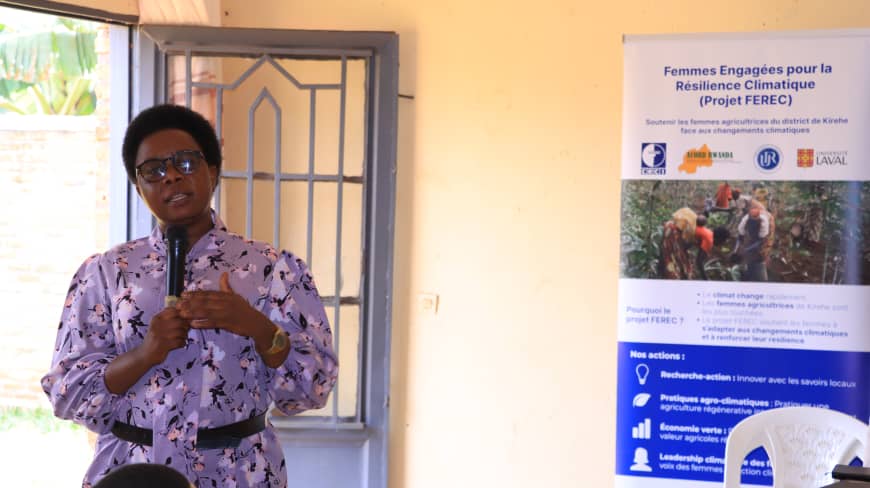
Janviere Mukandayisenga, Vice Mayor for Social Affairs in Kirehe District, thanked the organizations behind the project, especially for targeting Gahara Sector, which is frequently affected by climate change. She urged women to take the training seriously.
“We thank those who brought this project to our district, especially Gahara Sector, which is often affected by climate change and is near the Akagera River. Women, you’ve heard how important your role is, climate change affects you most. You should embrace this initiative. Make the most of what you harvest, like soybeans, which can be used to produce oil and generate income. You’ll also plant trees alongside your crops.” She spoke.
The FEREC project starts off with a strong base of over 12,000 women, all members of the COAIGA Cooperative, which has long been active in agriculture in the region. With their experience and community presence, these women are expected to play a vital role in ensuring the project’s success and building long-term climate resilience in Kirehe.