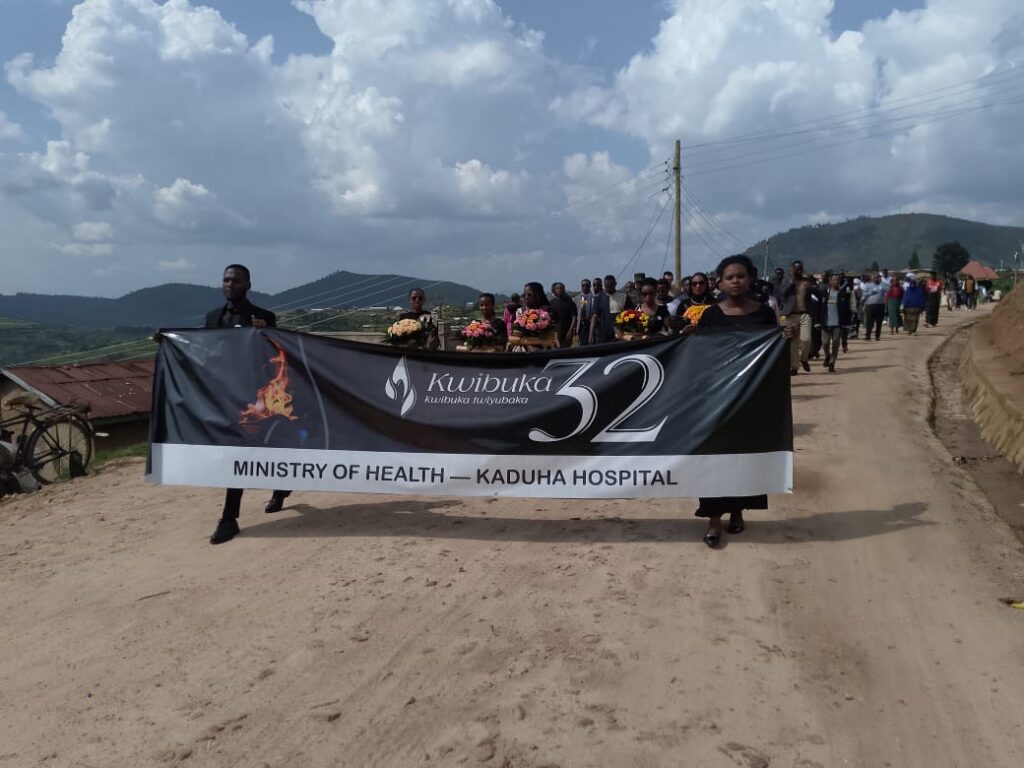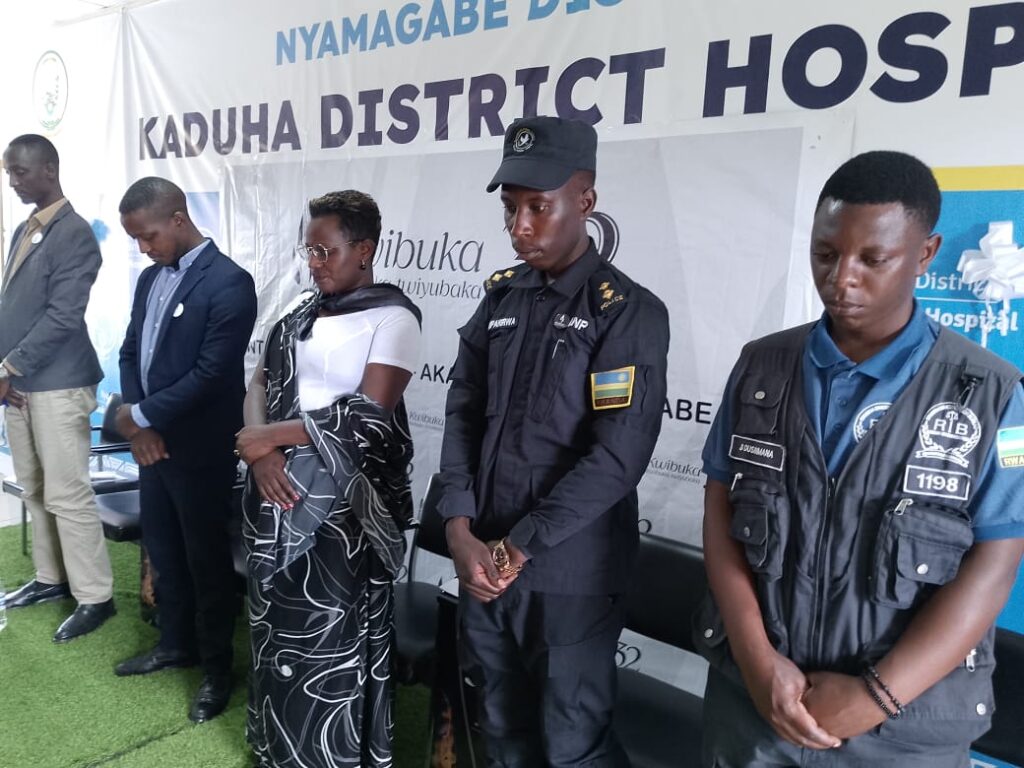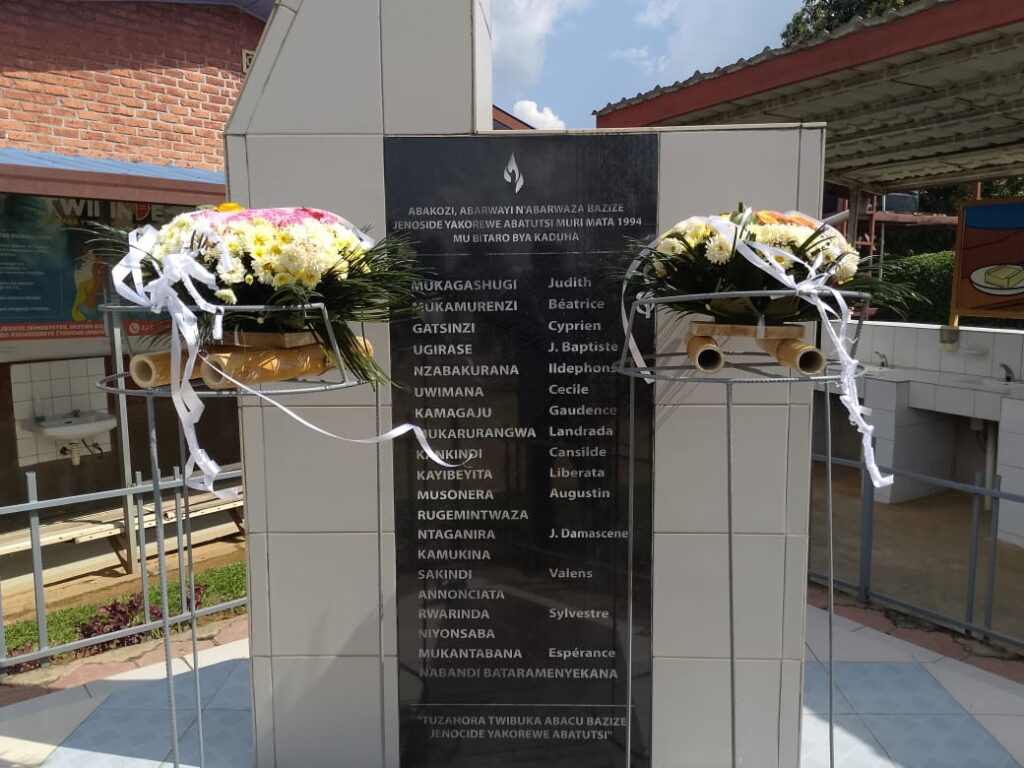
During the 32nd commemoration of the 1994 Genocide against the Tutsi held at Kaduha Hospital on May 21, 2026, participants reflected on the painful history that marked the area and emphasized the importance of preserving national unity and fighting genocide ideology, particularly among young people and health professionals.
The event brought together hospital leaders, genocide survivors, representatives of Ibuka, medical trainees, and residents of Kaduha Sector. Discussions focused on the history of the Genocide in Kaduha and the responsibility of safeguarding that memory for future generations.
Dr. Intwali Patrick, the Director of Kaduha Hospital, said the Genocide left a profound lesson for those working in the medical profession, noting that some healthcare workers abandoned their professional ethics and became accomplices in the killings.
“The principles and ethics of the medical profession are to help and protect human life. The Genocide showed us that some people betrayed that covenant and took the lives of those who had come seeking help. This should serve as a lesson to everyone working in healthcare today,” he said.
He also thanked the leadership of Rwanda, particularly President Paul Kagame, for stopping the Genocide at a time when the international community stood by and watched. He stressed that unity and reconciliation remain the foundation of Rwanda’s peace and development.
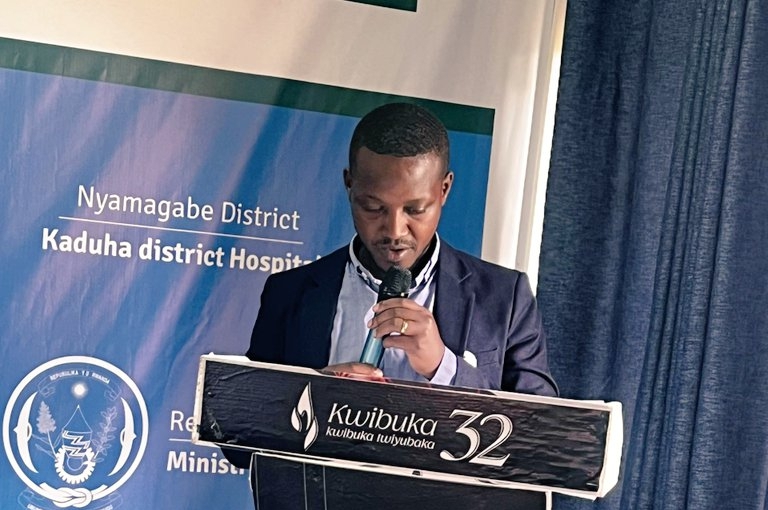
In an emotional testimony, Gahonzire Alphonse a genocide survivor, said that although many years have passed, seeing young people attend commemoration events gives him the strength to continue sharing the truth about what happened so history is never forgotten.
“For us, remembering is not something new. But whenever I see young people, I feel compelled to continue telling the true history of what happened,” he said.
He explained that he was 30 years old when the Genocide began and recalled how Tutsi families started being killed in Mushubi on April 8, 1994, forcing many to flee through different areas before reaching Kaduha. According to his testimony, many Tutsis sought refuge at the Kaduha Sous-Préfecture, which then served four communes. However, upon arrival, they were stripped of the weapons they carried because authorities feared they might defend themselves.
“Life there was extremely difficult. Some people had Hutu friends who secretly brought them food, but later they were stopped from helping. Many people died of hunger before they were killed by the Interahamwe,” he recounted.
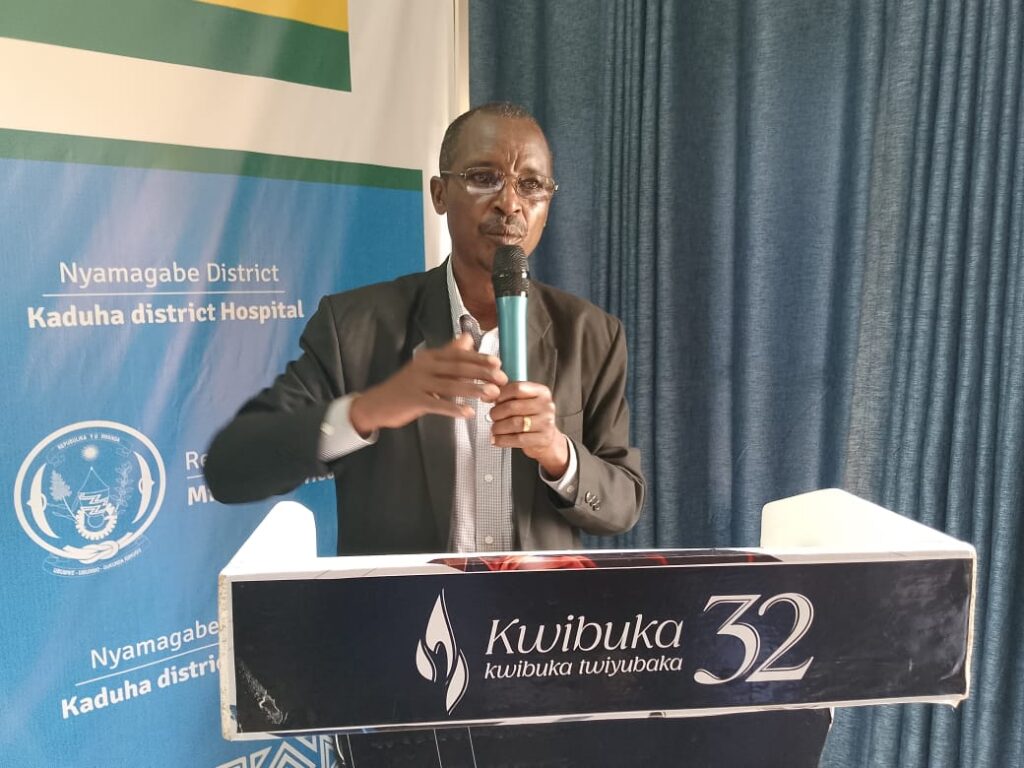
Mutwarasibo Norbert, who delivered a presentation on the history of the Genocide, said the Genocide against the Tutsi was not an accident but a long-planned campaign.
“Genocide only becomes possible when it has been prepared. The Genocide against the Tutsi was one of the most horrific crimes in Rwanda’s history,” he said.
He emphasized that the struggle to liberate the country and rebuild unity among Rwandans became the cornerstone for rebuilding the nation after the Genocide. He added that programs such as Ndi Umunyarwanda, Itorero, Girinka, and the National Dialogue Council (Umushyikirano) have played an important role in strengthening unity and reconciliation.
“Today, many Rwandans believe that being Rwandan comes before any other identity. That is a major step the country has achieved,” he said.
Alexis Hakizimana, the Ibuka representative in Kaduha Sector, praised Kaduha Hospital for organizing the commemoration event, saying it provides young people with an opportunity to learn the true history of the Genocide.
“Commemoration is part of our national history, and it will continue to be passed on to future generations,” he said.
He also expressed sadness that some people working in institutions meant to protect lives, including hospitals and churches, participated in the Genocide. “It is deeply painful that a healthcare worker could take another person’s life. Such behavior is like a virus that must always be fought against,” he said.
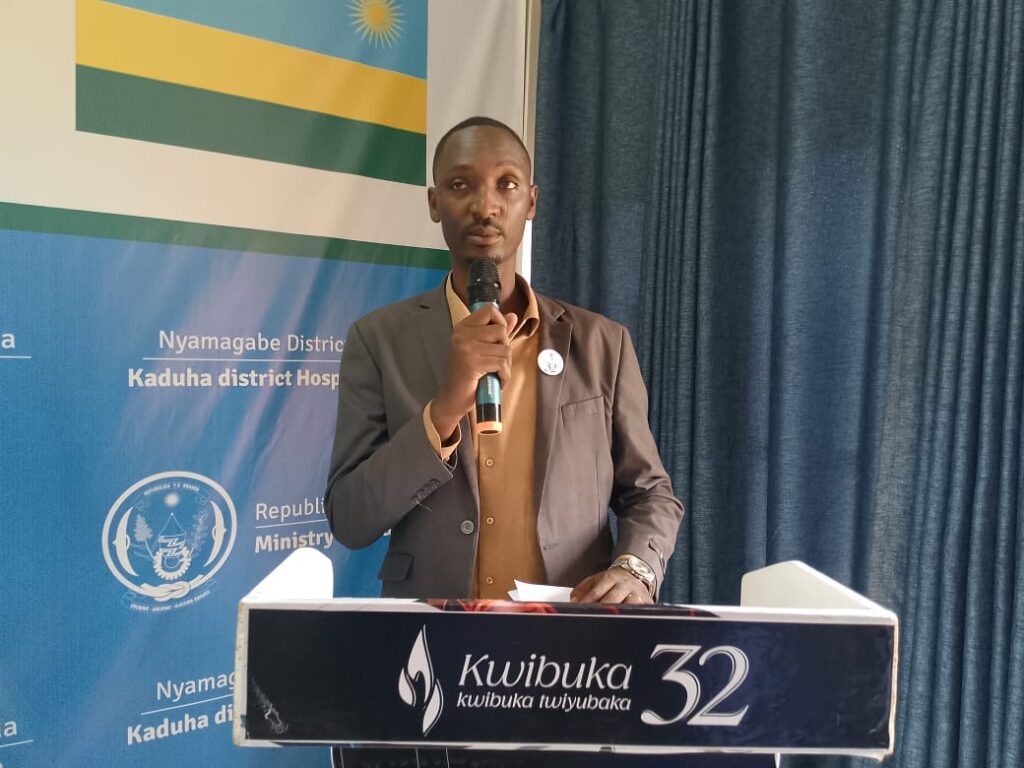
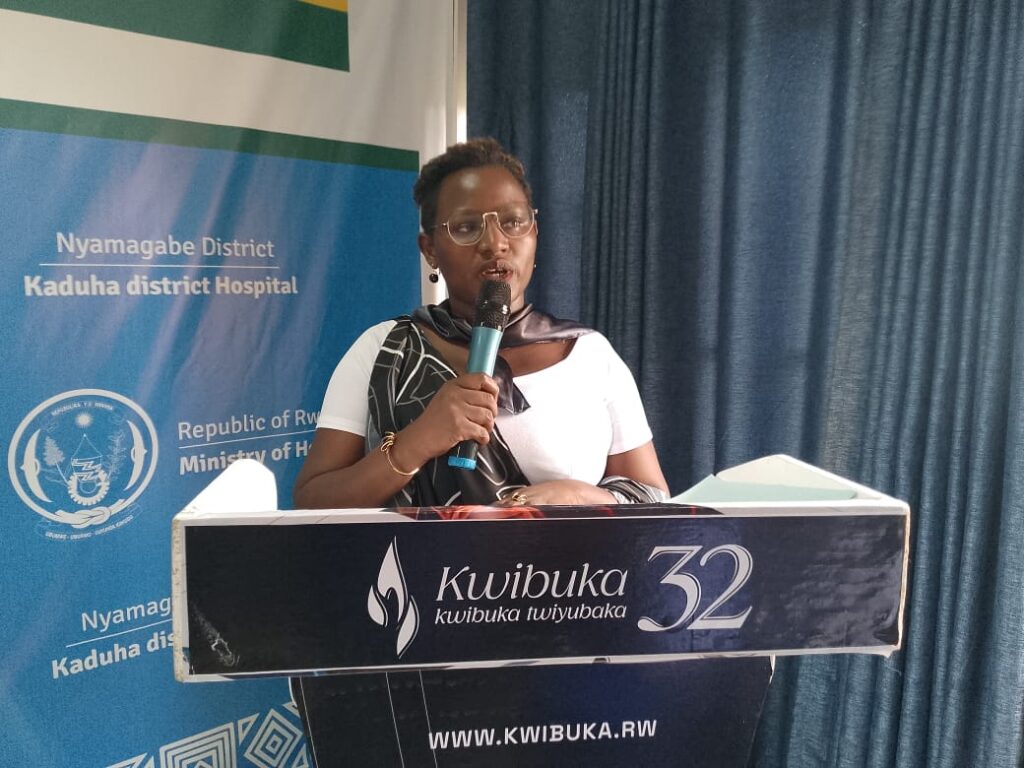
Marie Scolastique Muyishimire, Corporate service division Manager in Nyamagabe District, said commemoration is an opportunity to restore dignity to the victims of the Genocide and preserve the country’s history.
“The fact that bodies were found in hospitals and churches shows the scale and brutality of the Genocide in our country,” she said.
She urged young people studying medical professions to become protectors of life and to reject anyone spreading genocide ideology. Mushimiyimana also addressed the issue of bodies of genocide victims that have still not been recovered, calling on anyone with information to come forward so the victims can be given a dignified burial.
“It is painful that even today, bodies are still being discovered in Kaduha. We urge anyone with information about where victims were buried to share it so they can be laid to rest with dignity,” she said.
During the 32nd commemoration of the Genocide against the Tutsi at the Kaduha Sector level, three bodies were laid to rest in dignity. However, between May 20 and 21, 2026, an additional 75 bodies were discovered at Groupe Scolaire Saint Hanibal in Gatovu Cell while school infrastructure construction works were underway. The remains are expected to be given a dignified burial during next year’s commemoration activities.