To boost agricultural productivity and protect the environment, authorities in Gisagara District say a completed project in Dahwe Cell, Ndora Sector, is set to transform farmers’ livelihoods through solar powered irrigation and terracing.
This project addresses long standing challenges that had affected farmers in the area, including soil erosion and declining soil fertility. Residents explain that before the project, the hillsides were dominated by stones and severe erosion, making farming both difficult and unproductive.
Emmanuel Ruyenzi, a resident of Dahwe Cell, said:“Before the terraces were constructed, no one would have wanted to farm here. In some places, you would try to cultivate and find the soil full of stones, making it impossible for crops to grow.”
He added that after the introduction of terraces, yields have started to improve:
“We planted potatoes and beans, and although we haven’t yet reached our full target, production has increased significantly compared to before.”
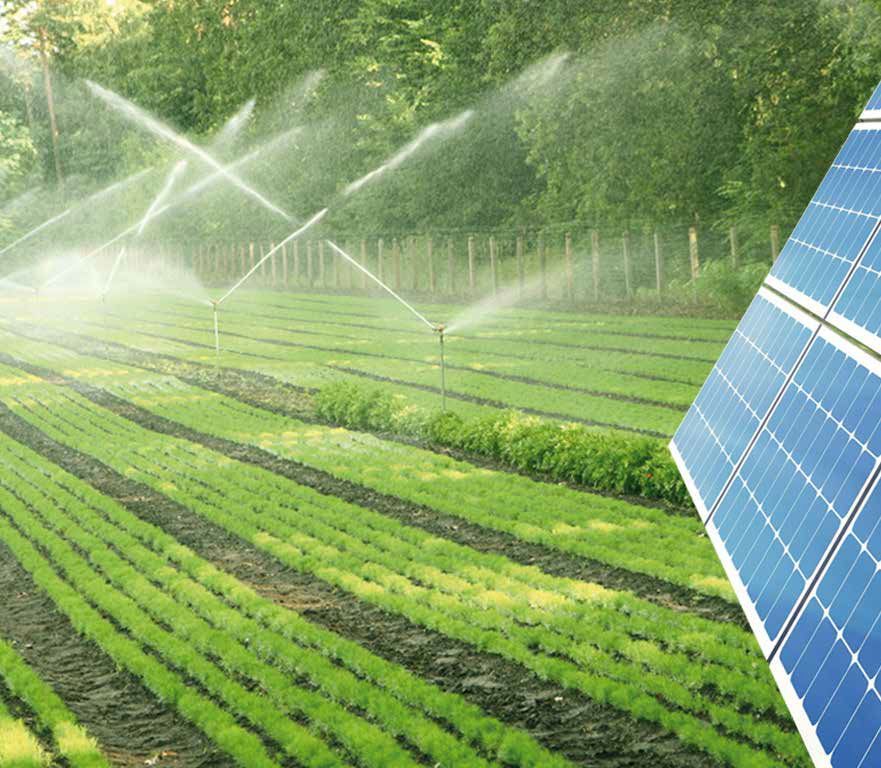
Farmers also emphasize that the introduction of solar-powered irrigation will enable them to cultivate throughout the year, including during the dry season, when they previously had no farming activities.
“In the dry season, we used to have nothing to do, but now this is a great opportunity because we will be able to farm all year round,” Ruyenzi noted.
Brandine Uwizeyimana also highlighted the visible transformation:
“This used to be a barren hillside because erosion carried away fertile soil into the marshlands. But now, with terraces and agroforestry practices, we can farm productively, and the soil is no longer washed away.”
She added that the planted trees play an important role:
“These trees help protect the environment and also provide fodder for livestock, which benefits the community.”
Gisagara District authorities say the project will significantly increase yields per hectare and improve food security among residents. Jean Paul Habineza, in charge of economic development in the district, explained:
“This project will greatly increase productivity. Where one hectare used to produce about 2 tons of maize, we expect it to reach up to 8 tons thanks to irrigation and proper land management.”
He also expressed appreciation to development partners:“We thank Trocaire, Duhamic ADRI, and the Government of Rwanda. This project addresses climate change challenges and expands productive agricultural land.”
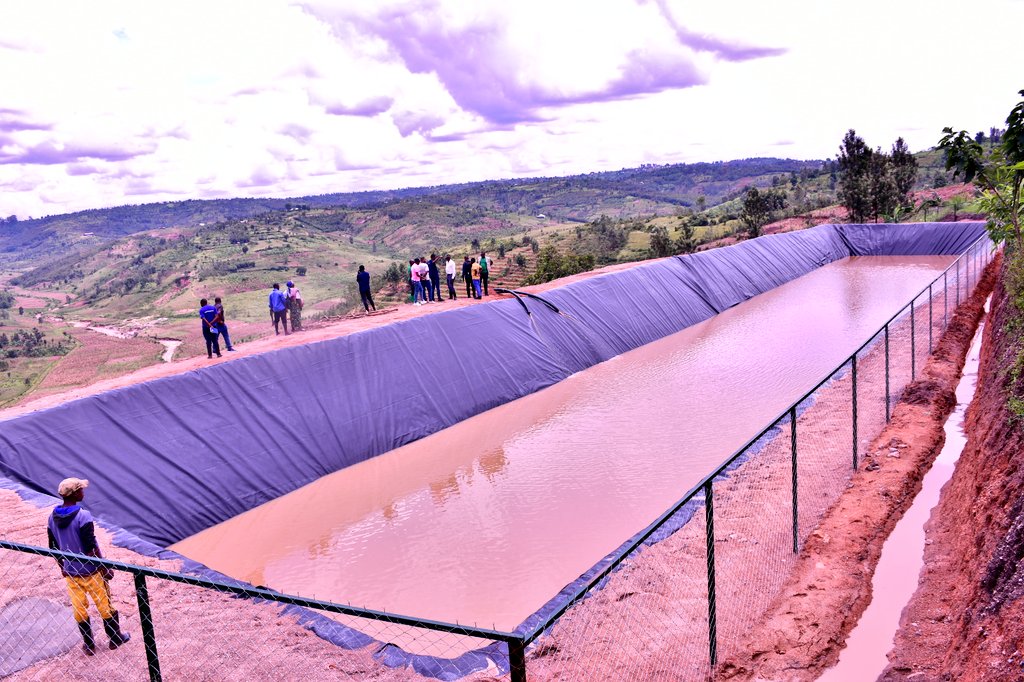
The initiative also focuses on environmental conservation through agroforestry and terracing, which help prevent soil erosion. In terms of water management, a reservoir (dam sheet) with a capacity of 2,500 cubic meters has been constructed to store water for irrigation on the hillsides.
Data shows that one hectare requires about 40 cubic meters of water per day, meaning 12 hectares will need approximately 480 cubic meters daily. This indicates that the stored water can be sustainably managed over time, enabling continuous farming across seasons.
Funded by Trocaire in partnership with Duhamic ADRI and the Government of Scotland, the project will run for three years. However, its benefits are expected to last much longer, especially for members of the cooperative operating in the Kibugazi marshland.
Overall, the project demonstrates how solar-powered technology combined with sustainable land management practices can provide a long-term solution for improving agriculture and addressing climate change in Rwanda.