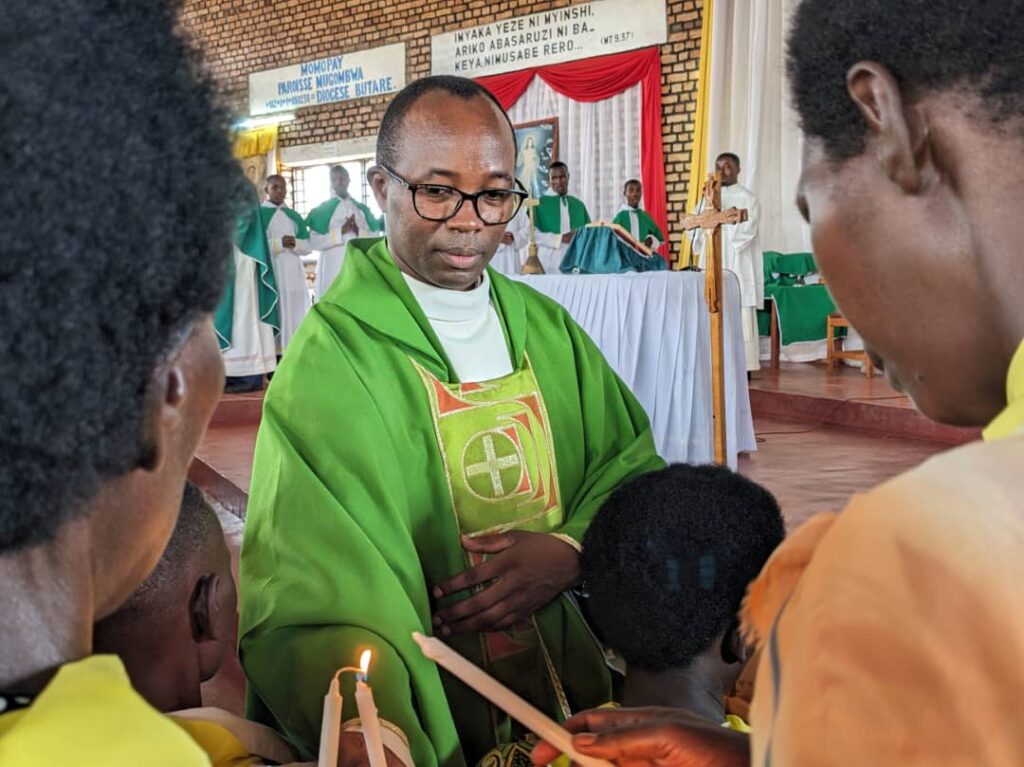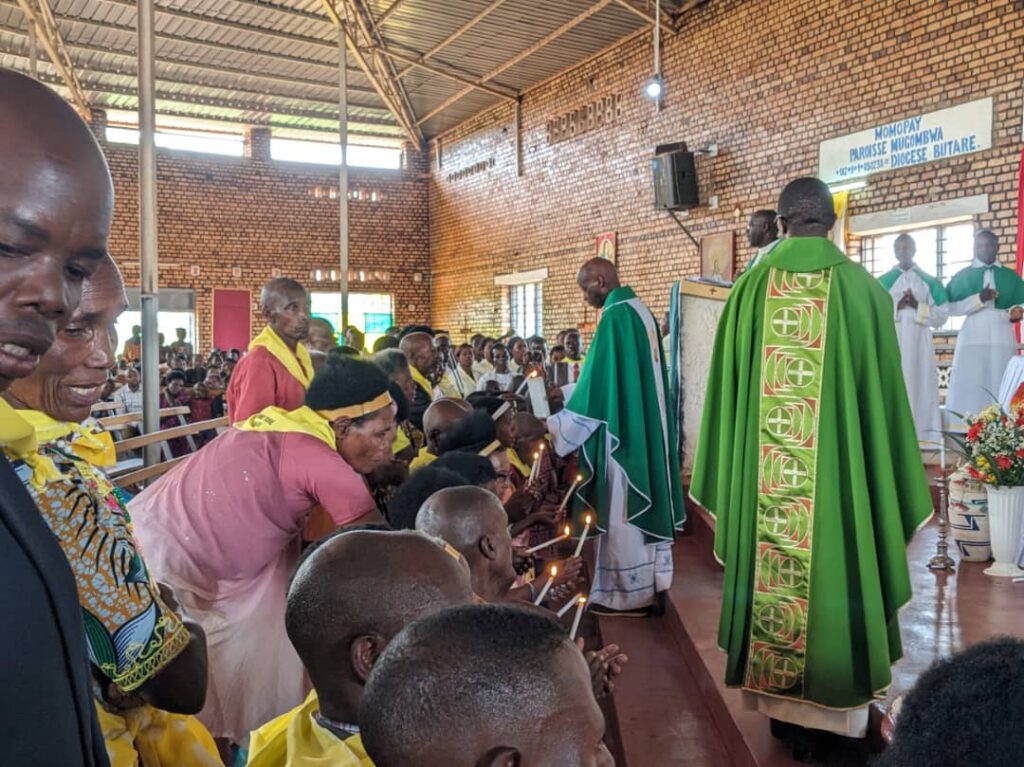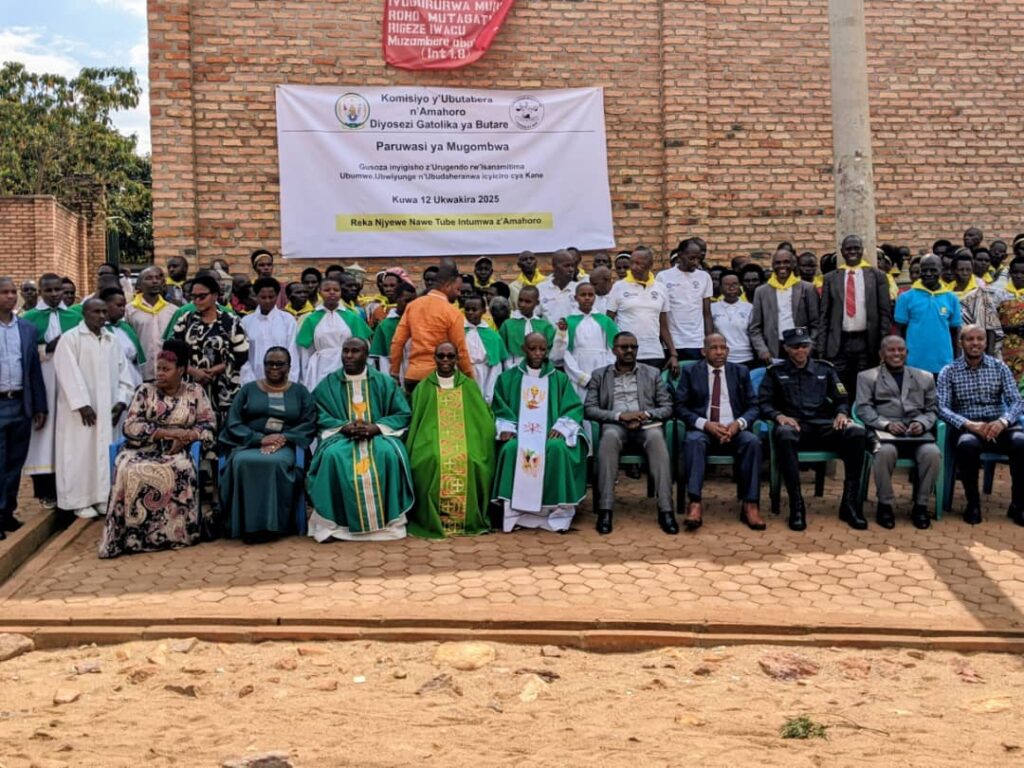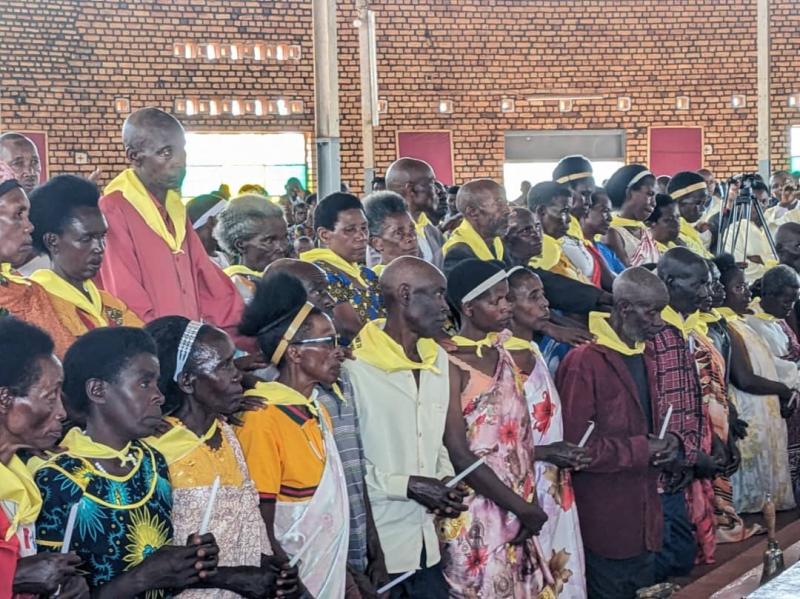
In collaboration with the Justice and Peace Commission of the Catholic Diocese of Butare, Mugombwa Parish in Gisagara District concluded the fourth phase of the Reconciliation, Unity, and Resilience Program ( Isanamitima).
The closing ceremony took place at Mugombwa Parish on Sunday, October 12, 2025, where participants were encouraged to promote unity, reconciliation, peacebuilding, and teamwork, while also giving greater value to the forgiveness they received.
Jean Paul Habineza, the Vice Mayor of Gisagara District in charge of Economic Development, highlighted the program’s positive impact on rebuilding relationships among Rwandans.
“These teachings play a significant role in fostering harmony and mutual trust among Rwandans. Survivors of the 1994 Genocide against the Tutsi are guided to forgive and heal, while perpetrators are taught to sincerely ask for forgiveness. As a result, they now live peacefully together and even collaborate in development activities.” Said Vice Mayor.
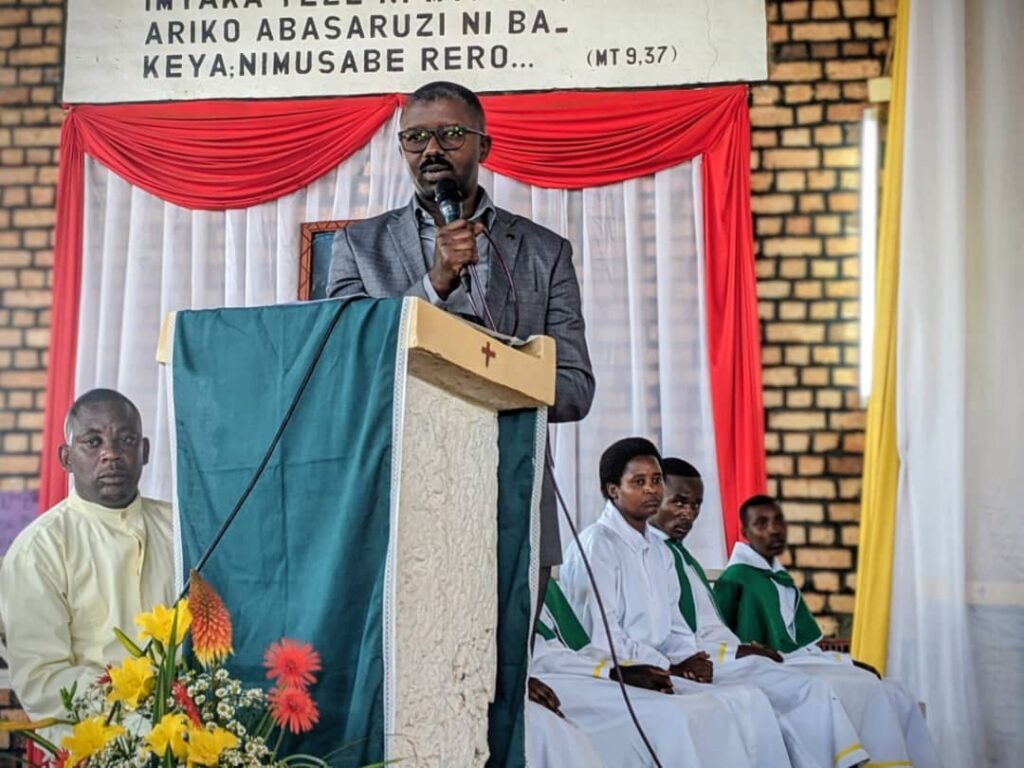
Mukayiranga Laurence, Community Engagement Analyst at the Ministry of National Unity and Civic Engagement (MINUBUMWE), commended the Justice and Peace Commission of the Butare Catholic Diocese for helping both genocide survivors and perpetrators reconcile through reconciliation teachings.
“We deeply appreciate the Commission’s contribution in helping genocide survivors heal from trauma, forgive those who wronged them, and in encouraging perpetrators to acknowledge their crimes and seek forgiveness. This strengthens efforts to build a Rwandan community free from genocide ideology. We hope these initiatives will continue and reach even those who have not yet participated in the program.” Said Laurence.
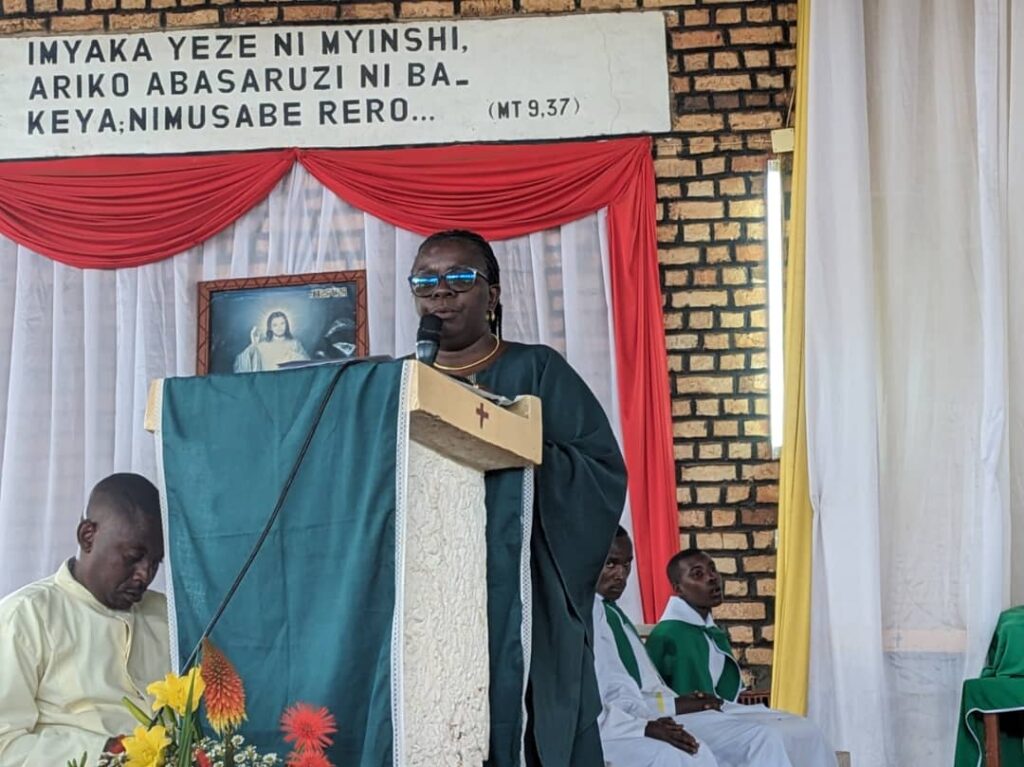
Father Edmond Habiyaremye, the Director of the Justice and Peace Commission of the Butare catholic Diocese, reflected on the Commission’s mission, explaining that peace and justice are inseparable.
He noted that many crimes were committed during the genocide against the Tutsi but emphasized that God calls for humility, repentance, and forgiveness.
He thanked both those who asked for forgiveness and those who granted it, by saying:
“Today, there is no more discrimination, we are all Rwandans. To those who were forgiven, give true value to the forgiveness you received, because no price can equal to what you did. We commend you for choosing repentance and change over shame.
And to those who forgave, we deeply appreciate your courage to confront painful history and forgive those who hurt you. It’s not easy, but your forgiveness is helping to rebuild our Rwandan family.”
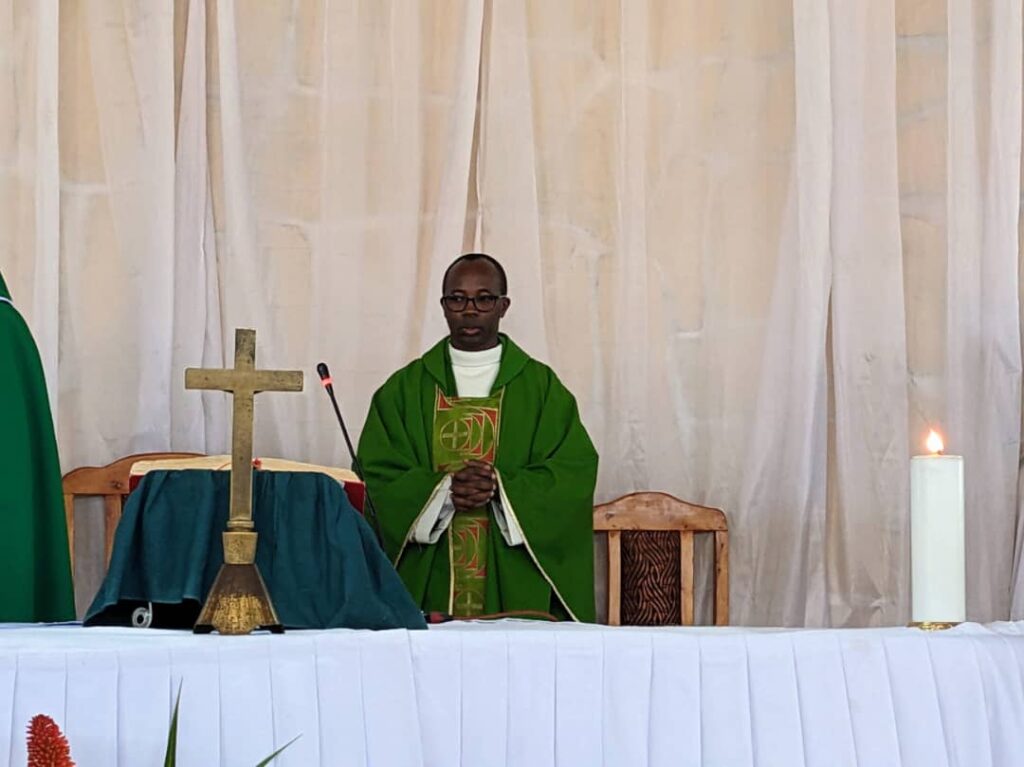
Agnes Nyiramahanga, who sought and received forgiveness from Ringuyeneza Pascal, the person she wronged during the 1994 Genocide against the Tutsi, shared her testimony. She said that even after completing her seven-year prison sentence, she still felt haunted by guilt until she joined the reconciliation teachings and was forgiven.
“I lived with guilt and shame for the atrocities I committed during the genocide. Even after serving my sentence, I was never at peace. But after being forgiven, I felt relieved and grateful to God for the mercy I received.” Shared Agnes.
Uguweneza Pascal, who granted forgiveness, said the reconciliation teachings helped him find inner peace and that he forgave wholeheartedly.
“I thank the organizers of these reconciliation teachings. They truly heal our hearts. The forgiveness we offered today is genuine and without reservation we gave it wholeheartedly without any doubt or hesitation.” Said Pascal.
This fourth phase of the reconciliation, unity, and resilience program at Mugombwa Parish, under the Justice and Peace Commission of the Catholic Diocese of Butare, concluded with 58 participants including 38 who asked for forgiveness and 20 who granted it.
Since 2022, Mugombwa Parish has recorded 1,368 people who have reconciled after taking part in the teachings of the journey of healing, unity, reconciliation, and resilience. The ceremony symbolized a renewed spirit of peace, unity, and moral rebirth within the community. As candles of reconciliation were lit, both survivors and former perpetrators stood side by side a living testament of forgiveness, though and difficult, remains the foundation of country’s ongoing healing and nation-building process.