


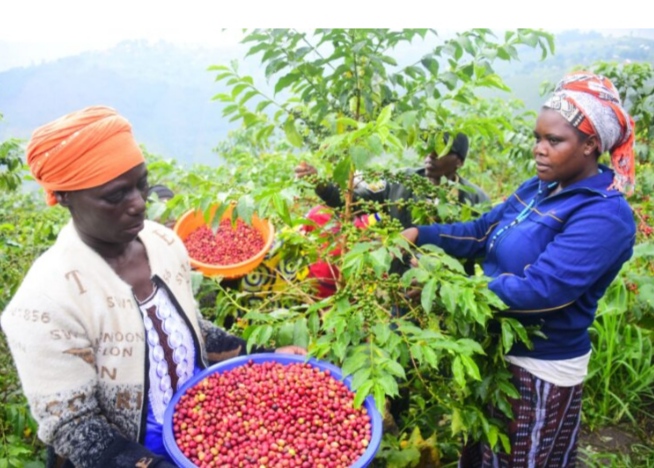
In Bwisige Sector, Gicumbi District, the residents testify to a remarkable transformation. Hills that were once dangerous and prone to severe erosion have become productive lands, thanks to the Green Gicumbi Project. This initiative has introduced coffee farming, which is now not only preventing soil erosion but also generating income for the local population.
Nabagize Fatima, one of the workers in the local coffee farmers’ cooperative and a native of the area said:
“This hill used to have so much water runoff, it was impossible to even make terraces here. But now, the Green Gicumbi Project planted coffee trees, created drainage channels and ditches, now the water that used to enter people’s homes is properly managed.”
Ngurumuryango Celestin, a resident who has lived in the area for 45 years, said that he had never had as much hope as he does now, all thanks to the changes in land use.
He added:
“Since I was young, this area was full of thickets and children used to graze animals here. Ever since coffee was planted, this is now our second harvest season, and the money has helped us a lot. Personally, I’ve already made 100,000 Rwandan Francs from it.”
Munganyinka Odette shared that before, her children struggled with their education, but thanks to the Green Gicumbi Project, they now study well and bring home good grades.
She said:
“They realized what we were farming had little value, so they taught us that we should grow coffee instead. Some welcomed the idea, others didn’t see its value, but now, if you have coffee, you’re considered smart. I used to harvest only 50 kilograms of beans, but now I harvest about 200 kilograms weekly. Coffee brings in about 1 million Rwandan Francs annually for me.”
Jerome Ntakirutimana, an agricultural officer of Green Gicumbi Project, confirmed that at the Gihuke site, land was consolidated and agroforestry trees were planted, allowing other food crops like pumpkins to be grown alongside coffee.
In one season, a single coffee tree can yield up to 10 kilograms, giving hope for further development. Moreover, the coffee is grown without chemical fertilizers, a step toward acquiring organic certification.
Jean Marie Vianney Kagenza, Director of the Green Gicumbi Project, said that the 40 hectares of coffee were planted on hillsides with climate-resilient varieties to help combat the effects of climate change and to increase yields.
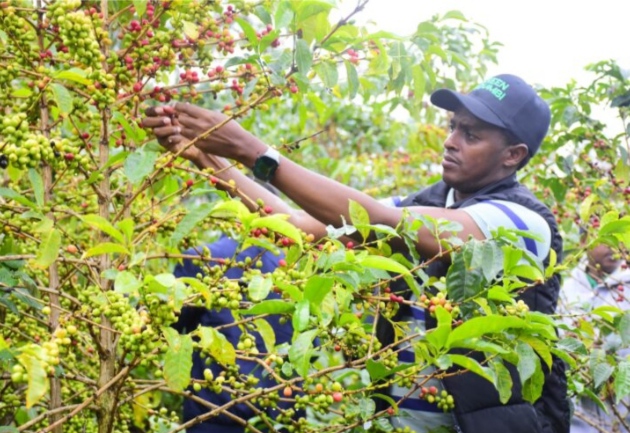
Jean Marie Vianney Kagenza, Director of the Green Gicumbi Project
Mountain coffee has helped the local population earn seasonal income and improve their living conditions. The cooperative Tubura Kawa Gihuke consists of 137 farmers, 93 men and 44 women and over 2,600 other farmers in different sectors supported by the Green Gicumbi Project have received coffee seedlings.
In the Munini village of Gihuke Cell, over 100,000 coffee trees have been planted across 40 hectares.
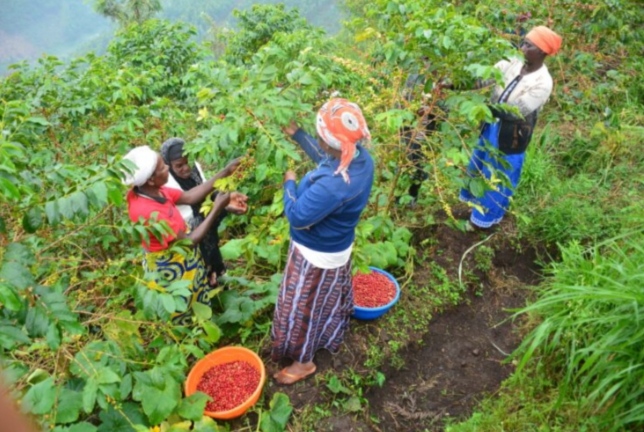
Coffee farmers harvesting
Aline Nyampinga