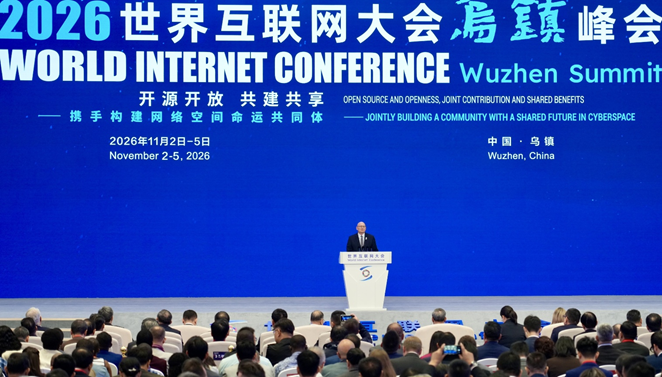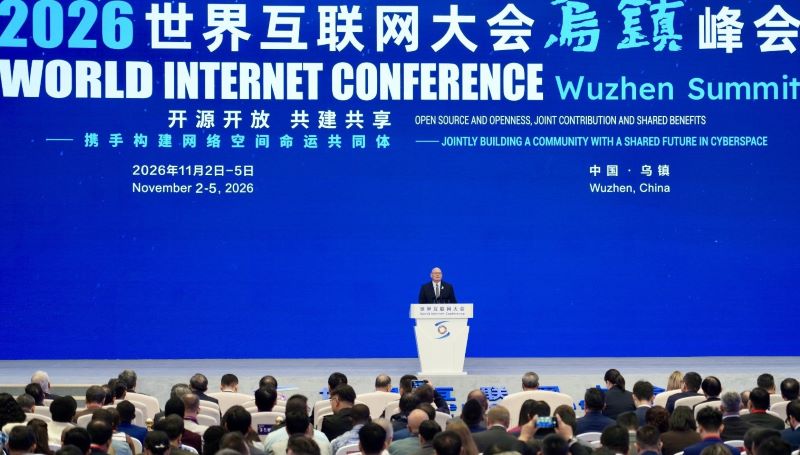
The World Internet Conference (WIC) has unveiled a new initiative aimed at making artificial intelligence (AI) more accessible, inclusive and secure worldwide, with particular opportunities for developing countries and the Global South.
The Action Initiative for Jointly Building Global Open Artificial Intelligence, released during the 2026 Wuzhen Summit, calls for stronger international cooperation to ensure that the benefits of AI are shared more equitably rather than concentrated in a few technologically advanced countries.
The initiative identifies unequal access to computing power, data and technological expertise as major challenges that could widen the global digital divide as artificial intelligence continues to transform education, healthcare, scientific research, climate action and public services.
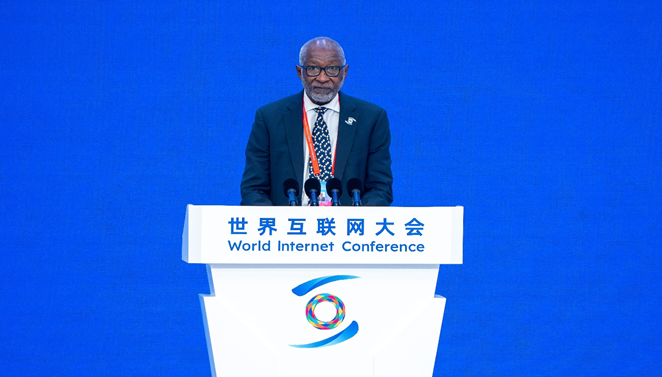
Nii Narku Quaynor, Chairman of Ghana Dot Com and Inductee of the Internet Hall of Fame, speaks at the opening ceremony of the 2026 World Internet Conference Wuzhen Summit in Wuzhen, China.s
Under the initiative, the WIC Specialized Committee on Artificial Intelligence proposes 18 actions grouped into four key areas: advancing openness and development, strengthening AI security and trustworthiness, promoting international dialogue and governance, and ensuring mutual benefit and inclusiveness.
One of the proposals with significant implications for Africa is the establishment of open-source seed funds to support research teams in the Global South. The initiative also encourages countries to develop their own AI capabilities through access to shared computing resources, quality datasets and international technical cooperation.
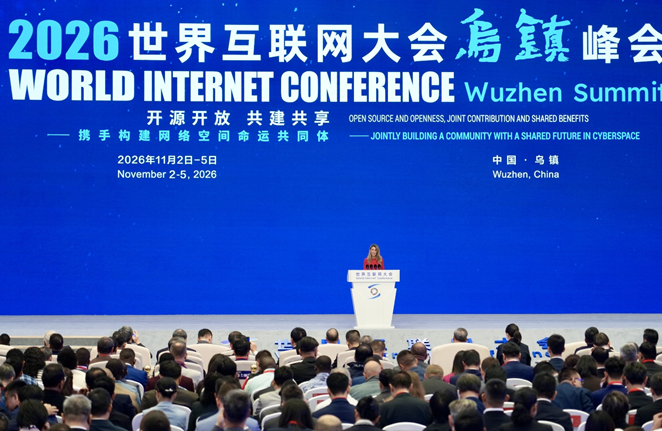
It further highlights the importance of developing AI models that cover more languages and cultures, potentially creating opportunities for African countries to expand the use of local languages in digital services and technological innovation.
The initiative also calls for making advanced AI technologies more affordable, enabling developing countries, small businesses and local innovators to participate in the global digital economy.
Beyond access and development, the document places strong emphasis on responsible AI. It calls for stronger safety measures, transparency in the development of AI systems, better management of technological risks and international cooperation to respond to harmful content and security incidents.
On global governance, the initiative advocates greater participation by governments, academic institutions, technology companies and civil society. It also supports a stronger role for the United Nations in advancing international dialogue and cooperation on AI.
Young people are another priority, with the initiative encouraging the creation of innovation platforms that enable them to become developers and creators of AI technologies rather than merely consumers.
The proposals come at a time when artificial intelligence is increasingly shaping global economic and social development, raising questions about who controls the technology, who benefits from it and how its risks should be managed.
The WIC initiative argues that openness should serve as a foundation for addressing these challenges and building a fair, trustworthy and sustainable global AI ecosystem.
For Africa and other developing regions, its implementation could create opportunities to strengthen local technological capacity, address language barriers and increase participation in shaping the future of artificial intelligence.
The initiative calls on the international community to work together to ensure that AI development benefits humanity as a whole, leaving no country behind.