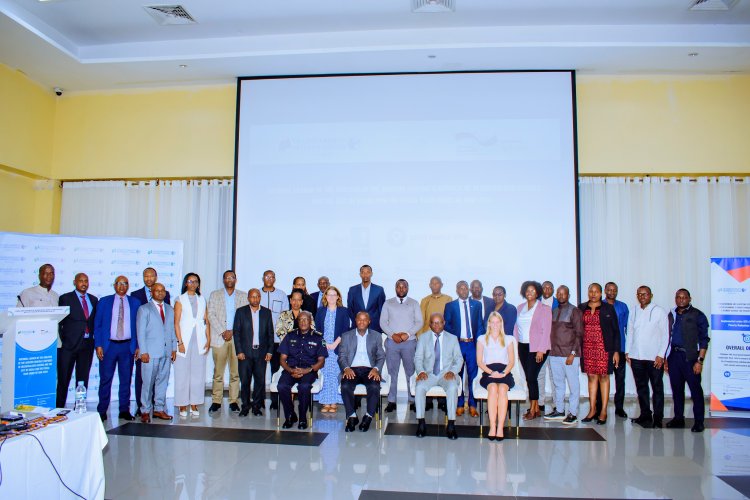
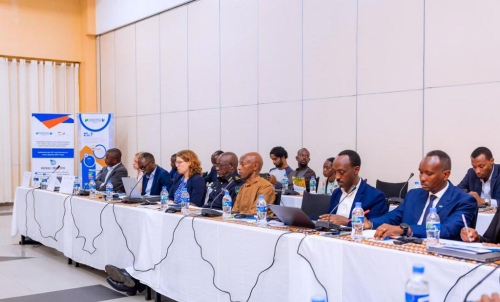
A recent review of public financial management (PFM) has revealed a troubling mix of persistent systemic weaknesses and encouraging improvements including weakness in public assets management, project mismanagement and compliance with law, this was revealed during the launch of the analysis of the Auditor General’s report of decentralized entities and the city of Kigali for the fiscal year 2023-2024, done by Transparency International Rwanda on 2 April 2026.
At the heart of the findings lies a stark reality of non-compliance with laws and regulations continues to dominate expenditure-related weaknesses, accounting for an overwhelming 93 percent. This trend points to deep-rooted issues in financial discipline and oversight across public institutions.
Equally concerning are weaknesses in public procurement, which make up 40 percent of all identified PFM shortcomings. Irregularities in procurement processes, alongside challenges in expropriation and legal disputes, are not only undermining transparency but also contributing significantly to financial losses.
Project mismanagement emerges as the single most critical issue, representing 63.2 percent of all weaknesses equivalent to over FRW 1,313.8 billion. Poor planning, weak contract management, and inadequate oversight have led to inefficiencies, particularly in key sectors such as road construction, water and sanitation, and health infrastructure. These shortcomings continue to erode value for money in public investments.
Richard Kubana, the Director General in Charge of Community Mobilization and Youth Volunteers Coordination in Community Policing in MINALOC, specified that working hand in hand may increase service delivery and reduce that weakness still lingering around” we are putting efforts in inter-institutional collaboration. It is true that this collaboration already existed, but we are looking on ways to further improve it so that we can be able to put in practice advice given by the Auditor General. We are working on how to manage effectively the public assets.”
The report also highlights inefficiencies in asset management, with idle resources and inadequate maintenance practices further compounding financial waste. Meanwhile, delays in social protection programs amounting to more than FRW 10.3 billion have had a direct and negative impact on beneficiaries. In some instances, payments were delayed by as much as 161 days, raising serious concerns about the effectiveness of service delivery mechanisms.
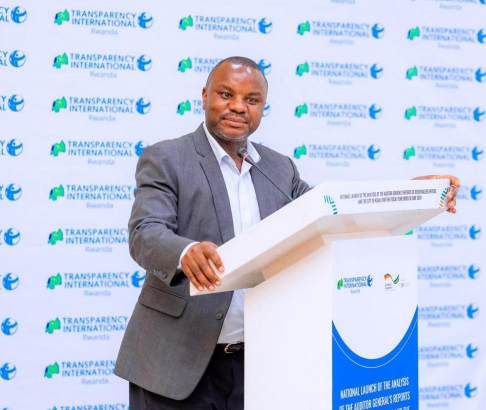
Mupiganyi Apollinaire, the Executive Director of Transparency International Rwanda pointed out the consequences of misusing resources as well as the root causes of it “when you look closely, you find that there is funds that were used for purposes other than what they were intended to do, in a way that people enriches themselves, and national resources end up being misappropriated. All this is done in order to highlight where the gaps are and to ensure that those gaps are addressed for the benefit of the citizens. “He highlighted.

Despite these challenges, there are notable signs of progress. The implementation rate of audit recommendations has risen significantly to 71 percent, up from 57.16 percent in the previous fiscal year. This improvement reflects strengthened follow-up mechanisms and a growing commitment to accountability.
In a milestone achievement, 19 districts have, for the first time since the inception of local government audits, attained at least a 70 percent implementation rate of audit recommendations. This marks a positive shift toward better governance and suggests that sustained efforts can yield tangible results.
Overall, the findings present a dual narrative. On one hand, entrenched weaknesses in compliance, procurement, and project management continue to pose serious risks to public finances. On the other, the progress in implementing audit recommendations offers a clear indication that reforms are taking hold.