


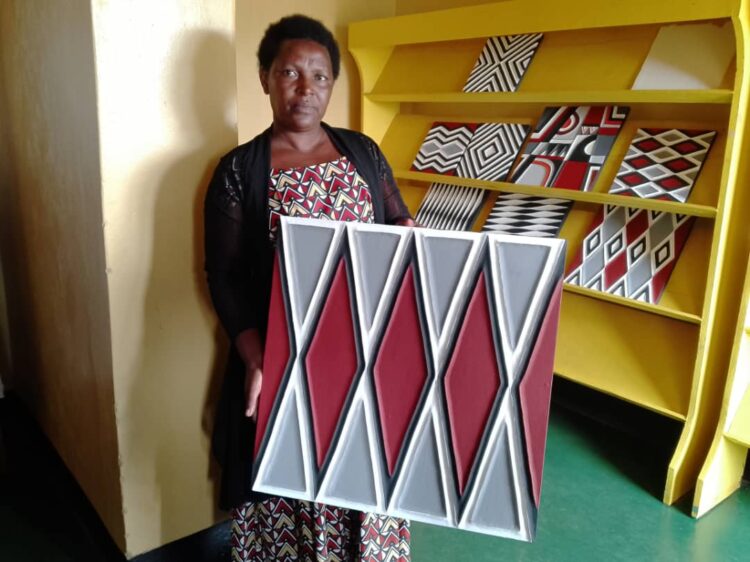
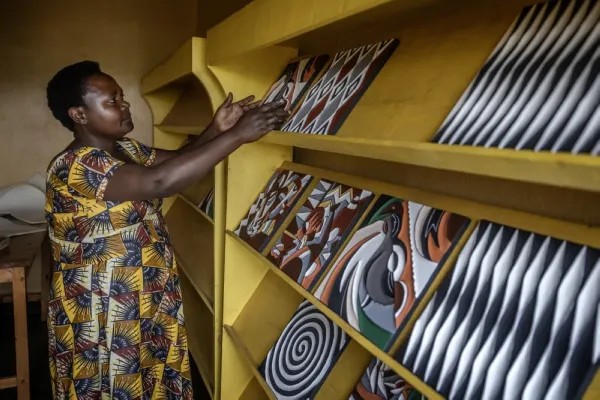
In the Kigina Sector, Kirehe District, there is a group of women united under a cooperative called Kakira, who specialize in making Imigongo, a traditional Rwandan form of decorative art. They say this craft was passed down to them by their parents, and they are advancing it as a way to preserve culture and improve their livelihoods. They hope that one day, it will be recognized globally and inscribed among the world’s intangible cultural heritage.
Imigongo, according to the women who practice it, is an art form based on a unique technique of painting primarily with black and white colors. Traditionally, it has been used to decorate Rwandan homes. Although modern construction methods have evolved, these women believe that Imigongo should be preserved and elevated to international prominence.
Mukandekezi, who joined the group in 1996, affirms that Imigongo plays a crucial role in safeguarding Rwandan culture and has greatly benefited her life. She believes that international recognition could bring even greater advantages.
She said:
“We started as a group of young women coming together, at a time when we were facing serious challenges after the genocide. At the time, we didn’t know it would help us this much, but it eventually became a source of empowerment. If we received support to take it to an international level, it would increase our earnings. For instance, I’ve built a house and educated my children thanks to Imigongo, and I continue to progress without difficulty.”
Jean d’Arc Nyiraneza, another member of the group, explained that after the Genocide against the Tutsi, they decided to form this group to both preserve the culture and turn it into a source of development.
She said:
“Imigongo is part of Rwandan culture. We began practicing it when we were young. Some of our fellow pioneers were killed during the genocide, but those of us who survived formed this group and committed to continuing the tradition. Traditionally, Imigongo symbolized cleanliness and was used to decorate traditional Rwandan homes. Even though those homes are rare today, we’ve adapted the art to modern houses.”
She further noted that government support could help raise Imigongo to international recognition, potentially leading to its inscription by UNESCO (United Nations Educational, Scientific and Cultural Organization) as a world heritage, thereby protecting and promoting it globally.
She added:
“It would be so fulfilling if Imigongo became known worldwide. We inherited it from our parents, and international recognition would open up broader markets and improve our income.”
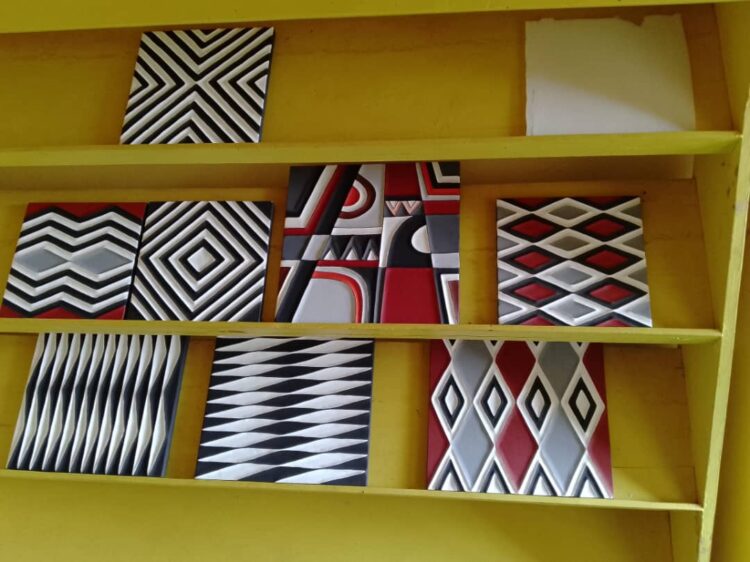
The Mayor of Kirehe District, Rangira Bruno, explained that Imigongo has its origins in this region, particularly in what is historically known as “Gisaka of Imigongo.” He said efforts are underway to promote this cultural art, including a project named Imigongo Hub, which focuses on both marketing and teaching the craft to younger generations.
He said:
“Historically, Imigongo comes from here—what is called the Gisaka of Imigongo. It has now spread across many places, and you can see it being used to decorate buildings. However, here at the origin, we still lack a dedicated school to teach the younger generation, which risks the art disappearing. In collaboration with REMA, we’ve begun working on ways to uplift it through the Imigongo Hub project. We already have several groups, but now we want to involve the youth.”
He also emphasized that if Imigongo were inscribed as heritage under UNESCO, it would enhance its protection and recognition globally.
He stated:
“If Imigongo is officially registered, it would help preserve it at the international level and prevent people from misusing or falsely claiming it. We are currently working with the relevant institutions to get it listed under UNESCO, and we strongly believe it will help protect this cultural heritage and make it known globally.”
Imigongo originates from the Gisaka region and was first practiced in the home of the son of the King of Gisaka, Kakira, son of Kimenyi, who was the son of Bazimya, of Ruregeya.
Editor/pureafricanews