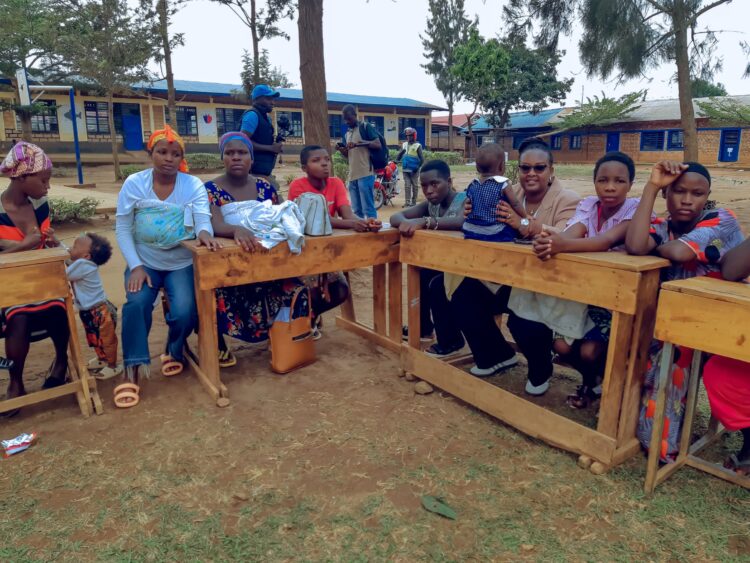
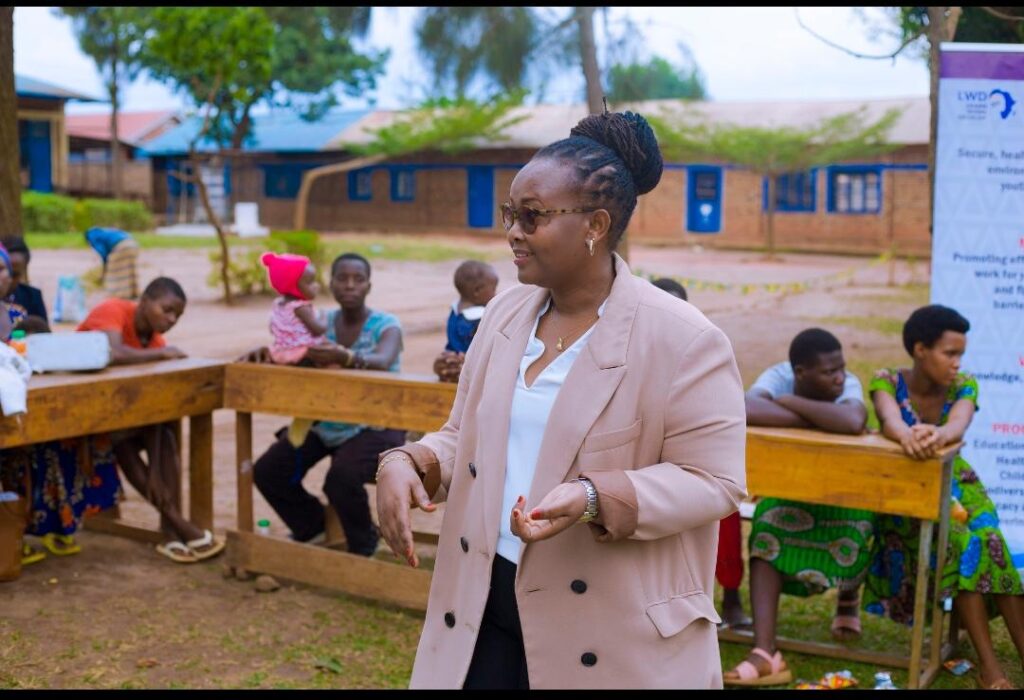
The Permanent Secretary in the Ministry of Gender and Family Promotion (MIGEPROF), Mireille Batamuriza, has praised the efforts of the organization Learn work develop (LWD) for its unique approach in supporting teenage mothers who became pregnant as a result of sexual abuse. The initiative, known as the “Masenge Mba Hafi” Project provides a safe community-based support system that helps vulnerable girls rebuild their lives.
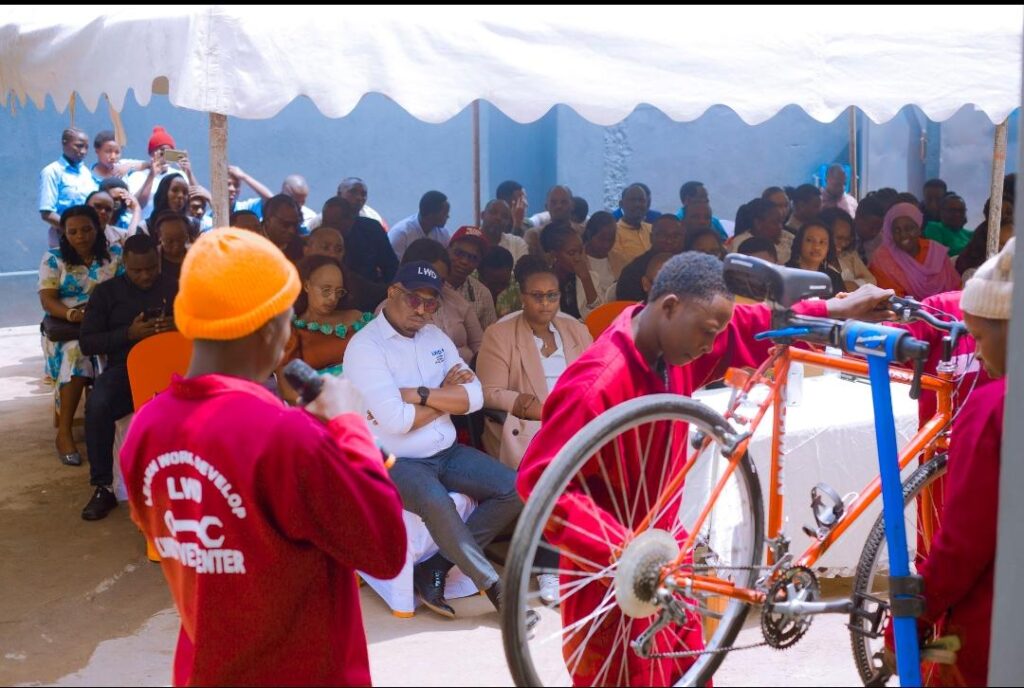
Batamuliza made the remarks during a field visit in Rwamagana District coordinated by MIGEPROF, toured LWD’s projects. Among the programs they visited were Urubohokero a safe space for children and adolescents as well as a vocational training center offering skills in bicycle mechanics, tailoring, hairdressing, and beauty therapy.
Community-driven approach
The Permanent Secretary highlighted LWD’s model of involving families and communities in protecting and supporting vulnerable children.
“What impressed me most is how LWD creates space for citizens to contribute to solutions in their communities,” Batamuliza said. “They give parents the opportunity to play an active role in monitoring and guiding children facing challenges in their neighborhoods.”
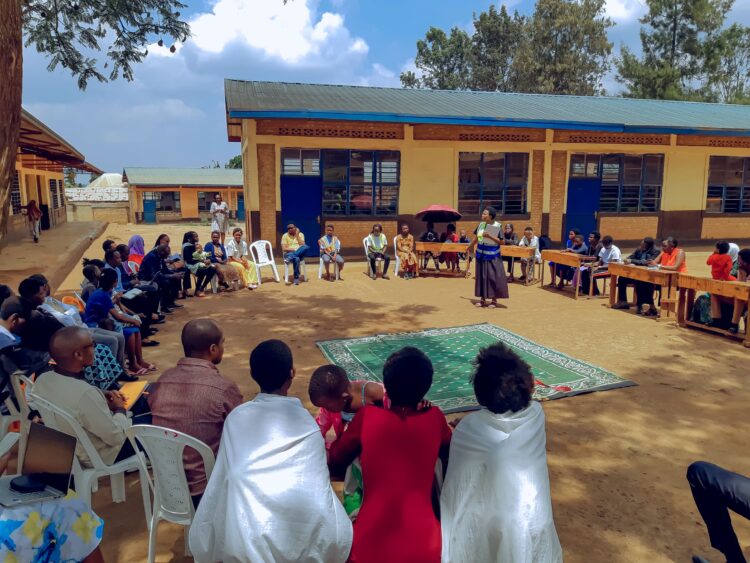
She particularly commended the Urubohokero initiative, which is set up within villages where the children live. Here, parents and women volunteers known as Masenge (aunts), along with older girls serving as peer mentors, come together to provide guidance, counseling, and companionship to teenage mothers. According to Batamuliza, this approach strengthens community ownership of child protection while also giving the girls a safe place to speak openly about their experiences.
Voices of resilience
Teenage mothers who attend the Urubohokero testified to the impact the program has had on their lives.
“At Urubohokero I share my struggles with peers and Masenge. They advise me and remind me that my life has value. Sometimes men still try to give me money in exchange for sex, but thanks to Masenge, I now know I must protect my future and not destroy my life with such choices.” One girl explained
Another participant, who had previously been rejected by her family, shared her story of reintegration:
“After giving birth, I was welcomed by an elderly woman who took me in. Later, she and Masenge spoke to my parents until they accepted me back home. Now I live with my mother, and since joining Urubohokero, my problems have reduced. I finally feel supported and safe.”
Tangible results in reducing teenage pregnancies
Each Urubohokero gathers 25 to 30 children who meet regularly with trained Masenge and peer mentors. The sessions are conducted in strict confidentiality, and where necessary, children are referred to specialized services in a way that safeguards their dignity.
According to Jean Claude Mwiseneza, Executive Director of LWD, the project has significantly reduced teenage pregnancies in the areas where it operates.
“In Kayonza District, for instance, there used to be more than 60 teenage pregnancies in a single sector every year. Today, that number has dropped dramatically. In some sectors, you may find no more than two cases in an entire year,” He revealed.

Expanding reach and partnerships
The Masenge Mba Hafi project was first launched in 2020 in partnership with the Rwanda Governance Board (RGB), with financial support from UNDP. In 2022, it expanded under the Make Way program in collaboration with FAWE Rwanda. Currently, in Rwamagana District, the project is being implemented with the support of AHF.
So far, the Urubohokero in Rwamagana alone has reached and supported more than 1,000 children a milestone that demonstrates the effectiveness of community-driven child protection models.
PS Batamuliza concluded by reaffirming the government’s commitment to strengthen partnerships with civil society organizations like LWD, noting that their work complements national efforts to fight sexual violence, reduce teenage pregnancies, and promote the well-being of vulnerable children.