Institutions involved in monitoring child health and development in Huye District have reported a significant reduction in stunting among children under the age of five dropping from 19% to 15%. This improvement is largely attributed to the initiative called “Umudugudu Uzira Igwingira” (loosely translated as “A Village Free from Stunting”), which focuses on closely tracking every child’s development from the moment of conception.
According to Habyarimana Etienne, Head of the Health Department in Huye District, this program has made a measurable impact at the village level. He noted that in the 2023/2024 fiscal year, the stunting rate stood at 19.8%, but by 2024/2025, it had decreased by 4.5 percentage points to 15.3%.
Habyarimana added that this progress accelerates the achievement of the five-year goals of Rwanda’s National Strategy for Transformation (NST2). He expressed optimism that the district could even exceed the national target of 15% stunting by 2029.
“This program is effective because now, all children are regularly monitored at the village level through the involvement of community health workers,” he explained. “This has improved child health follow-up significantly compared to the past, when children were only assessed at health centers, which many parents couldn’t easily access. Some children were left out completely.” “Now, in every village and neighborhood, no child is left behind,” he emphasized.
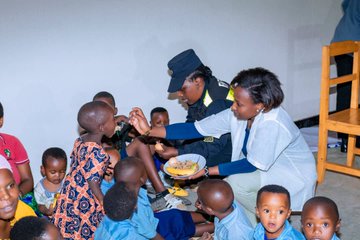
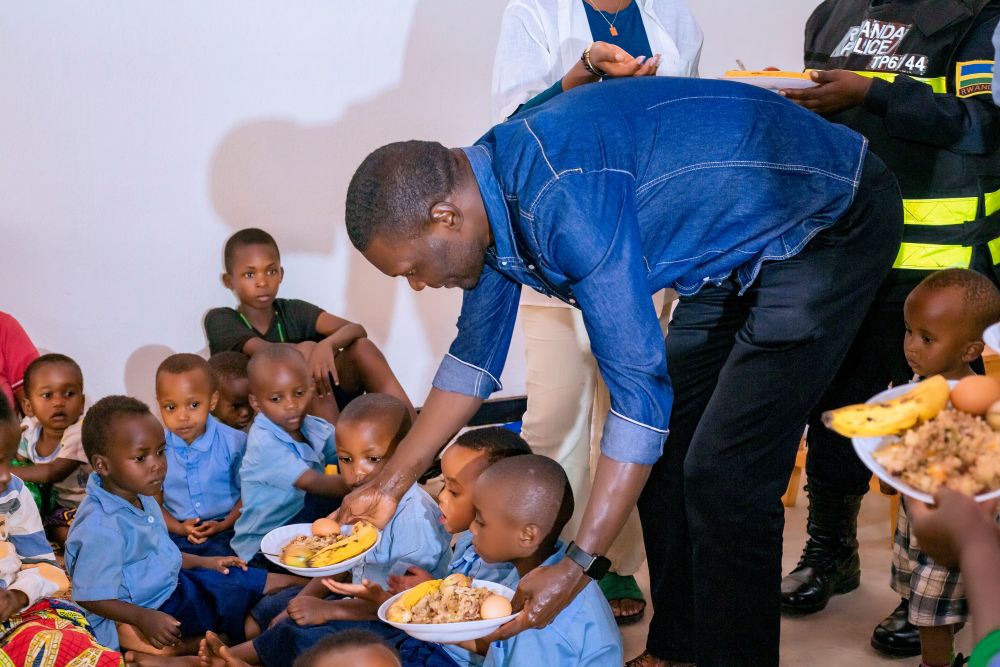
The program also utilizes Early Childhood Development (ECD) centers and model homes, which offer comprehensive care and support for young children. Habyarimana encouraged all parents to send their children to these centers, highlighting how they promote both physical growth and cognitive development. “These are national programs set up to benefit families. Parents should take advantage of them,” he urged.
One parent, Tuyishime Rosine, from Huye District, shared her testimony about the program. Her child, who has a speech disability, greatly benefited from attending a local ECD center. She said the child, who was previously withdrawn and cognitively stunted, is now more social and shows signs of potential speech development.
“My child had developmental delays and couldn’t speak. But after spending over a year at the center, he has become more alert and interactive. Even though he still can’t tell me what he learned, he gestures and I can tell he’s gained a lot,” she said.
Tuyishime added that before joining the center, her son avoided contact with anyone outside the immediate family. Now, at nearly four years old, he has begun to open up to others a major breakthrough for the family.
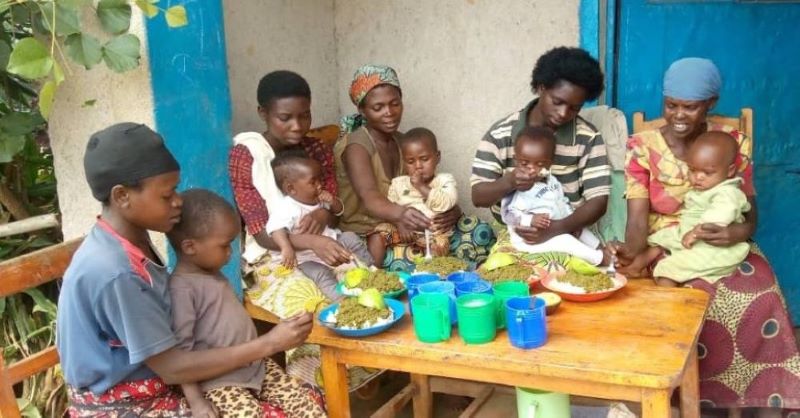
Nzabamwita Espérance, a community health worker and caregiver running a home-based ECD center since 2019 in the Runga Village, recalled that the program started in what used to be a “village kitchen.” At that time, five children in her village were suffering from malnutrition.
She explained that as awareness campaigns grew, more children began attending the ECD center. Simultaneously, she educated parents about proper child nutrition and feeding practices. As a result, there are currently no children with stunting in her village.
The Early Childhood Development (ECD) initiative was launched by the Rwandan government in 2011 to combat malnutrition and stunting among young children. As of now, Huye District has a total of 1,221 ECD centers, including 1,087 home-based centers, collectively serving 38,976 children.