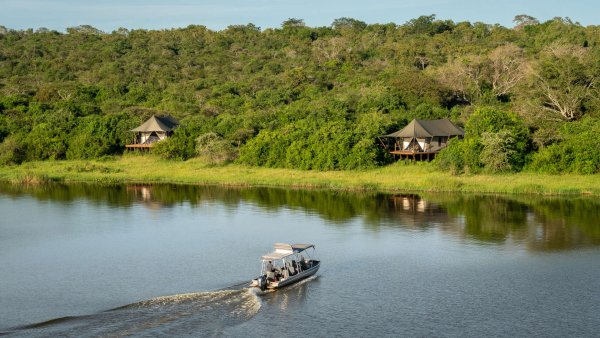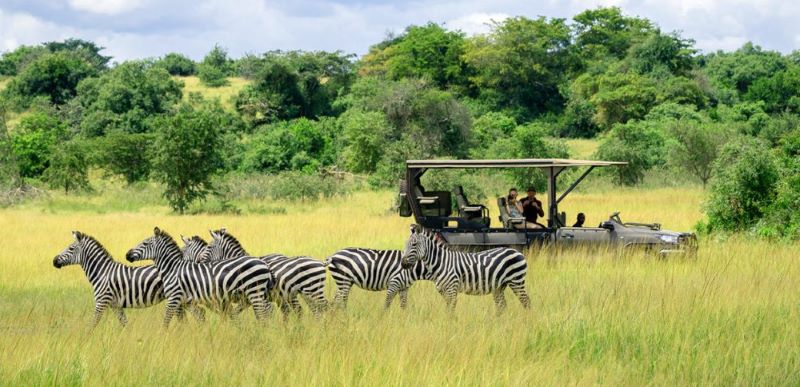
Rwanda is set to establish a school focused on environmental conservation, which will operate at a regional level within the East African Community. The school will be built in the Eastern Province on an 8-hectare plot of land near Akagera National Park.
The institution will offer advanced knowledge and training in environmental conservation, particularly geared toward the protection of wildlife and natural ecosystems across the region, according to the Rwanda Development Board (RDB).
The school will be developed in partnership with African Parks Network, the organization responsible for managing Akagera National Park. African Parks will also contribute to conducting modern research, providing training, and facilitating collaboration in conservation efforts.
Eugène Mutangana, Head of the Department of Biodiversity Conservation at RDB, told The New Times that the school will be built at the southern entrance of Akagera National Park and is expected to bring numerous benefits. He stated that the final agreement for the establishment of the school will be signed on September 30, 2025.
“It will be located near the southern gate of Akagera National Park. This will help position Rwanda as a regional hub for environmental conservation,” Mutangana said.
Following the signing of the agreement, construction of the necessary infrastructure is expected to take around a year. “We anticipate welcoming the first cohort of students around 2027,” He added.
Rwanda will hold a 49% stake in the school, while the remaining shares will be held by African Parks. Rwanda is contributing the 8-hectare land and will also grant students access to Akagera National Park to support their learning.
Although the school will admit students from across the African continent, it will also provide training to Rwandan park managers, rangers, and local government officials.
The school is expected to attract environmental experts to Rwanda, who will also contribute to the local economy through their day-to-day spending. According to Mutangana, another key benefit is that the school will serve as a hub where conservation professionals from different backgrounds can meet, exchange knowledge, and collaborate on innovative approaches.
The initiative will strengthen Rwanda’s conservation efforts across its protected areas, including Akagera, Volcanoes, Gishwati-Mukura, and Nyungwe National Parks. It will also enhance collaboration with environmental organizations and various international partners.
Mutangana highlighted that the school will serve as a model for Rwandans interested in pursuing careers in environmental conservation, while also creating jobs and other opportunities in the sector.
In 2020, Rwanda and African Parksan organization that manages 19 parks in 11 countries signed a 20-year agreement for the management and conservation of Nyungwe National Park. Nyungwe, established in 1934, spans 1,122 square kilometers and hosts a variety of iconic wildlife species including lions, leopards, elephants, rhinos, and buffalo.
In 2024, the park saw a 3.83% increase in visitors, reaching 56,219, up from 2023. It generated $4.7 million in revenue in 2024, compared to $4.6 million the previous year. Importantly, 10% of this revenue is distributed directly to local communities.