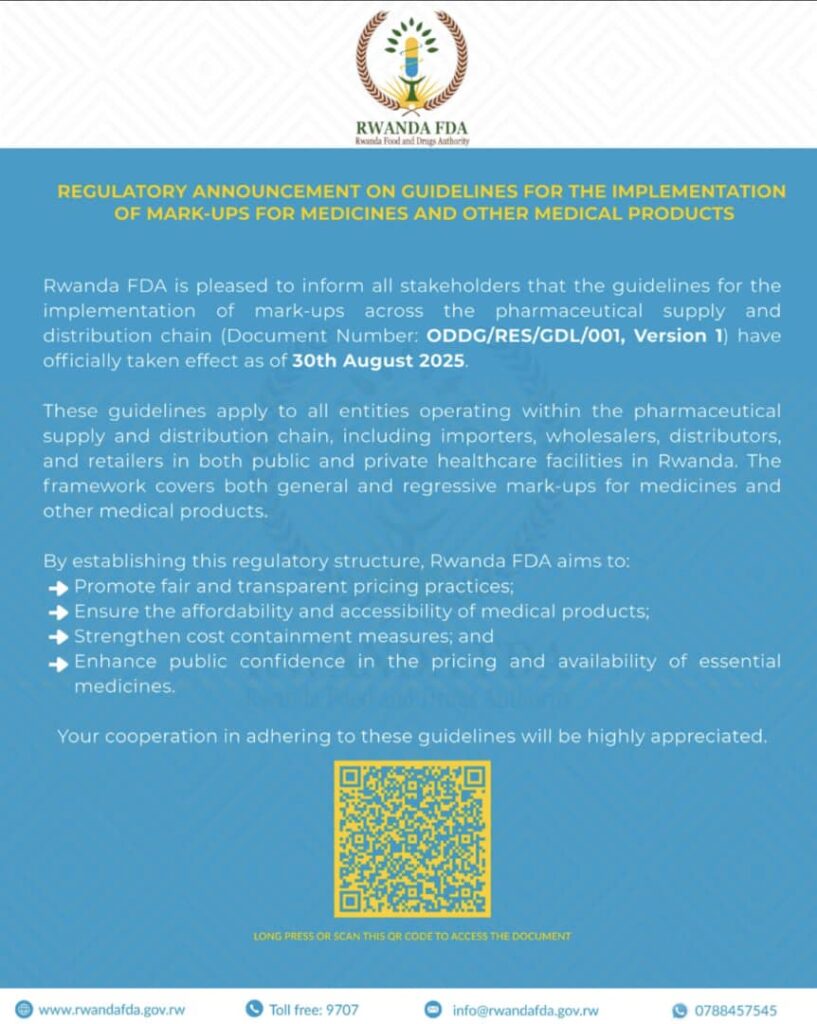
The Rwanda Food and Drugs Authority (Rwanda FDA) has announced the official implementation of new guidelines governing mark-ups for medicines and other medical products. The regulatory framework, outlined in Document Number ODDG/RES/GDL/001 (Version 1), took effect on 30th August 2025.
The guidelines apply to all players in the pharmaceutical supply chain importers, wholesalers, distributors, and retailers operating in both public and private healthcare facilities across the country. They introduce a clear structure for both general and regressive mark-ups, setting the stage for a more accountable and transparent pharmaceutical market.
Key Objectives of the Guidelines
According to Rwanda FDA, the new system is designed to achieve four critical goals:
. Promote Fair and Transparent Pricing Practices
The mark-up system ensures that prices reflect actual supply chain costs while preventing exploitative pricing, especially on essential and life-saving medicines.
. Ensure Affordability and Accessibility of Essential Medical Products
By capping allowable price increases at different supply levels, the guidelines aim to make critical medicines more accessible to the general population, especially vulnerable groups.
. Strengthen Cost-Containment Measures
The policy supports national efforts to manage rising healthcare expenditures and improve the cost-efficiency of medical services.
. Boost Public Trust in the Availability and Pricing of Medicines
Transparency in pricing is expected to increase confidence among patients and healthcare providers, reducing the prevalence of price manipulation and informal market practices.
Scope and Implementation
The guidelines apply to all imported and locally manufactured medicines and medical products, including over-the-counter (OTC) and prescription drugs. They provide detailed formulas for calculating mark-ups at each level of the supply chain, taking into account factors such as product type, value, and therapeutic classification.
In addition, the Rwanda FDA will require mandatory price disclosure and registration for all pharmaceutical products sold in the country. This means that suppliers must submit price structures for approval and display standardized pricing where applicable.
Enforcement and Compliance
To ensure compliance, Rwanda FDA has established a monitoring and enforcement mechanism, including:
Regular audits and inspections of pharmacies, distributors, and wholesalers, Penalties for non-compliance, including fines, suspension of licenses, or legal action, A dedicated platform for consumers to report suspected pricing violations. Training and sensitization sessions are also being rolled out to ensure that stakeholders understand their responsibilities under the new framework.
Regional Context and Long-Term Impact
Rwanda’s move aligns with broader East African Community (EAC) efforts to harmonize pharmaceutical regulations and improve access to essential medicines. It also supports the World Health Organization (WHO)’s recommendations for price regulation as a tool for universal health coverage (UHC).
By balancing the needs of suppliers with the rights of patients, the Rwanda FDA’s regulatory intervention is expected to bring lasting benefits to both the health sector and the broader public.